
Published on •Updated
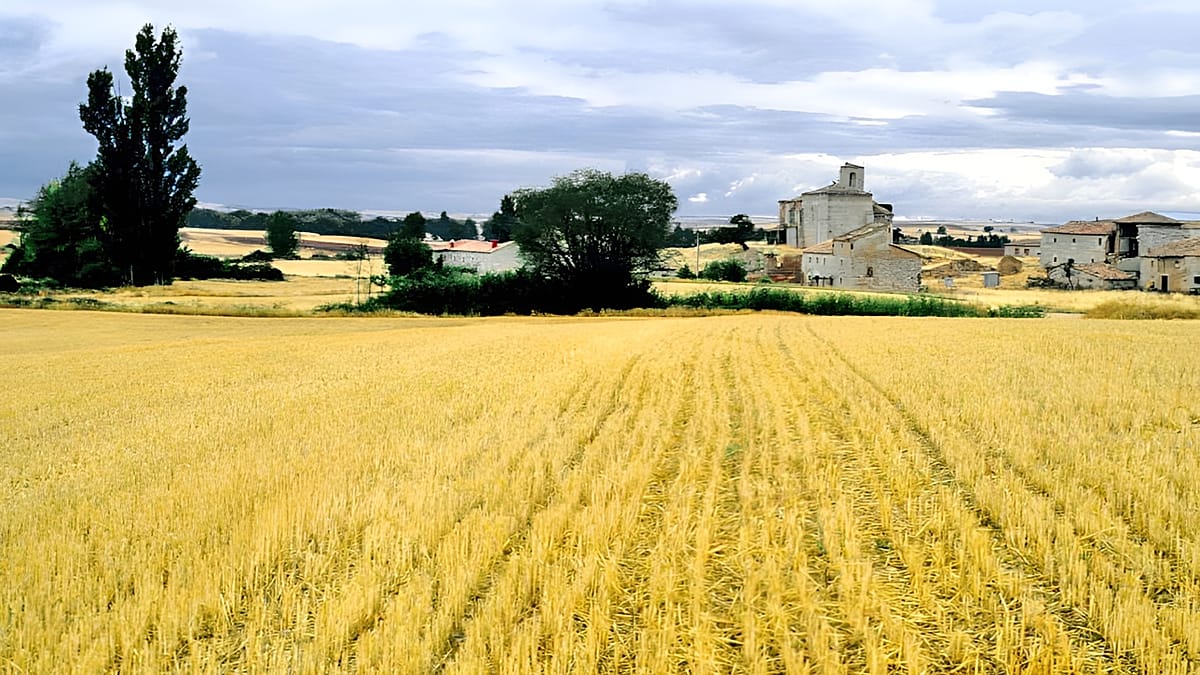
A tiny village in the province of Burgos, brought back from the brink of extinction, is about to have its moment in the “shadow” — NASA has picked Villalibado as one of its ringside seats for the total solar eclipse on 12 August.
The village, abandoned for decades before a handful of dedicated locals rebuilt it by hand, will now host one of the US space agency’s broadcast teams as the Moon takes centre stage.
The feed will beam out worldwide via NASA’s digital platforms and San Francisco’s Exploratorium, giving Villalibado more screen time than most villages get in several centuries.
The choice is down to several factors, among them its location within the path of totality, an unobstructed horizon and good communications infrastructure.
The observation point will be set up next to the church of San Salvador, in the upper part of the village, where almost thirty NASA and Exploratorium scientists and technicians will prepare the international broadcast.
Juan Ansótegui, the businessman who bought Villalibado 20 years ago to turn it into a rural tourism complex, told Diario de Burgos that NASA had contacted him months earlier asking to rent the entire village, including its Romanesque church, for the eclipse.
“I thought it was a scam,” he recalled of the phone call, according to comments he gave the Spanish daily.
He explained that the US agency had spent more than a year scouting locations along the path of totality across Spain before settling on Villalibado. “They went without telling anyone and chose it after visiting many other places,” he explained.
Ansótegui also noted that the team’s technical demands have been minimal so far. “They have only asked for a dedicated electricity and network supply, of course, but as we already have fibre-optic connections in the village there has been no problem,” he added.
From abandoned village to global showcase
Villalibado lay uninhabited for almost three decades before work began to revive it as a rural tourism destination. Its last two residents left in 1998, and years later, Ansótegui and his siblings spearheaded its restoration as a rural tourism complex.
The eclipse will now turn this small village in Burgos into one of the vantage points from which millions of people follow one of the most eagerly awaited astronomical events in recent years.
The broadcast will be available on the Exploratorium’s website and YouTube channel and, according to the San Francisco science museum, will also be distributed to other international media outlets.
The total solar eclipse on 12 August will pass over Greenland, Iceland, the Atlantic Ocean, northern Spain, a small part of Portugal and northern Russia. Elsewhere in Europe and across large parts of the northern hemisphere, it will be visible as a partial eclipse.
NASA will broadcast the phenomenon live from various points along the path of totality, featuring images of the eclipse, interviews with specialists and coverage of several scientific experiments scheduled for the day.
The live feed will begin at 7:30 pm CEST (10:30 am PDT), and alongside the real-time coverage, it will generate images and other material for later use in education.