
Published on •Updated
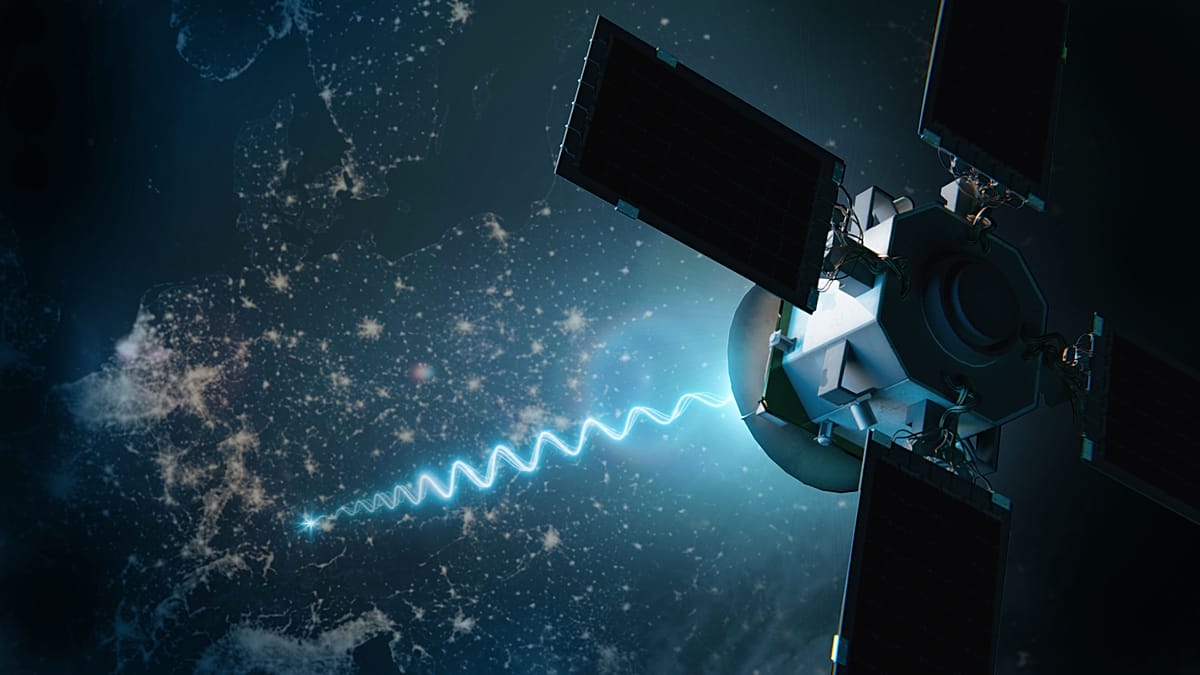
Google launched a prototype satellite into orbit loaded with its AI chips on Thursday as part of the first phase of a project to explore if space could be the best place for powering large-scale AI infrastructure.
The satellite, built by Planet Labs and launched on SpaceX’s Transporter-18 rideshare, is loaded with Google’s Tensor Processing Units (TPUs) to see how they perform in space and deal with the physical stress of spaceflight, radiation and extreme temperature conditions.
The thinking behind the initiative, aptly named ‘Project Suncatcher’, is to place satellites in low-earth orbit where they can benefit from near-constant sunlight to capture up to eight times more solar energy than on Earth.
Google wants to see if large-scale machine-learning infrastructure can survive in space and benefit from abundant solar energy.
The amount of energy data centres consume is growing rapidly, driven in no small part by the massive surge in artificial intelligence workloads. Globally, data centres consumed an estimated 415 to 485 terawatt-hours (TWh) last year.
This accounts for 1.5% to 2.5% of the world’s total electricity generation, according to the European Commission, a figure that is set to double by 2030.
Many data centre projects around the world are facing growing public opposition amid concerns that they drive up energy bills; therefore, building data centres in space far away from the general public is an appealing prospect.
Google is not the only company exploring the possibility of sending AI into space. Nvidia-backed startup Starcloud trained an artificial intelligence model from space for the first time last December.
In June, Elon Musk unveiled SpaceX’s AI1 satellite, also known as Starmind, a new satellite class designed as a flying GPU (graphics processing unit) cluster rather than a communications relay.
And in September, Mistral announced a partnership with Marlan Space and Loft Orbital to develop artificial intelligence satellite infrastructure, with the first satellite launch this October.
What is Google testing?
The launch marked the first phase of Google’s test with a 10-minute climb into low Earth orbit. The spacecraft endured intense vibrations and sustained acceleration of up to 10 times the force of gravity, while the TPU chips on board were hit by brief shocks of between 50 and 100g.
In anticipation of these hardy conditions, the Suncatcher team carried out vibration testing on the satellite to mimic a rocket launch, with the craft and TPU chips passing test.
Now that Google has safely launched the TPU chips into orbit, the next phase of the experiment begins as the team assesses how the TPU chips deal with the higher levels of radiation outside the Earth’s atmosphere, as well as solar events and cosmic rays, which can also disrupt electrical systems.
Data centres infamously require an inordinate amount of energy and water resources, but in the vacuum of space this is a different problem entirely. The mission will be an opportunity for the research team to test a number of different solutions, including a combination of heat pipes and radiators to cool the chips.
In future Suncatcher missions, satellites carrying dozens of TPU chips will be tested with the aim of moving from the current approach of low bandwidth across large distances to high bandwidth over extremely short distances to maintain connectivity.
The technology already exists in space. However, Google will test ways of maintaining a high bandwidth connectivity over shorter distances with greater accuracy when it launches further satellites next year.