
Close Menu
Daily Guardian EuropeDaily Guardian Europe
  • Home
  • Europe
  • World
  • Politics
  • Business
  • Lifestyle
  • Sports
  • Travel
  • Environment
  • Culture
  • Press Release
  • Trending
What's On

Bulgaria’s parliament passes law protecting journalists from abusive SLAPP lawsuits

September 30, 2026

Video. Rehabilitated green sea turtle Jurassic returns to Atlantic

September 30, 2026

No more radio silence: EU plans cross-border lifeline for emergency services

September 30, 2026

Sound and vision: Creators Olivier Calvert and Jose Luis Agreda on the art of animation

September 30, 2026

Europe’s energy security has a Black Sea opportunity – POLITICO

September 30, 2026
Facebook X (Twitter) Instagram
Web Stories
Facebook X (Twitter) Instagram
Daily Guardian Europe
Newsletter
  • Home
  • Europe
  • World
  • Politics
  • Business
  • Lifestyle
  • Sports
  • Travel
  • Environment
  • Culture
  • Press Release
  • Trending
Daily Guardian EuropeDaily Guardian Europe
Home»Lifestyle
Lifestyle

No more radio silence: EU plans cross-border lifeline for emergency services

By staffSeptember 30, 20263 Mins Read
No more radio silence: EU plans cross-border lifeline for emergency services
Share
Facebook Twitter LinkedIn Pinterest Email
By&nbspUna Hajdari&nbspwith&nbspAFP

Published on
30/09/2026 – 13:51 GMT+2

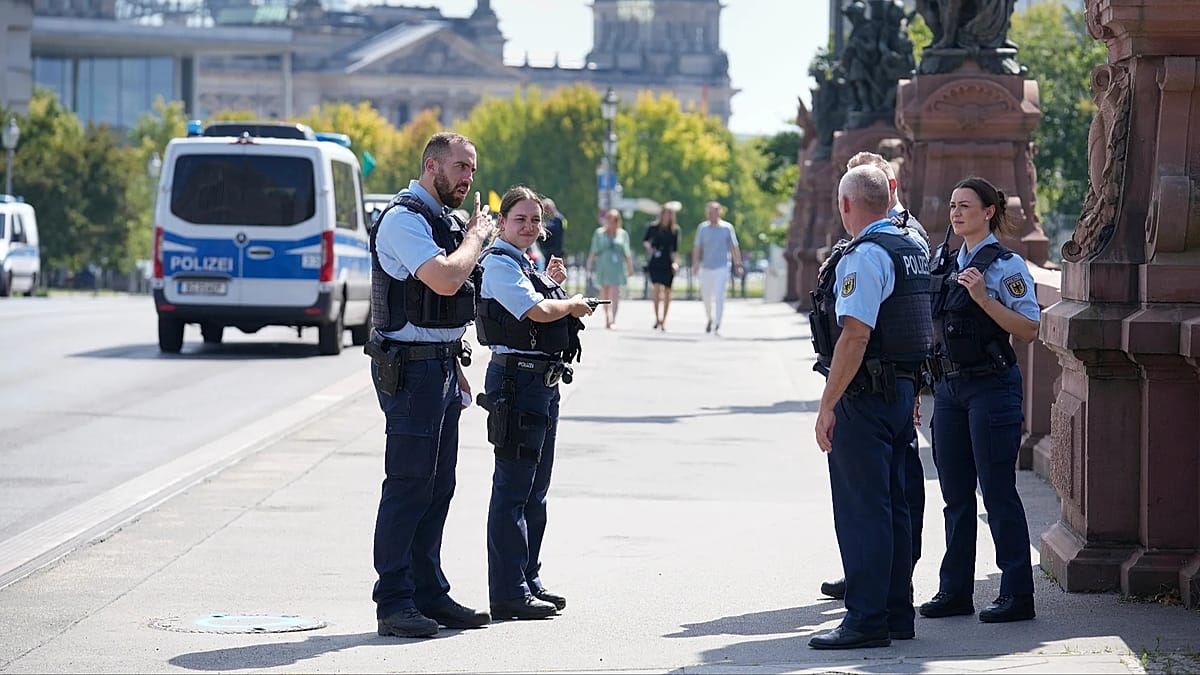
The EU put forward plans for a new bloc-wide communication system on Wednesday that would allow police, firefighters and other national emergency services to better coordinate during cross-border crises.

Currently, first responders across the 27-country European Union mostly rely on radio to communicate, but secure channels normally stop working at national borders, hampering international operations, Brussels says.

“When crisis strikes, our first responders must be able to communicate instantly across agencies, across borders, across Europe,” said the EU’s commissioner for internal affairs Magnus Brunner.

The proposed “EU Critical Communication System” would see nations move their emergency comms from radio to broadband technology such as 5G — something Brussels says most are already planning to do.

The EU would then ensure national systems can talk to each other by coordinating exchanges through a central hub and set up a monitoring centre to track cyber security risks and support member countries.

Under the plan, EU satellites will serve as back-up were land-bound systems to fail, as might occur during a blackout.

Using broadband rather than radio will enable responders to share video, messages and geolocation in real-time, normally using a smartphone, although the EU plan does not envisage the adoption of any specific device.

EU officials listed wildfires, counter-terrorism operations, drone threats and search-and-rescue efforts in the Mediterranean as examples of instances where the tech could prove decisive.

Military forces would also be able to use the system, if they so wished.

Brunner cited as an example the challenges met during the massive wildfire this summer in Belgium’s High Fens nature reserve bordering Germany.

“The moment a first responder had to cross the border, their radio actually stopped working,” he said.

In another case, he pointed to a shooting in the Netherlands, which took place just 200 metres (655 feet) from Belgium, that triggered a cross-border police chase “where every minute counted”.

But under the current system, the Dutch operational centre in Maastricht could not directly alert its counterparts in Liege, on the Belgian side — and therefore officers on the street.

The commission said the critical components underpinning the system will be developed by European companies.

EU officials speaking on condition of anonymity listed Airbus, Italy’s Leonardo and Austria’s Frequentis among the companies that had participated in a pilot.

The satellite back-up could be provided by an EU satellite constellation project currently under development known as Iris², they added.

Brussels would like the system to be fully operational by 2036. The plan needs to be approved by member states and the European Parliament.

Share. Facebook Twitter Pinterest LinkedIn Tumblr Email

Keep Reading

Unlike the EU, Trump’s new AI pact lets tech companies police themselves

Gene therapy: The breakthrough that inspired Spider-Man

Learning from the front line: Estonian defence sector bets on cheap, smart and flexible military drone systems

Spanish company Sateliot to launch five satellites with SpaceX to boost global 5G

Nvidia rival AMD bets $8.2bn on the ‘godmother of AI’ and her virtual worlds

Trump’s AI rebrand sparks unexpected rush for Slovenian .si domains

Google appeals EU data-sharing order, warns of ‘irreversible harm’

OpenAI postpones release of latest AI model over security concerns as the industry faces new safety pressures

Europe’s AI demand could set off nuclear energy boom, says JP Morgan

Editors Picks

Video. Rehabilitated green sea turtle Jurassic returns to Atlantic

September 30, 2026

No more radio silence: EU plans cross-border lifeline for emergency services

September 30, 2026

Sound and vision: Creators Olivier Calvert and Jose Luis Agreda on the art of animation

September 30, 2026

Europe’s energy security has a Black Sea opportunity – POLITICO

September 30, 2026

Subscribe to News

Get the latest Europe and world news and updates directly to your inbox.

Latest News

Ukraine’s partners could access new tech to counter jet-powered drones, Budanov tells Euronews

September 30, 2026

Video. Thousands of firefighters march in Paris demanding more resources

September 30, 2026

UK growth revised up to 0.5%: What drove the stronger figures?

September 30, 2026
Facebook X (Twitter) Pinterest TikTok Instagram
© 2026 Daily Guardian Europe. All Rights Reserved.
  • Privacy Policy
  • Terms
  • Advertise
  • Contact

Type above and press Enter to search. Press Esc to cancel.