
Close Menu
Daily Guardian EuropeDaily Guardian Europe
  • Home
  • Europe
  • World
  • Politics
  • Business
  • Lifestyle
  • Sports
  • Travel
  • Environment
  • Culture
  • Press Release
  • Trending
What's On

Video. Heidi Klum turns herself into a giant severed hand for Halloween

November 1, 2026

Russian strikes leave thousands without power in Ukraine, says Zelenskyy – POLITICO

November 1, 2026

Swiss foreign minister makes first North Korea visit since 2003 as diplomatic office reopens

November 1, 2026

Video. Looted shops, burning barricades as riots erupt in Frankfurt

November 1, 2026

Video. Flags, banners and chants at youth protest in Berlin

November 1, 2026
Facebook X (Twitter) Instagram
Web Stories
Facebook X (Twitter) Instagram
Daily Guardian Europe
Newsletter
  • Home
  • Europe
  • World
  • Politics
  • Business
  • Lifestyle
  • Sports
  • Travel
  • Environment
  • Culture
  • Press Release
  • Trending
Daily Guardian EuropeDaily Guardian Europe
Home»Lifestyle
Lifestyle

The solar system will fall apart far sooner than anyone thought, scientists say

By staffOctober 2, 20263 Mins Read
The solar system will fall apart far sooner than anyone thought, scientists say
Share
Facebook Twitter LinkedIn Pinterest Email

Published on
02/10/2026 – 16:50 GMT+2

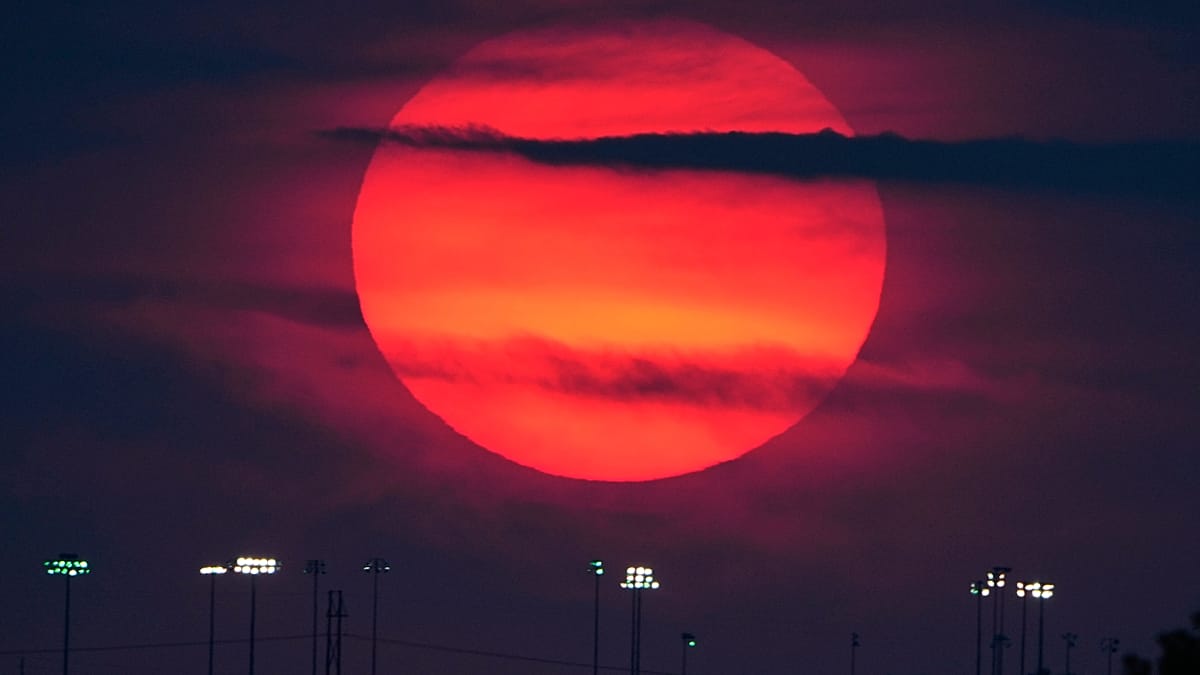
The outer planets of the solar system will be thrown into chaos roughly a billion years after the Sun dies, a new study has found, cutting their expected life span a billion-fold.

Previous estimates put the stability of the giant planets’ orbits at around a quintillion years, far longer than the current age of the universe.

Researchers at California’s Institute of Technology (Caltech) were investigating how the sun’s slow death would impact the outer planets including Jupiter, Saturn, Uranus and Neptune.

It was also previously believed by many scientists, including Isaac Newton, that the sun would shed its mass smoothly as it slowly died, transitioning first into a Red Giant and later a White Dwarf.

Earth, Venus and Mercury would be the first to go, consumed by the Sun as it expanded into a Red Giant, with Mars the lone survivor, sitting far enough away to escape the engulfment.

Earlier studies found the outer planets would survive this process, with their orbits widening to about twice their current size as the Sun lost mass. Their eventual break-up was expected to come only from passing stars, over 30 to 100 billion years.

The new findings suggest this picture is wrong. Instead, the outer planets will be thrown into disorder roughly one billion years after the Sun becomes a white dwarf, which is still billions of years away.

When the Sun becomes a white dwarf, it rapidly cools and shrinks to half its current size, but this will not be a smooth process and previously thought.

The research argues the star will lose its mass in violent, random ejections known as “stochastic kicks,” rather than a calm, consistent release.

The new findings suggest this picture is wrong. Instead, the outer planets will be thrown into disorder roughly one billion years after the Sun becomes a white dwarf, which is still billions of years away.

The solar system is 4.57 billion years old, and the Sun has around five billion years left before it swells into a red giant. Scientists had long assumed the giant planets would outlast it by an almost unimaginable stretch of time.

The research was carried out using high-performance supercomputers and hundreds of advanced N-body numeral simulations, with no AI tools involved whatsoever.

The researchers programmed a virtual model of the solar system containing the Sun, Jupiter, Saturn, Uranus and Neptune, which the supercomputers then calculated and simulated the velocity and position over billions of years.

What made this year analysis different from previous research was the scripting of the sun losing its mass as it died via random, violent, episodic bursts, with hundreds of different model iterations tested in order to come to a consensus conclusion.

The findings were reported in a study called ‘Terminal Instability of the Solar System Triggered by Stochastic Solar Mass Loss’, published in The Astrophysical Journal Letters.

Share. Facebook Twitter Pinterest LinkedIn Tumblr Email

Keep Reading

FBI blames North Korea for $6.3 billion Binance crypto hack

Nvidia CEO sees Kazakhstan as potential AI hub for Europe

UK probes Meta over ‘exploitative’ new terms for media as global pushback mounts

How the Binance hack happened and who was behind it?

2026 science Nobel Prizes: Who are the winners, and is there a gender gap problem? | Password

Mistral releases latest AI model for download, giving companies more control over their cybersecurity

US vs China: As the world splits into AI blocs, where does Europe stand?

Gene therapy beyond rare diseases with Alessandra Biffi

EU approves €319 million in state aid to Austrian ‘first of a kind’ next generation semiconductor factory

Editors Picks

Russian strikes leave thousands without power in Ukraine, says Zelenskyy – POLITICO

November 1, 2026

Swiss foreign minister makes first North Korea visit since 2003 as diplomatic office reopens

November 1, 2026

Video. Looted shops, burning barricades as riots erupt in Frankfurt

November 1, 2026

Video. Flags, banners and chants at youth protest in Berlin

November 1, 2026

Subscribe to News

Get the latest Europe and world news and updates directly to your inbox.

Latest News

Commission backs Tusk as he vows no compromise in court showdown – POLITICO

November 1, 2026

Video. Latest news bulletin | November 1st, 2026 – Midday

November 1, 2026

UK’s future lies in EU, says Rachel Reeves – POLITICO

November 1, 2026
Facebook X (Twitter) Pinterest TikTok Instagram
© 2026 Daily Guardian Europe. All Rights Reserved.
  • Privacy Policy
  • Terms
  • Advertise
  • Contact

Type above and press Enter to search. Press Esc to cancel.