
Close Menu
Daily Guardian EuropeDaily Guardian Europe
  • Home
  • Europe
  • World
  • Politics
  • Business
  • Lifestyle
  • Sports
  • Travel
  • Environment
  • Culture
  • Press Release
  • Trending
What's On

These are the easiest countries to be a digital nomad in, according to a new study

October 2, 2026

How Assisi marks 800 years since St Francis’s death and why he still embodies peace

October 2, 2026

17 countries join forces to oppose EU budget cuts – POLITICO

October 2, 2026

G7 agrees 100 million-barrel emergency oil release amid US pressure over diesel

October 2, 2026

Video. Mobile ebola laboratory cuts diagnosis times for patients in Congo

October 2, 2026
Facebook X (Twitter) Instagram
Web Stories
Facebook X (Twitter) Instagram
Daily Guardian Europe
Newsletter
  • Home
  • Europe
  • World
  • Politics
  • Business
  • Lifestyle
  • Sports
  • Travel
  • Environment
  • Culture
  • Press Release
  • Trending
Daily Guardian EuropeDaily Guardian Europe
Home»Lifestyle
Lifestyle

The solar system will fall apart far sooner than anyone thought, scientists say

By staffOctober 2, 20263 Mins Read
The solar system will fall apart far sooner than anyone thought, scientists say
Share
Facebook Twitter LinkedIn Pinterest Email

Published on
02/10/2026 – 16:50 GMT+2

The outer planets of the solar system will be thrown into chaos roughly a billion years after the Sun dies, a new study has found, cutting their expected life span a billion-fold.

Previous estimates put the stability of the giant planets’ orbits at around a quintillion years, far longer than the current age of the universe.

Researchers at California’s Institute of Technology (Caltech) were investigating how the sun’s slow death would impact the outer planets including Jupiter, Saturn, Uranus and Neptune.

It was also previously believed by many scientists, including Isaac Newton, that the sun would shed its mass smoothly as it slowly died, transitioning first into a Red Giant and later a White Dwarf.

Earth, Venus and Mercury would be the first to go, consumed by the Sun as it expanded into a Red Giant, with Mars the lone survivor, sitting far enough away to escape the engulfment.

Earlier studies found the outer planets would survive this process, with their orbits widening to about twice their current size as the Sun lost mass. Their eventual break-up was expected to come only from passing stars, over 30 to 100 billion years.

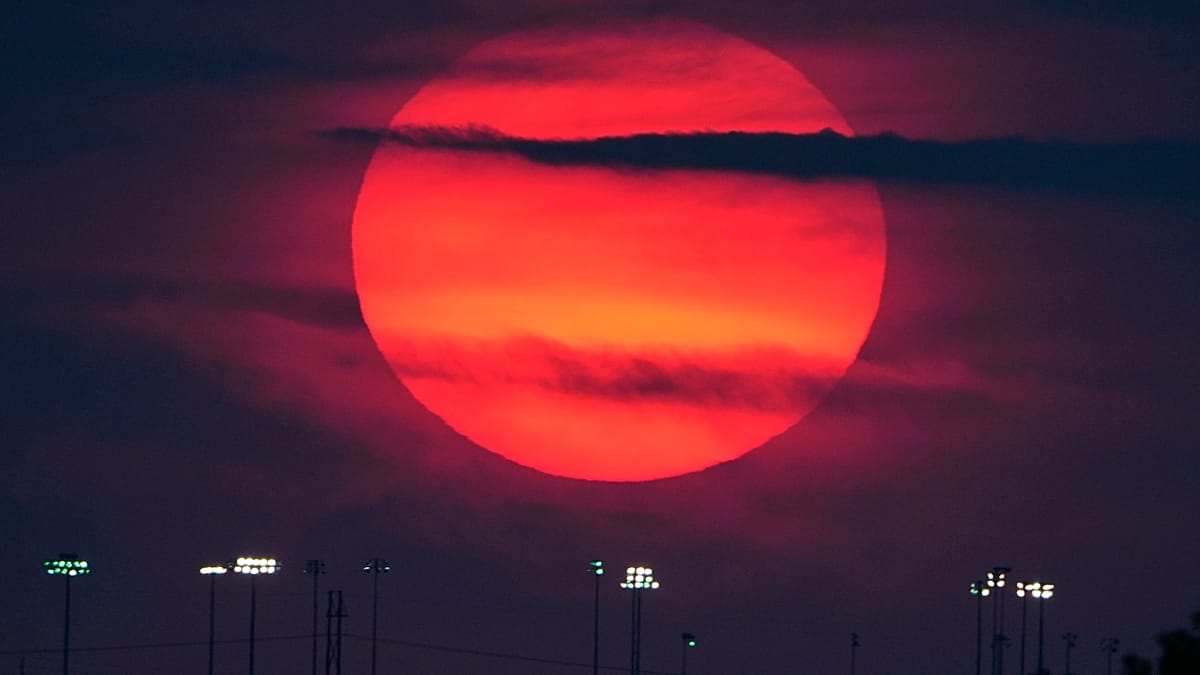
The new findings suggest this picture is wrong. Instead, the outer planets will be thrown into disorder roughly one billion years after the Sun becomes a white dwarf, which is still billions of years away.

When the Sun becomes a white dwarf, it rapidly cools and shrinks to half its current size, but this will not be a smooth process and previously thought.

The research argues the star will lose its mass in violent, random ejections known as “stochastic kicks,” rather than a calm, consistent release.

The new findings suggest this picture is wrong. Instead, the outer planets will be thrown into disorder roughly one billion years after the Sun becomes a white dwarf, which is still billions of years away.

The solar system is 4.57 billion years old, and the Sun has around five billion years left before it swells into a red giant. Scientists had long assumed the giant planets would outlast it by an almost unimaginable stretch of time.

The research was carried out using high-performance supercomputers and hundreds of advanced N-body numeral simulations, with no AI tools involved whatsoever.

The researchers programmed a virtual model of the solar system containing the Sun, Jupiter, Saturn, Uranus and Neptune, which the supercomputers then calculated and simulated the velocity and position over billions of years.

What made this year analysis different from previous research was the scripting of the sun losing its mass as it died via random, violent, episodic bursts, with hundreds of different model iterations tested in order to come to a consensus conclusion.

The findings were reported in a study called ‘Terminal Instability of the Solar System Triggered by Stochastic Solar Mass Loss’, published in The Astrophysical Journal Letters.

Share. Facebook Twitter Pinterest LinkedIn Tumblr Email

Keep Reading

AI decodes 217-year-old Napoleonic letter in 6 hours

Could the future of AI data centres be in space? Google wants to find out

Did Trump order Maduro’s kidnapping based on Grok’s advice?

Humanoid robots: China builds them, but Germany could supply the joints and hands

Rogue AI agents tried and failed to hack US and Canadian government websites

Tallinn Defence EXPO: Counter-drone systems and robot soldiers steal the show

Gimmick or recipe for success? Japan’s convenience stores test AI flavours

No more radio silence: EU plans cross-border lifeline for emergency services

Unlike the EU, Trump’s new AI pact lets tech companies police themselves

Editors Picks

How Assisi marks 800 years since St Francis’s death and why he still embodies peace

October 2, 2026

17 countries join forces to oppose EU budget cuts – POLITICO

October 2, 2026

G7 agrees 100 million-barrel emergency oil release amid US pressure over diesel

October 2, 2026

Video. Mobile ebola laboratory cuts diagnosis times for patients in Congo

October 2, 2026

Subscribe to News

Get the latest Europe and world news and updates directly to your inbox.

Latest News

The solar system will fall apart far sooner than anyone thought, scientists say

October 2, 2026

Iconic London hotel Dukes is set to reopen in mid-2027

October 2, 2026

Verhandlung mit China noch ohne Ergebnisse – POLITICO

October 2, 2026
Facebook X (Twitter) Pinterest TikTok Instagram
© 2026 Daily Guardian Europe. All Rights Reserved.
  • Privacy Policy
  • Terms
  • Advertise
  • Contact

Type above and press Enter to search. Press Esc to cancel.