
Galicia is deploying artificial intelligence and an expanded satellite and camera network to detect wildfires earlier, after a region long considered one of Europe’s most fire-prone areas suffered its most destructive season in decades last year.
The regional government is now implementing its “largest fire prevention plan in its history” with AI, a new app, more resources and a €213 million investment.
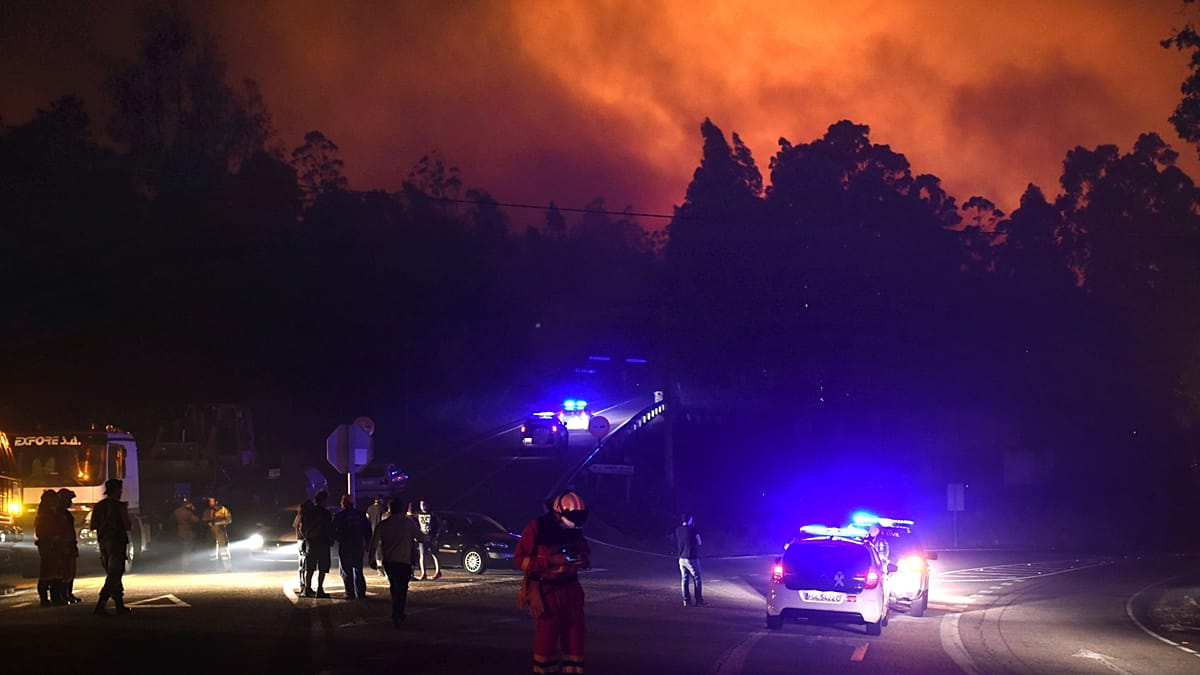
Wildfires burned more than 118,000 hectares across Galicia in 2025 — an area larger than Berlin, leading to them being referred to as “megafires” — according to figures released by the regional government, with the Larouco fire in Ourense becoming the largest single blaze in the region’s recorded history.
Galicia’s mix of dense forestry, an ageing rural population and land abandonment has long made it one of the most fire-affected regions in Europe, alongside Portugal and Greece.
How can AI help?
The AI systems work by feeding a constant stream of images, whether from ground-based cameras or, in some cases, orbiting satellites, into models trained to recognise the visual signatures of a fire starting: a rising column of smoke, a heat signature, or a specific pattern of colour and movement across the landscape.
When the system flags a possible match, it sends an automatic alert, which a technician then checks before crews are deployed.
The aim is to shrink the gap between ignition and detection from hours to minutes, since a fire caught within its first few minutes can often be contained to a small area, while one that burns unnoticed overnight or in a remote valley can spread across thousands of hectares before anyone responds.
Presenting the update to Galicia’s wildfire prevention plan, regional president Alfonso Rueda said the changes were designed to “adapt to the new types of fires” of “enormous intensity” seen in recent summers, according to Galicia Press.
Galicia has built this capability into Xeocode, the region’s internal fire management platform, ahead of the high-risk season that began on 1 July.
The system uses convolutional neural networks, a type of AI model suited to recognising patterns in images, to identify smoke rising from any of the 241 surveillance cameras installed in high-risk parishes across the region.
Two years of pilot testing found the system could detect a fire from more than 15 kilometres away, rising to 25 kilometres in favourable weather.
Other countries deploying AI
Galicia is not alone in turning to AI and space technology to fight fires.
The approach reflects a wider shift across fire-prone parts of Europe and beyond, as 2025 was the EU’s most destructive wildfire season on record, with more than 1,079,000 hectares burnt across 25 of the 27 member states.
Greece has gone furthest, becoming the first country to integrate a dedicated satellite constellation into its national firefighting system.
Four nanosatellites, each smaller than a piece of carry-on luggage and built by German company OroraTech, scan the country twice a day, with thermal sensors designed to flag blazes as small as four metres across.
When a fire is detected, AI-processed data on its location, size and intensity is sent directly to national commanders, helping them prioritise resources when multiple fires break out at once.
The models are also trained to filter out false alarms, such as sun-warmed rock faces, solar panels or overheated factory roofs, before an alert ever reaches emergency services.
Portugal, which has the largest cumulative burnt area of any European country over the past two decades, has also begun integrating satellite-based detection into its national response, as fire-prone southern European states increasingly turn to the same combination of cameras, satellites and machine learning that Galicia is now rolling out.