
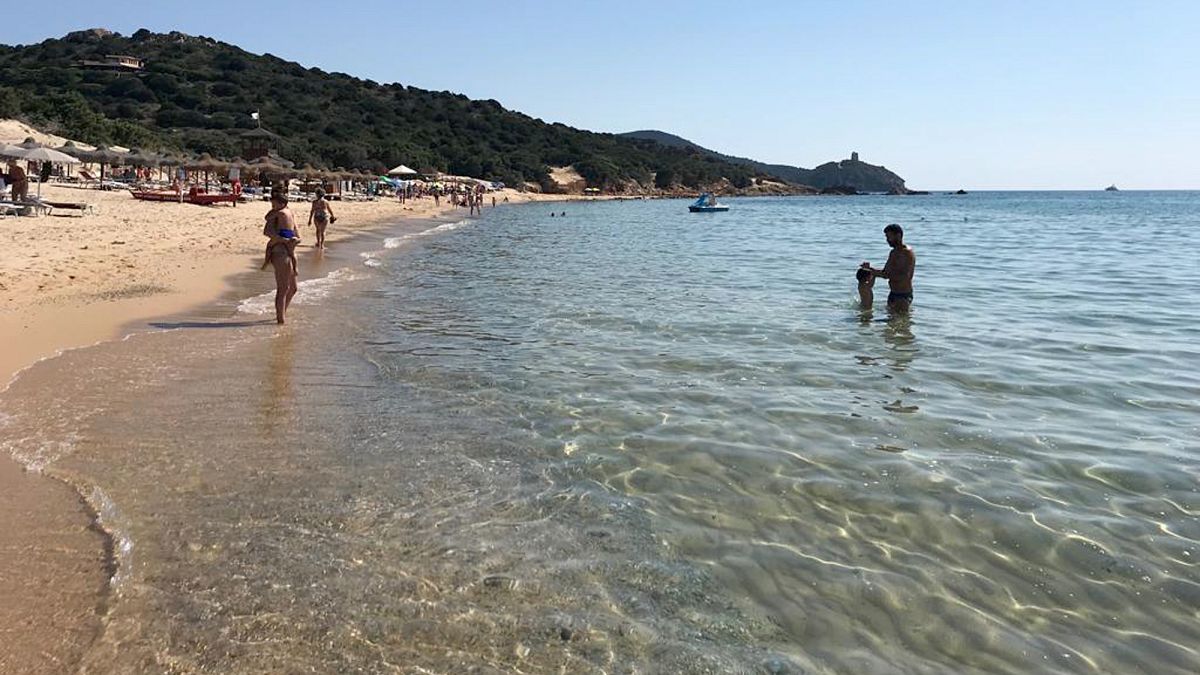
End of the special economic zone in Cala Finanza, in north-eastern Sardinia. The Tavolara glamping site was in danger of turning into an Albanian-style national scandal.
There are many similarities between the resort Donald Trump’s son-in-law wants to build in the lagoon near Vlorë and the Tavolara Bay project in Cala Finanza, in north-eastern Sardinia. But the Italian government has stepped in and withdrawn the authorisations, upholding the demands of those who were protesting.
As of 2 July, the luxury tourism project in the municipality of Loiri Porto San Paolo – opposite the island of Tavolara and 20 km south of Porto Rotondo – run by the company Tavolara Bay no longer has government authorisations. The Department for the South at Palazzo Chigi has ordered the revocation of the authorisation granted on 6 February 2026, which had given the green light to the project.
The news was announced by the mayor of Loiri Porto San Paolo himself, Francesco Lai, who also found himself at the centre of protests by Sardinians who staged rallies and demonstrations to voice their opposition to the property development.
Who protested against the Tavolara Bay property development
A major victory for residents, civic groups and environmentalists who coordinated among themselves and mounted strong protests. Alongside WWF, Legambiente and Italia Nostra were, among others, the Gruppo di intervento giuridico, Liberu, Rosso Mori, the Comitato Costituzione attiva Sassari, Surra, Movimento ambiente Sardegna, Bardianía de sa Nurra, Gruttes and Nurnet.
The area, in addition to being part of a marine protected area where, under a national law, an absolute building ban is in force, is protected by the regional landscape plan, with which in 2006 Renato Soru effectively locked down Sardinia’s coasts by stipulating that no construction sites may be opened within 300 metres of the sea.
Why a special economic zone was needed to build a glamping site in Cala Finanza
To get around these rules, one of Brazil’s leading property developers, Jsfh, had asked the government to apply the simplified ZES authorisation procedures. And they had been given the go-ahead.
But the president of the Sardinian regional government herself, Alessandra Todde, filed an appeal with the regional administrative court (TAR) (source in Italian) (the hearing is scheduled for 8 July) and says she is ready to take the case all the way to the Constitutional Court.
The government’s green light concerned only a strip of land facing the sea where the Brazilian company wanted to build a “glamour camping” site by refurbishing an old villa and installing around twenty removable cabins, with no increase in total floor space.
However, resorting to ZES procedures even just to secure approval for this first stage would still have been extremely serious, as it would have sidestepped national and regional landscape and environmental restrictions.
According to Mayor Lai, this victory should serve as a warning for the future: “This affair must be a lesson. For everyone. For investors, first and foremost: Sardinia is not up for grabs.”