
By Dianne Apen-Sadler
Published on
The world of aviation is constantly innovating, from the expansion ofgreen fuelsto theplanned return of supersonic flights.
One such innovation, arguably the most visible to passengers, is the introduction of speedy in-flight WiFi.
Long gone are the days of putting your phone into flight mode before cracking open a book you abandon after a few pages in favour of watching Crazy Rich Asians again.
Now, we’re constantly connected: Where you might once have been lucky to send a text-based message, now you can actually stream videos in high quality – and a lot of that is down to the satellite internet provider Starlink.
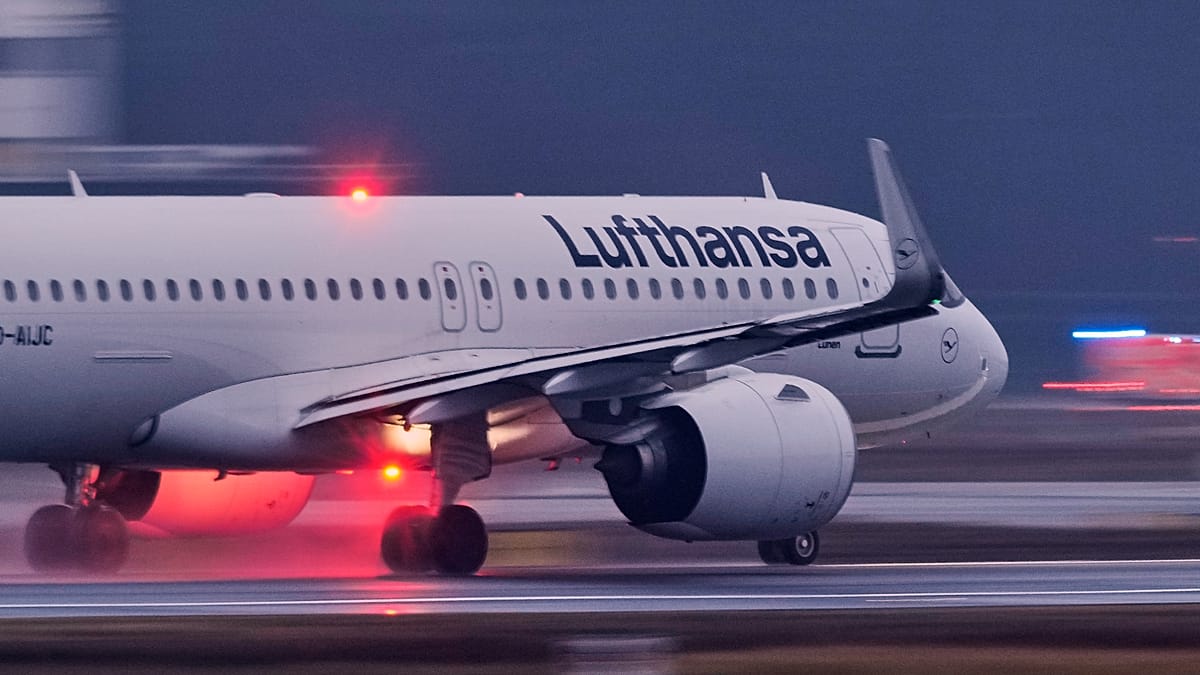
With Lufthansa Group becoming the latest to announce the introduction of the technology on its planes, we thought we’d take a look at how it all works, and which airlines to fly with if you’re not satisfied with just the in-flight entertainment.
What is Starlink and how does it work?
Starlink, which is a subsidiary of Elon Musk**’**s SpaceX, offers internet access across the globe by using a constellation of satellites.
When a user accesses the internet via Starlink, data is transmitted to one of the more than 6,750 satellites currently in orbit, which is then sent to a receiving dish on board.
Unlike traditional satellites, which orbit the Earth nearly 36,000 km above the equator, Starlink’s satellites use a low Earth orbit.
While the information sent travels at the speed of light, the shortened distance to the satellite does make the round-trip time shorter. Known as latency, this is measured in milliseconds, with Starlink’s latency being around 25 ms, compared with 600 ms when using traditional satellites.
The sheer amount of Starlink satellites in orbit means that the company has created a global mesh that allows people in some of the world’s most remote areas to access the internet, making it perfect for use on board an aircraft.
Which airlines are offering it?
SpaceX first began launching Starlink satellites in 2019, with a beta launch of its internet service in 2020.
It wasn’t until early 2024 that the first airline began rolling out the service across its fleet, with Hawaiian Airlines adding it to all aircraft by October 2024. Qatar Airways quickly followed suit, with the roll-out beginning the same month, and now around 120 aircraft are Starlink-equipped.
Latvian airlineairBalticbecame the first to introduce the service in Europe, starting from February 2025, with Air France and SAS also introducing Starlink last year.
Lufthansa is the latest to announce a collaboration with the internet provider, with plans to roll out Starlink across its fleet from the second half of 2026. Virgin Atlantic will become the first UK airline equipped with Starlink beginning in the third quarter of the year.
For the most part, airlines are offering the service to customers for free, although in some cases you will need to be a member of the airline’s loyalty programme (which again is usually free to join).
…and which airlines aren’t
Traditionalists (and those jumping on the raw-dogging flight trend), don’t worry: Not every airline is jumping on the bandwagon, including Europe’s largest.
Ryanair CEO Michael O’Leary told Reuters that the airline will not be introducing the service due to the short length of its average flight times, as well as the costs associated with installing the device.
No budget airline currently offers Starlink, although Eurowings is part of the Lufthansa Group, and so will be adding the service in the coming months. Barcelona-based Level will also roll out Starlink at the end of the year.