
Close Menu
Daily Guardian EuropeDaily Guardian Europe
  • Home
  • Europe
  • World
  • Politics
  • Business
  • Lifestyle
  • Sports
  • Travel
  • Environment
  • Culture
  • Press Release
  • Trending
What's On

Magyar hints at ending Hungary’s block on €90B Ukraine loan – POLITICO

April 13, 2026

Britain won’t support Trump’s Iran blockade, says Starmer – POLITICO

April 13, 2026

Video. Thailand marks Songkran New Year with water fights and travel surge

April 13, 2026

How Orbán lost the Hungarian election – POLITICO

April 13, 2026

The forint verdict: How investors are reacting to a landslide Hungarian opposition victory

April 13, 2026
Facebook X (Twitter) Instagram
Web Stories
Facebook X (Twitter) Instagram
Daily Guardian Europe
Newsletter
  • Home
  • Europe
  • World
  • Politics
  • Business
  • Lifestyle
  • Sports
  • Travel
  • Environment
  • Culture
  • Press Release
  • Trending
Daily Guardian EuropeDaily Guardian Europe
Home»Lifestyle
Lifestyle

‘6G is a revolution, not an evolution’ and Europe should lead it, says Qualcomm

By staffMarch 4, 20263 Mins Read
‘6G is a revolution, not an evolution’ and Europe should lead it, says Qualcomm
Share
Facebook Twitter LinkedIn Pinterest Email

Semiconductor giant Qualcomm has set an ambitious 2029 date for 6G commercialisation and says the next generation of wireless is a “revolution, not an evolution,” that Europe should lead.

The tech company aims for 6G pre-commercial deployments beginning as early as 2028, which will be key to artificial intelligence, connectivity, and high-performance computing taking off.

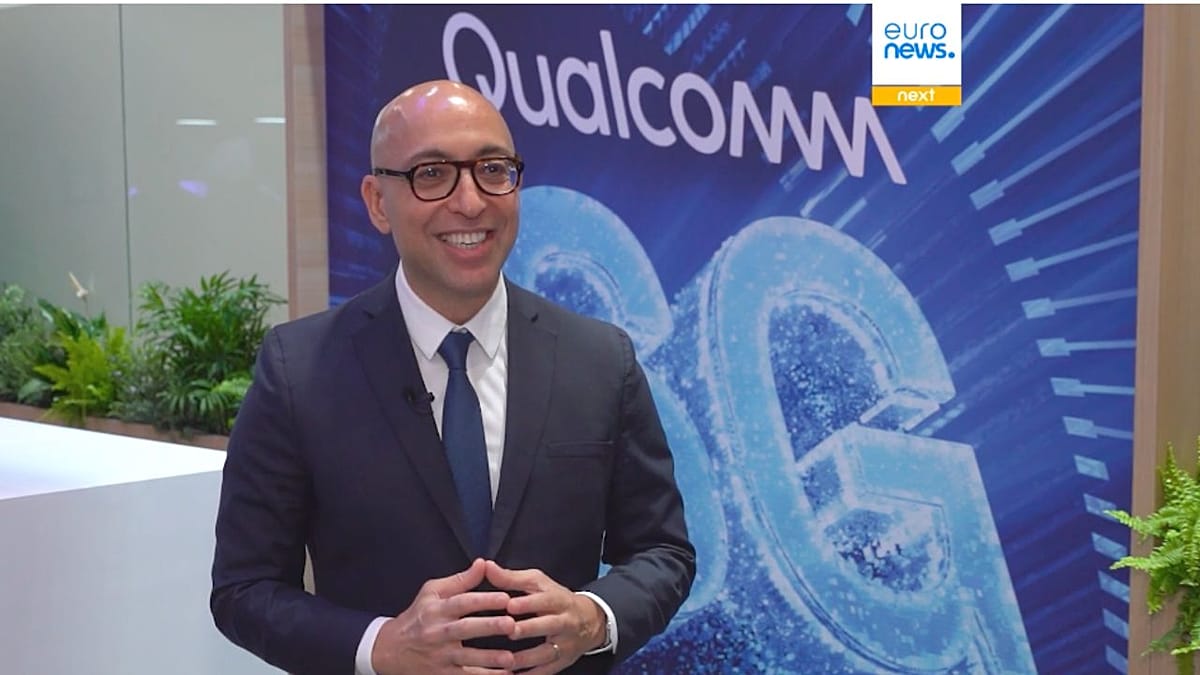
“6G is not an evolution, it’s a revolution, and Europe should be completely a leading continent on 6G,” said Wassim Chourbaji, Qualcomm’s president for the Middle East and Africa and senior vice president for government affairs for Europe, the Middle East and Africa.

Speaking to Euronews Next at the Mobile World Congress (MWC) tech fair in Barcelona, he said Qualcomm is positioning 6G as a platform for physical AI, the next wave of AI that interacts with the physical world, such as robotics and smart glasses.

Giving the example of smart glasses, he said that the video streams need to go back to the data centre, to the network to be processed and tokenised. For that, “you need a big upload and that’s something 6G will enable,” he said.

Another benefit of 6G is that it introduces sensing capabilities so objects can be detected and tracked, such as cars or drones, which he said was “super important” for national security applications.

Qualcomm announced at MWC a new coalition aimed at accelerating 6G development, drawing in several European partners, including Nokia and Ericsson, as well as US companies Amazon, Google and Microsoft.

On the issue of Europe’s AI sovereignty, Chourbaji argued for a so-called “hybrid AI” model that would distribute computing across devices, edge networks, and the cloud.

‘Europe can be a leader’

But he said that the AI must speak your own language and culture.

“When you’re engaging today with your device, with AI, the computer understands you, speaks your language. You need to integrate large language models that are local by nature, that understand your culture,” he said.

These locally embedded models will represent a practical and tangible layer of digital sovereignty, not just a policy ambition.

“We are supporting and working very hard with European governments and European industries to partner on sovereignty layers,” Chourbaji said.

Qualcomm’s European footprint spans R&D and engineering operations in Germany, France, Ireland, Spain, Italy, and Sweden, which the company says positions it as a natural partner for the continent’s digital transformation ambitions across automotive, industrial, and defence sectors.

Though the US-based company is multinational, Europe is a key market and one with a strong history of manufacturing.

“Europe has great assets, precise manufacturing, critical infrastructure, defence, automotive and smart transportation,” he said.

“Bringing those capabilities together with 6G technology and AI, I do believe that Europe can be a leader.”

Share. Facebook Twitter Pinterest LinkedIn Tumblr Email

Keep Reading

How satellites are driving cooperation beyond the Central Asian region

How will AI impact tourism and travel? Your next trip could be entirely planned by ChatGPT

‘Riding a fireball through atmosphere’: How Artemis II astronauts will return to Earth

Swiss researchers test robot dog designed to speed up Moon and Mars exploration

Robot taxes, four-day work week: Inside OpenAI’s plan for an AI-driven economy

Artemis II crew head back towards Earth after completing record-breaking lunar flyby

Humanoid robots inspire a new generation to build machines

Can brain cells run computers? This startup powers data centre using human neurons

‘Kids will find a way around it’: Europeans on proposed social media bans for children

Editors Picks

Britain won’t support Trump’s Iran blockade, says Starmer – POLITICO

April 13, 2026

Video. Thailand marks Songkran New Year with water fights and travel surge

April 13, 2026

How Orbán lost the Hungarian election – POLITICO

April 13, 2026

The forint verdict: How investors are reacting to a landslide Hungarian opposition victory

April 13, 2026

Subscribe to News

Get the latest Europe and world news and updates directly to your inbox.

Latest News

How satellites are driving cooperation beyond the Central Asian region

April 13, 2026

Combined air-rail tickets: How to fly, ride and explore Europe on one booking

April 13, 2026

‘What House Are You From?’: A daughter’s take on her mother’s exile from civil war in Spain

April 13, 2026
Facebook X (Twitter) Pinterest TikTok Instagram
© 2026 Daily Guardian Europe. All Rights Reserved.
  • Privacy Policy
  • Terms
  • Advertise
  • Contact

Type above and press Enter to search. Press Esc to cancel.