
Close Menu
Daily Guardian EuropeDaily Guardian Europe
  • Home
  • Europe
  • World
  • Politics
  • Business
  • Lifestyle
  • Sports
  • Travel
  • Environment
  • Culture
  • Press Release
  • Trending
What's On

Video. Eurovision winner Dara turns Sofia into a giant ‘Bangaranga’ party

May 20, 2026

Are lasers the key to GPS like navigation on the Moon?

May 20, 2026

The world has 6 months to avert Hormuz-linked food crisis, says UN – POLITICO

May 20, 2026

As Iran mulls tariffs on Hormuz internet cables, how might the fees threaten Europe?

May 20, 2026

Tehran’s tiered internet leaves most Iranians in the dark 82 days on

May 20, 2026
Facebook X (Twitter) Instagram
Web Stories
Facebook X (Twitter) Instagram
Daily Guardian Europe
Newsletter
  • Home
  • Europe
  • World
  • Politics
  • Business
  • Lifestyle
  • Sports
  • Travel
  • Environment
  • Culture
  • Press Release
  • Trending
Daily Guardian EuropeDaily Guardian Europe
Home»Lifestyle
Lifestyle

Are lasers the key to GPS like navigation on the Moon?

By staffMay 20, 20262 Mins Read
Are lasers the key to GPS like navigation on the Moon?
Share
Facebook Twitter LinkedIn Pinterest Email

Published on
20/05/2026 – 14:05 GMT+2

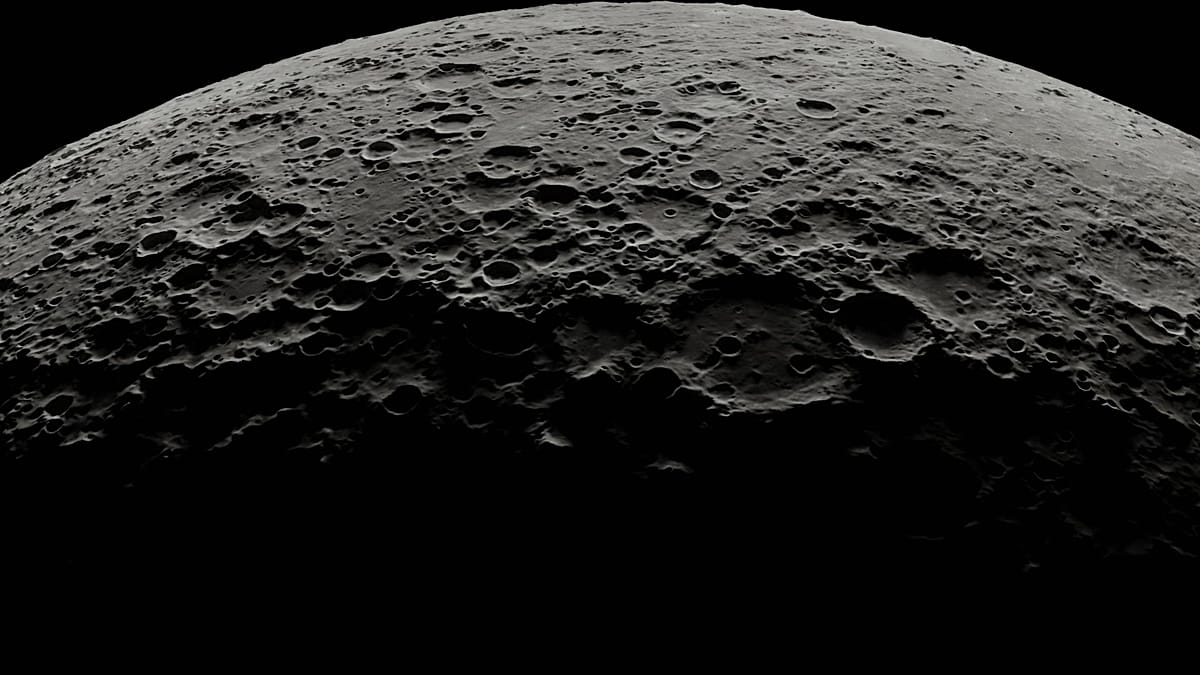
Scientists have proposed building extremely stable lasers in the Moon’s darkest craters to help future spacecraft navigate and keep time more accurately, according to a new study.

Researchers at NASA’s Jet Propulsion Laboratory and the National Institute of Standards and Technology, in the United States, proposed in a peer-reviewed study placing a small silicon device inside one of the Moon’s permanently shadowed craters to stabilise laser light.

Once stabilised, the laser could be used as a timing and navigation signal for future lunar missions.

Scientists say it could help spacecraft land safely, support a GPS-like system on the Moon and improve communication between satellites.

Why the Moon’s darkest craters?

Permanently shadowed craters have long interested scientists because they may contain water ice and other resources needed for future lunar missions.

But they are also difficult to study because they receive little or no sunlight, making landing, movement and direct observation challenging.

The study suggests lowering a small silicon device, called an optical cavity, into one of these craters to stabilise a laser by controlling the light passing through it.

The device works by reflecting light between two mirrors. For the laser beam to remain stable, the distance between those mirrors must stay almost perfectly constant.

Researchers say the deep cold inside the craters would help achieve this.

Because the silicon would barely expand or shrink in such low temperatures, the laser signal could remain far steadier than on Earth.

Researchers also believe a network of these lasers could help detect tiny changes in distance between objects on the Moon, potentially opening new ways to study gravity and space-time.

The team says the technology could first be tested in low Earth orbit before being deployed on the lunar surface within the next few years.

Share. Facebook Twitter Pinterest LinkedIn Tumblr Email

Keep Reading

Google announces sweeping AI overhaul of its search engine

Joint ESA–China mission begins mapping Earth’s protective magnetic field

Bible bytes: The Pope and Anthropic co-founder join forces on AI ethics

The EU’s plan to tackle 'cookie fatigue'

China’s Unitree unveils a rideable, wall-smashing robot straight out of science fiction

Malta offers free ChatGPT Plus access to its citizens through a national AI program

NASA’s Psyche spacecraft to race past Mars in hunt for clues about how Earth was formed

Europe’s AI defence revolution: who’s leading and what comes next?

What did Sam Altman say at the Elon Musk OpenAI trial

Editors Picks

Are lasers the key to GPS like navigation on the Moon?

May 20, 2026

The world has 6 months to avert Hormuz-linked food crisis, says UN – POLITICO

May 20, 2026

As Iran mulls tariffs on Hormuz internet cables, how might the fees threaten Europe?

May 20, 2026

Tehran’s tiered internet leaves most Iranians in the dark 82 days on

May 20, 2026

Subscribe to News

Get the latest Europe and world news and updates directly to your inbox.

Latest News

The UN has bad news for global growth as Middle East crisis continues

May 20, 2026

Google announces sweeping AI overhaul of its search engine

May 20, 2026

Czech hospital to monitor doctor exposed to Ebola in Uganda – POLITICO

May 20, 2026
Facebook X (Twitter) Pinterest TikTok Instagram
© 2026 Daily Guardian Europe. All Rights Reserved.
  • Privacy Policy
  • Terms
  • Advertise
  • Contact

Type above and press Enter to search. Press Esc to cancel.