
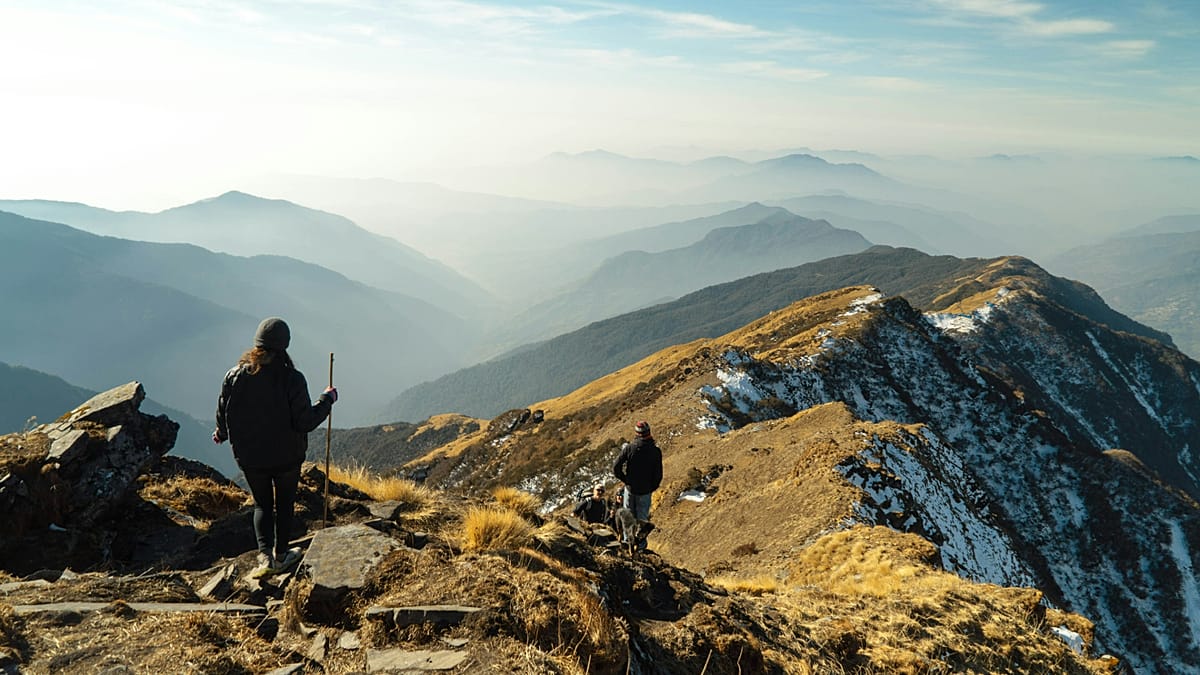
Over the past few years, hiking trails have become one of the most popular tourist attractions. They are luring visitors looking to travel slowly, see more authentic sides of destinations, and escape soaring summer temperatures.
Dozens of new routes have opened or been renewed, from the world’s longest circular route in Portugal to the Path of Love in Italy.
But there’s another side to the hiking boom. Extreme weather phenomena and global warming are making some trails unsafe, while excessive visitor numbers are damaging local environments.
Together, it means many paths are restricting access, introducing higher visitor fees, or closing altogether.
Hiking trails in Europe close amid rockfall and landslide risks
Last summer, dozens of trails were temporarily closed in the Alps following perilous rockfalls.
Hundreds of hikers and tourists were evacuated from the slopes of Cima Falkner in the Brenta Dolomites of northern Italy in July, with experts warning that the sudden increase in landslides in the area was connected to thawing permafrost.
“Never before have we seen such an incredible increase in rockfalls,” Piero Carlesi, president of the scientific committee of the Italian Alpine Club (CAI), told national newspaper La Repubblica at the time. “Landslides are on the rise, and the main cause is the climate crisis. There’s no doubt about it.”
In Switzerland last year, hiking trails were closed well into autumn due to weather and climate concerns.
Over 70 routes, from the Lower Engadine in the east of Switzerland to Lower Valais on the border with France, were off-limits for safety reasons.
Vera In-Albon, digital communications manager at Swiss hiking trail organisation Schweizer Wanderwege, told local press that drier summers, heavier rainfall, hotter days and less snowy winters are all behind the rise in risks to hikers.
“Prolonged and intense precipitation favours rockfalls, torrents and landslides in some places,” she said.
“Rockfalls tend to increase in alpine and high alpine terrain where the permafrost is thawing, while landslides could also become more frequent in the foothills of the Alps or in the Jura.”
Increased interest in hiking strains natural environments
At the beginning of the year, the authorities of Mount Rinjani National Park on the Indonesian island of Lombok announced the temporary closure of all hiking trails until 31 March, 2026.
“This closure is for the safety of visitors and the future of Rinjani itself,” Budhy Kurniawan, head of the park’s office, said.
The rainy season brings heightened risks, including slippery terrain, dense fog, and overflowing waterways.
“The risk of hypothermia and accidents increases significantly, so safety is the top priority,” Kurniawan said.
But he emphasised that the closure is also to give the mountain’s ecosystem a chance to recover, allowing flora to regenerate and fauna to resettle.
Increased human presence along hiking trails is putting pressure on natural environments around the world.
Japan introduced a fee for hikers wishing to climb up Mount Fuji using any of its four main paths last summer.
The country’s highest mountain has been struggling with overtourism, which is causing pollution and safety concerns. The levy aims to help clean up the mountain and preserve its environment.
Already, visitors had to pay ¥2,000 (€12.35) to hike up the Yoshida trail. This is the most popular ascent thanks to its easy access from Tokyo and the frequency of mountain huts en route offering accommodation and meals.
Now, the fee to hike the iconic trail has doubled to ¥4,000 (€24.70), a charge which now also applies to three other routes that were previously free.
Local authorities also implemented a 4,000 people per day limit on hikers using the Yoshida trail to ease congestion.
Europe pushes back against an influx of hikers
Sweltering summer temperatures are pushing more tourists in Europe towards ‘coolcations’, which often involve hiking in mountainous areas.
In some cases, the surge in popularity has put unsustainable strain on natural destinations.
Last year, Madeira introduced a new fee for non-residents on some of its most popular hiking trails to help fund conservation efforts.
The surcharge was already applied to seven of the most trafficked routes, but was expanded to all recommended trails on the Portuguese archipelago from January 2025.
With steep peaks, verdant forests, and lush waterfalls, the archipelago’s hiking trails are some of its top visitor draws.
The trail charge aims to manage the flow of visitors on paths and help protect the natural landscape by funding trail maintenance, cleaning and preservation efforts.
In Italy, tensions between communities and local councils are growing over overtourism in the Alps, with a hiking trail on Seceda mountain becoming the poster child for this battle.
The route in the Dolomites has become renowned for its dramatic views of the spiky Odle Peaks, and camera-wielding tourists become a nightmare in summer for residents of the area in South Tyrol.
At the beginning of July, a group of frustrated local farmers briefly set up a turnstile with a toll on the Odle trail to protest against the constant passage of tourists who, they say, disrespect the area.
“The trails are abandoned and the meadows are full of rubbish,” they said in a statement.
The landowners said they were obliged to charge a toll to compensate for the damage to their land and to fund their upkeep of the slopes.