
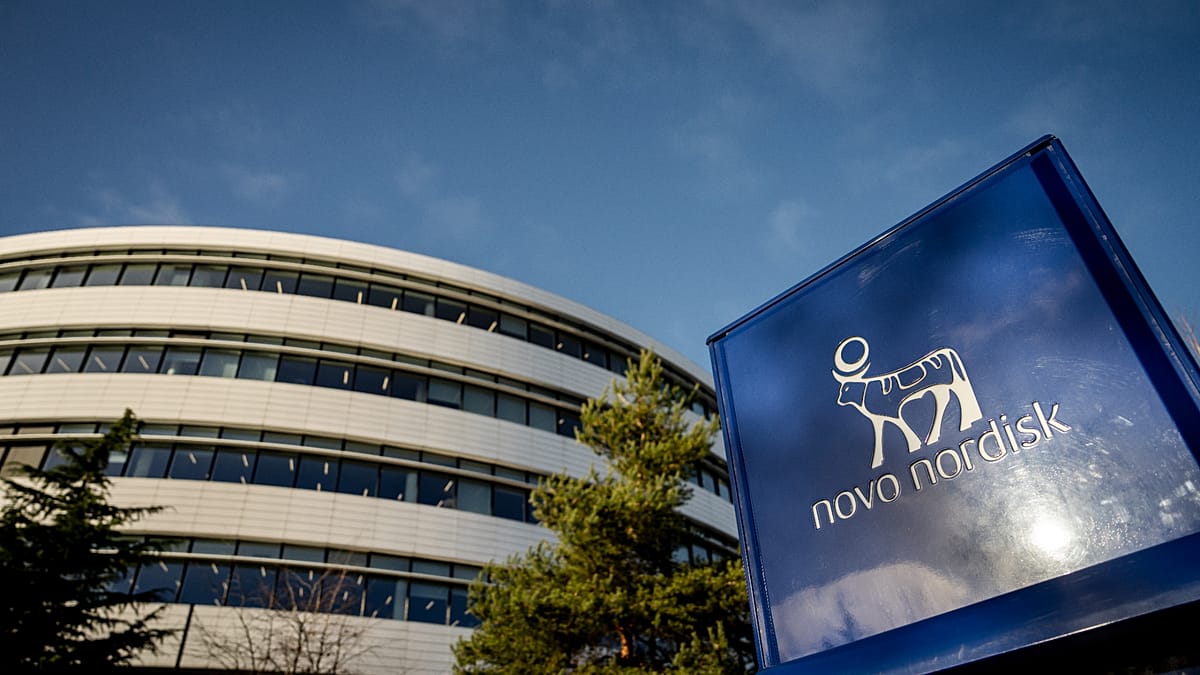
As Denmark begins talkswith the United States over a potential Greenland deal, the country’s largest industry may not give it much leverage in negotiations, experts told Euronews Health.
Denmark’s top exports to the United States are chemicals and related products, including pharmaceutical, worth approximately DKK 21.5 billion (€2.8 billion) in 2024, and 34 percent of the country’s exports across the Atlantic, according to Statistics Denmark.
At the heart of this trade is Novo Nordisk, the Danish pharmaceutical giant behind popular weight loss and diabetes drugs Ozempic and Wegovy.
The company holds approximately 43 per cent of the US market share for weight loss drugs, according to the American financial firm Morningstar, and remains a major player despite competition.
But the new geopolitics of pharmaceutical trade could backfire if there are any restrictions on Denmark’s products during the talks.
“Denmark would be shooting itself in the foot because they wouldn’t have a lot of leverage,” Marta Wosinska, a healthcare economist and senior fellow at the American think tank Brookings, told Euronews Health.
“It would not be a very smart move for them to do this.”
‘It’s not an antibiotic or a cancer medicine’
The active ingredient in Ozempic and Wegovy, semaglutide, is mostly manufactured in Denmark. While the pens patients use to inject themselves with the drug are filled both in Denmark and in the US state of North Carolina, according to Prashant Yadav, senior fellow for global health at the American think tank, The Council on Foreign Relations.
These distinctions matter when governments decide at which manufacturing stage to impose a tariff or sanction, Yadav added, because they can raise complex questions about which country will bear the additional cost.
“The US could impose high tariffs on finished products, but because Novo already carries out fill-and-finish operations in North Carolina, it would be difficult to use tariffs to fully squeeze the company out of the US market,” he said.
Denmark could theoretically restrict the export of semaglutide to the US, but Yadav said the impact would be limited.
Sanctions on medications work best when the drug is essential, which Wegovy and Ozempic are not, despite their effective treatment for patients with diabetes, he said.
“It’s not like an antibiotic or a cancer medicine where things in a health system will completely fall apart because you don’t have [it].”
Ozempic could be replaced by Mounjaro
Novo Nordisk also faces a major US challenger, Eli Lilly, the global pharmaceutical company behind weight loss drug Mounjaro.
The market share is “somewhat evenly split” between Eli Lilly and Novo Nordisk, which means the US has a “large dependency” on Danish obesity drugs, Yadav said.
China, Canada, Japan, and European countries are Novo Nordisk’s largest markets after the United States, the company wrote in a 2024 business filing to the US Securities and Exchange Commission (SEC).
Yet, Yadav said none of these markets are big enough to replace the US-sized hole in Novo Nordisk’s profits if controls were put in place.
“The US is about 70 percent of Novo Nordisk’s market for semaglutide,” Yadav estimated.
Novo Nordisk and Eli Lilly products are also similar enough that a patient on one could take the other if need be, Yadav and Wosinska argued.The only obstacle with switching from one to the other is getting a doctor’s prescription, Wosinska said.
Yadav said some patients might have to switch from Novo Nordisk’s oral Wegovy tablet to an injection if there were any restrictions on the company’s products in the US, but the number of patients on this form of Wegovy is quite small.
The Wegovy tablet was only approved by the American Food and Drug Administration (FDA) in December, according to Novo Nordisk.
Eli Lilly is conducting medical trials on their own pill, which early results show can maintain the same weight loss results that patients are seeing on injectables like Wegovy or Ozempic.
“If [Novo Nordisk] sort of disappears for a certain amount of time from the market, and the tablet of Eli Lilly’s product comes out, that would be a major, major loss for Novo ,” Wosinska added.
Shortage could bring ‘unapproved’ semaglutide products to US shelves
Restrictions on semaglutide products by either Denmark or the US, would also mean that the drug would be considered “in shortage,” by the FDA, Wosinska said.
Medications are protected by 20-year patents that give the manufacturer exclusive rights to make, use, and sell the drug, according to the FDA.
If a medication like semaglutide is on a shortage list, a loophole in US law states authorised pharmacies are able to legally modify branded drugs to make an “unapproved version” of it in a process called “compounding,” Wosinska said.
“[The pharmacies] might say, we’re going to have a very different dosing regimen for [patients]’ … or they might add vitamin D to it,” Wosinska said. “One could argue that they might not be substantial enough [changes], but the law doesn’t define this customisation very clearly.”
In 2022, the FDA listed Novo Nordisk’s semaglutide and Eli Lilly’s tirzepatide, the active ingredient in Mounjaro, on the shortage list because of highdemand, according to a statement from the administration. Both drugs are no longer in shortage.
After the shortage, Novo Nordisk filed more than 130 lawsuits against US companies in 40 states that sold unapproved versions of semaglutide, the active ingredient in Wegovy and Ozempic, according to the company.
Wosinska said Novo Nordisk would have to disclose to the FDA any disruption in semaglutide supply if Denmark chooses to impose any restrictions in the US market, and it would likely be put back on the shortage list.