



Published on
The World Health Organization has raised its public health risk from the Ebola outbreak from “high” to “very high” in the Democratic Republic of Congo.
In an update on Friday, Tedros Adhanom Ghebreyesus, the head of the agency, said 82 cases had so far been confirmed in the country, with seven confirmed deaths.
“But we know the epidemic in the DRC is much larger,” Ghebreyesus said, adding that there were around 750 suspected cases and 177 suspected deaths.
The Director-General said the global risk from the disease remained low.
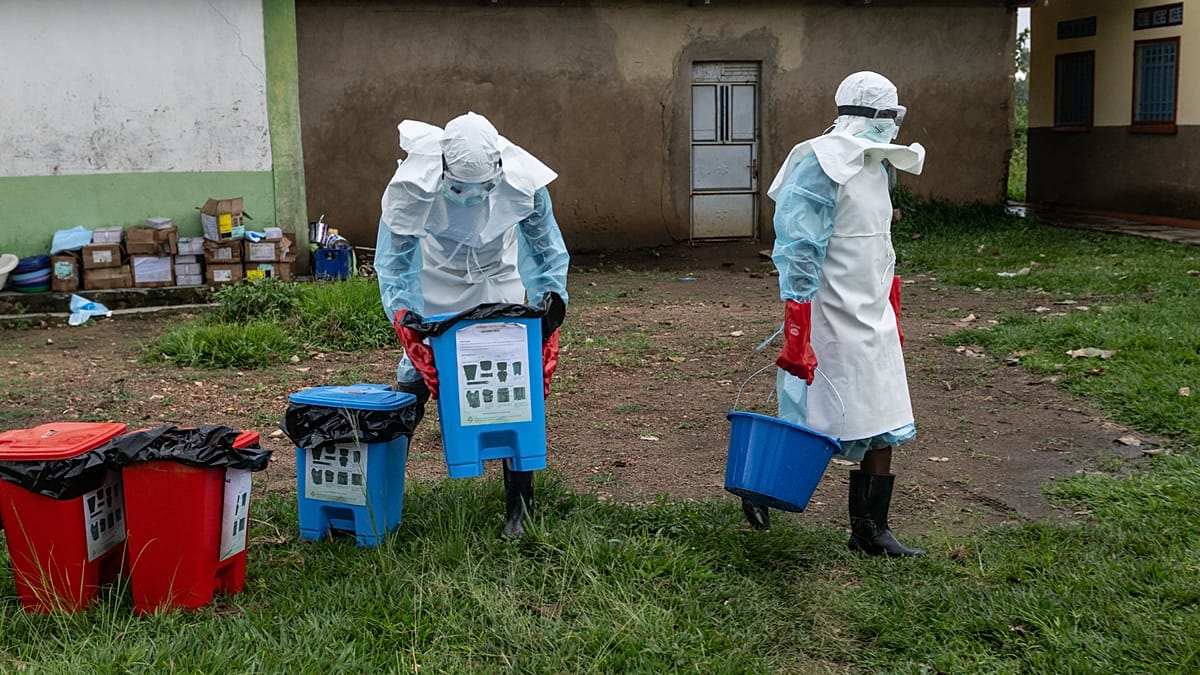
The outbreak has been caused by the rare Bundibugyo virus, which has no proven vaccine. It has also spread into neighbouring Uganda, where two cases have been confirmed and one death.
A US national who had been working in the DRC has been confirmed to have contracted the disease and was transferred to Charité hospital in Berlin for treatment earlier this week.
The hospital said on Friday that the man was “severely weakened” but was not critically ill.
“Because the course of the illness can change, he remains under close observation and is receiving treatment. He is being cared for in the high-security area of the specialized isolation unit,” it said.
Tedros said the WHO was also aware of reports that another US national deemed to be a high-risk contact had been transferred to the Czech Republic.
In the Netherlands, Radboud University Hospital said Friday that it had admitted a patient with a “low suspicion” of Ebola and had put them in isolation pending the result of diagnostic tests.
Ebola is a severe and deadly illness first identified in 1976. According to the Centers for Disease Control and Prevention, up to 90% of cases of Ebola are fatal. Symptoms can include fever, weakness, diarrhea and vomiting.