
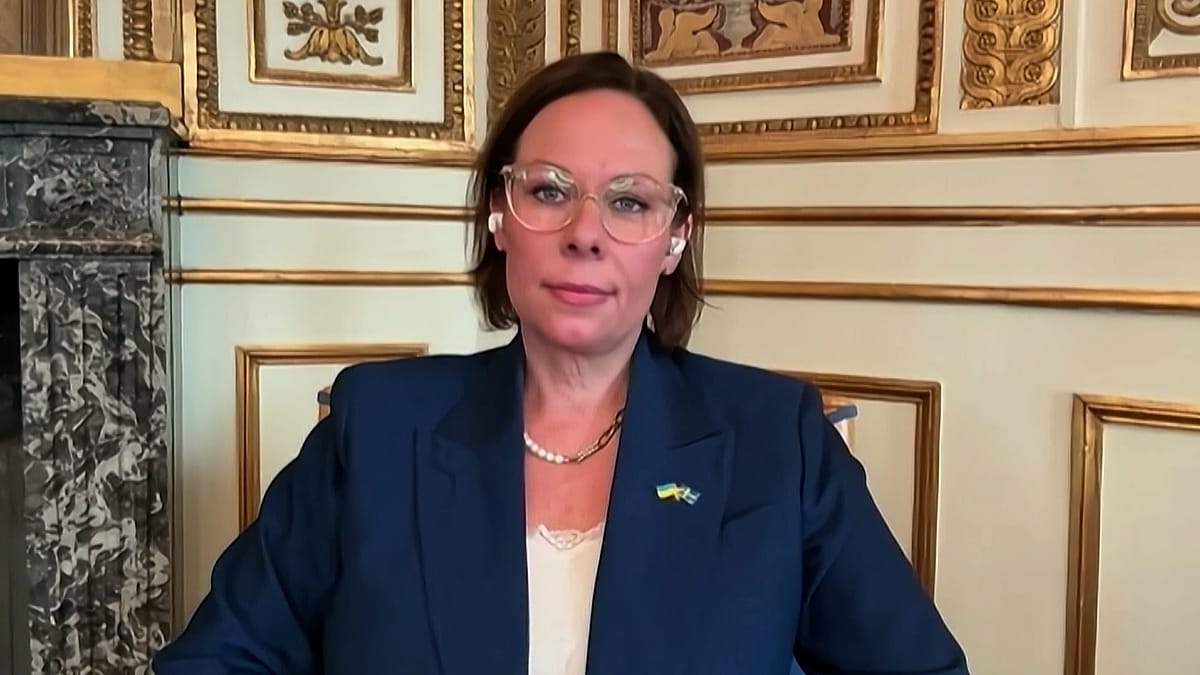
Russia has become “more desperate” in recent weeks, and is stepping up its hostile activity towards NATO, Swedish Foreign Minister Maria Malmer Stenergard, told Euronews.
Speaking on Euronews’ flagship morning Europe Today show, she said European unity was key to deterring Russia from further aggression on NATO territory.
The minister was responding to reports of a significant uptick in hybrid-war activities across Europe in recent weeks. The most significant was the discovery of an explosive-laden drone at Leipzig airport, Germany in early August.
“We see a more desperate Russia,” she said.
“Russia is losing territory, losing influence, losing men, and now they are obviously more desperate testing us and testing our unity,” she told Euronews correspondent, Shona Murray.
“We have seen a lot of incidents lately and we have seen united response from NATO,” she said.
Meanwhile, German Chancellor Frederic Merz is due to announce he is to formally accuse the Kremlin for the drone incident in Leipzig and vowed to respond accordingly.
It’ll be the first time a European country has formally accused Russia of such aggression, and it’s likely his response will raise tensions further.
Malmer Stenergard spoke to Europe Today ahead of a gathering of EU defence and foreign affairs ministers to be held in Ireland this week.
EU foreign affairs ministers are also meeting in Wicklow for the so-called Gymnich informal session Wednesday. They’ll be joined by their Ukrainian, British and Canadian counterparts where European and transatlantic security is top of the agenda.
Meanwhile, Stockholm is calling for the European Commission to revisit the issue of using frozen Russian state assets – most of which are held in Belgian financial repository, Euroclear – to fund Ukraine.
Leaders of Sweden, Spain, Portugal and the Netherlands want to reopen the issue and pledge to accommodate Belgium’s concerns.
The Belgium government put up the strongest resistance to the measure late last year saying it would create too much risk to the financial sector.
Prime Minister Bart de Wever insisted on limitless guarantees in exchange for his government’s imprimatur. “We cannot stay in the same position as we were before Christmas,” said Malmer Stenergard.
“We have to move on because this is what is fair to Ukraine, it’s what is fair to the taxpayers,” she said.
“And we have to find a way to make sure that Belgium feels comfortable with this,” said Malmer Stenergard.