
Close Menu
Daily Guardian EuropeDaily Guardian Europe
  • Home
  • Europe
  • World
  • Politics
  • Business
  • Lifestyle
  • Sports
  • Travel
  • Environment
  • Culture
  • Press Release
  • Trending
What's On

Meloni’s EU lieutenant urges Brussels to work with Le Pen – POLITICO

September 22, 2026

EU nears deal to break impasse over French request to remove Usmanov from sanctions

September 22, 2026

US has deported 25,000 people to third countries under secretive deals, report shows

September 22, 2026

How Europe’s energy shock is fuelling the far right ahead of elections

September 22, 2026

Three South Korean soldiers injured in DMZ explosion, Seoul says

September 22, 2026
Facebook X (Twitter) Instagram
Web Stories
Facebook X (Twitter) Instagram
Daily Guardian Europe
Newsletter
  • Home
  • Europe
  • World
  • Politics
  • Business
  • Lifestyle
  • Sports
  • Travel
  • Environment
  • Culture
  • Press Release
  • Trending
Daily Guardian EuropeDaily Guardian Europe
Home»Europe
Europe

EU needs European digital agency to close enforcement gap, experts say

By staffSeptember 1, 20263 Mins Read
EU needs European digital agency to close enforcement gap, experts say
Share
Facebook Twitter LinkedIn Pinterest Email

Published on
01/09/2026 – 7:00 GMT+2

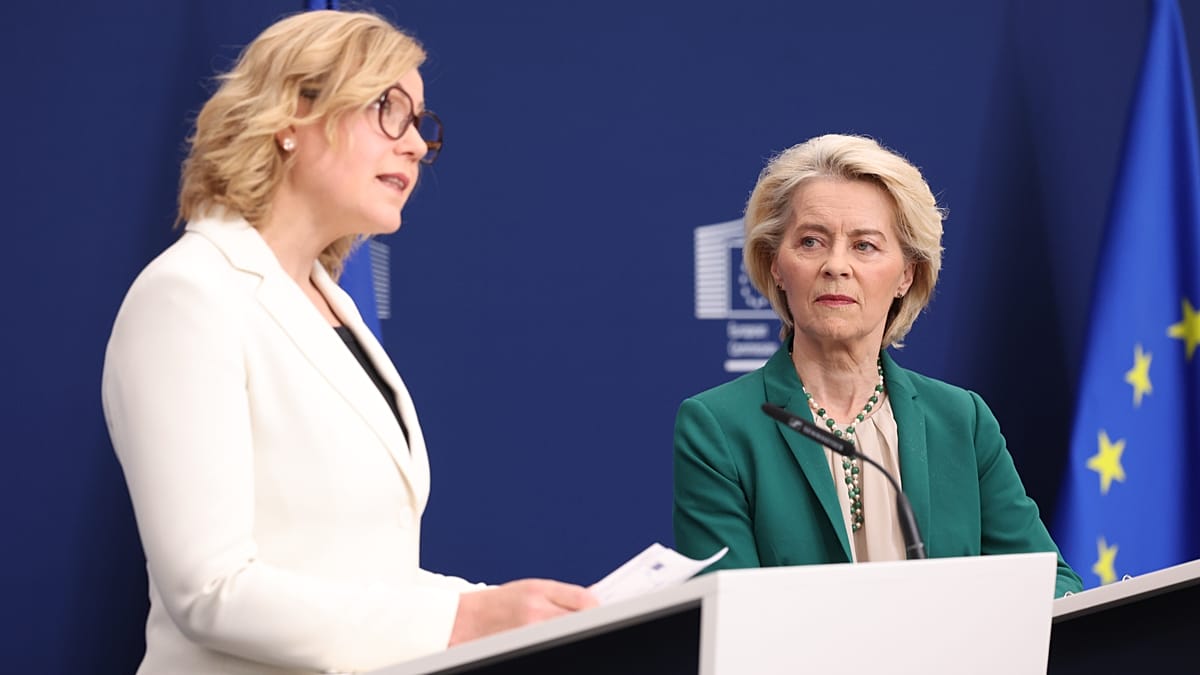
Brussels has built one of the world’s densest regulatory frameworks for digital technologies. For experts, it is high time to centralise enforcement under a single European agency to overcome the fragmentation now holding it back.

The EU’s digital rulebook spans more than 171 laws and 315 regulatory bodies — an unwieldy structure that has opened up a significant enforcement gap, leaving the bloc structurally unable to uphold its own rules.

That is the conclusion of a paper authored by Kai Zenner, head of office of MEP Axel Voss (Germany/EPP), and Maria Koomen, an independent tech and democracy analyst, who argue for the creation of a Digital Enforcement Agency.

The paper argues that streamlining enforcement is now urgent, just as Brussels has begun enforcing landmark digital laws such as the AI Act, the Digital Services Act (DSA) and the Digital Markets Act (DMA).

“Enforcement of the AI Act, DSA and DMA is ramping up, but their enforcement is split across more than 300 different EU and national bodies – many without the staff, expertise, or independence to act consistently,” Koomen told Euronews.

For the authors, the European Commission — which leads enforcement of these flagship rules — is itself part of the problem, since it simultaneously legislates, enforces and evaluates while negotiating deals with foreign powers.

They point out that the EU executive is not only the bloc’s most prominent digital enforcer but is also responsible for negotiating with third countries on issues such as trade and security, leaving it exposed to political pressure, or even inclined to underenforce pre-emptively.

Last year, media reports emerged that Trade Commissioner Maroš Šefčovič had lobbied to delay an antitrust sanction against Google, for fear it could jeopardise the fragile trade truce between the EU and the US, known as the Turnberry Agreement.

For Koomen and Zenner, the combination of geopolitical capture, fragmented governance, the national interests of influential member states, and a lack of adequate resources together create an enforcement gap that leaves the EU’s digital rules failing in practice.

The idea of centralising digital enforcement is not new, but has faced strong opposition in the past, with Brussels and national capitals reluctant to give up regulatory powers, and member states unwilling to finance a costly new EU body.

The paper proposes a three-step approach to overcome this resistance: starting with a short-lived cooperation forum, which would give way to a Digital Enforcement Agency in the medium term. The latter would gain fully independent status following treaty reform in the long run.

The authors argue there is a timely opportunity to act, with the Commission about to launch a broad review of EU digital legislation just as negotiations over the bloc’s next long-term budget enter a crunch phase.

“A rare window is open to fix this structurally rather than patch it case by case,” Koomen said. “If we miss this moment, the next opportunity will only come in seven years.”

Share. Facebook Twitter Pinterest LinkedIn Tumblr Email

Keep Reading

EU nears deal to break impasse over French request to remove Usmanov from sanctions

How Europe’s energy shock is fuelling the far right ahead of elections

More flight disruption in UK after second air traffic control glitch this month

EU countries issued a record 3.9 million residence permits last year

Pope Leo XIV set for first official visit to France, with huge crowds expected in Paris

Spain seizes two tonnes of cocaine from yacht linked to Balkans drug network

Removing Usmanov from sanctions list risks making EU look weak – Lithuanian finance minister

Former Romanian presidential candidate Georgescu detained and put under investigation for fraud

What is CETA – and why is the EU-Canada trade deal still in limbo?

Editors Picks

EU nears deal to break impasse over French request to remove Usmanov from sanctions

September 22, 2026

US has deported 25,000 people to third countries under secretive deals, report shows

September 22, 2026

How Europe’s energy shock is fuelling the far right ahead of elections

September 22, 2026

Three South Korean soldiers injured in DMZ explosion, Seoul says

September 22, 2026

Subscribe to News

Get the latest Europe and world news and updates directly to your inbox.

Latest News

More flight disruption in UK after second air traffic control glitch this month

September 22, 2026

Video. Latest news bulletin | September 21st, 2026 – Midday

September 22, 2026

EU countries issued a record 3.9 million residence permits last year

September 22, 2026
Facebook X (Twitter) Pinterest TikTok Instagram
© 2026 Daily Guardian Europe. All Rights Reserved.
  • Privacy Policy
  • Terms
  • Advertise
  • Contact

Type above and press Enter to search. Press Esc to cancel.