

By Сергiй Дубина
Published on
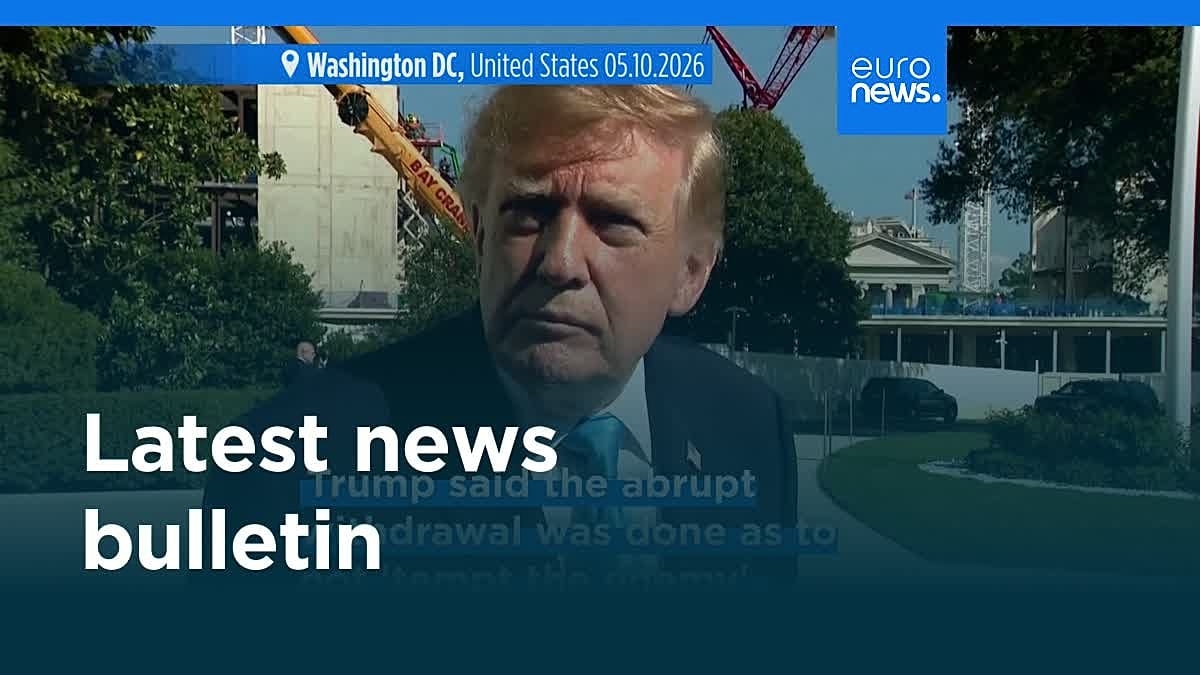
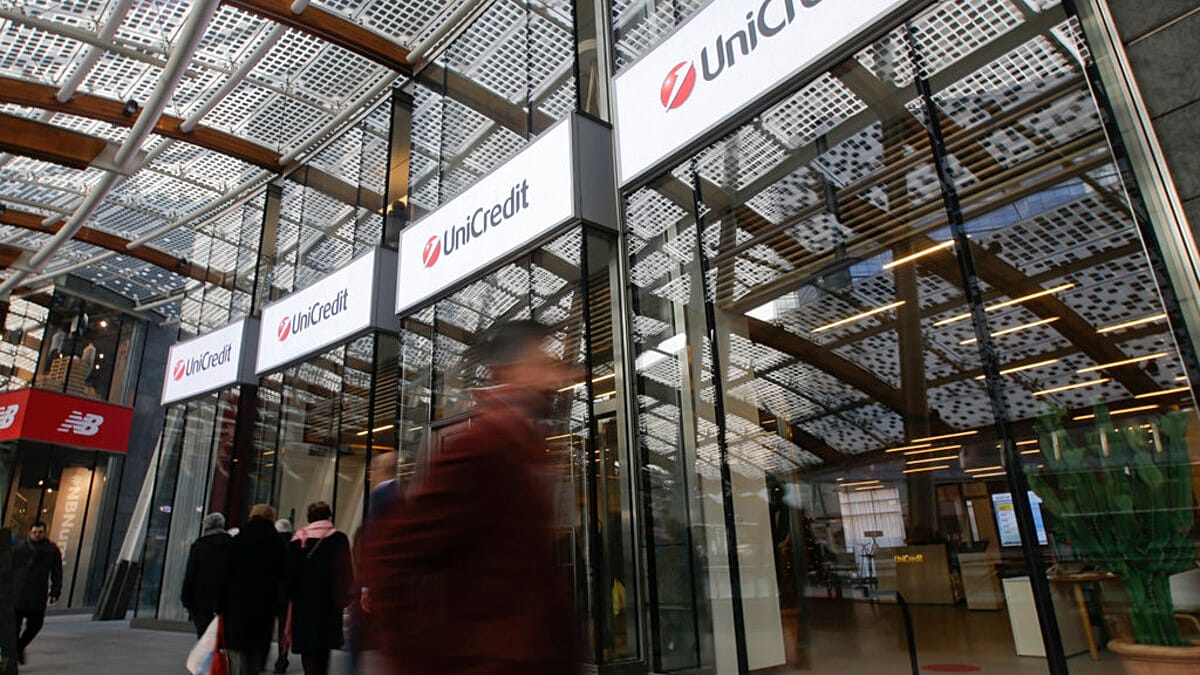
On Monday, Russian President Vladimir Putin signed a decree allowing Italian bank UniCredit to sell part of its Russian business, paving the way for the Milan-based group to scale back its presence in the country.
UniCredit Bank has been operating in Russia since 1989. It continued its activities in the Russian Federation after the full-scale invasion of Ukraine in February 2022.
In May, the bank announced plans to sell part of its Russian subsidiary to “a well-established private investor in the United Arab Emirates” with “long-standing ties to the local institutional and business community”, while retaining part of the business linked to payment services.
The newspaper Kommersant previously reported that the investor eyeing the assets represents Alfa Group, an international conglomerate in good standing with the Kremlin. One of its founders is Mikhail Fridman, who was recently removed from the EU’s sanctions list.
The decree “permits the reorganisation” of the company in Russia, envisaging the separation of part of the Russian legal entity UniCredit Bank into a new company that will remain under the ownership of the Italian UniCredit group.
Under the decree, the Italian group is permitted to sell 100% of its shares in the Russian UniCredit Bank.
The carved-out “new bank” will stay in Italian hands and will focus on international euro and dollar payments for corporate clients who are not under sanctions.
The rest of the business will pass to the buyer, whose name UniCredit has not disclosed.
The Italian group has estimated the negative impact of the deal on its financial results at €3–3.3 billion.
UniCredit said in May that it expected to complete the transaction in the first half of 2027, subject to binding agreements, the separation of the businesses and regulatory approvals.
Conditions for leaving Russia
Without the personal approval of the Russian president, the deal would not have been possible, writes RFE/RL. Since 2022, under a decree on special measures regarding so-called “unfriendly” countries, UniCredit Bank has been on a list of banks for which any share transaction requires special permission.
In 2025, the Russian central bank’s press service published a list of systemically important credit institutions, with 12 lenders on it, including UniCredit and Raiffeisenbank.
This came amid pressure from the European Central Bank on both banks to reduce their Russian operations and the banks’ own declarations that they were winding down their activities in the country.
In addition to these two Western “systemic” banks, Italy’s Intesa Sanpaolo continues to operate in Russia on a more limited scale through its corporate banking business. It received presidential approval to leave in September 2023 but has yet to complete its exit. Hungary’s OTP Bank also continues operating through its Russian subsidiary.
Alongside the need for a “Kremlin blessing” to leave Russia, the conditions for doing so were made much tougher in October 2024: for affected foreign asset sales, the discount must be at least 60% off market value, and there is an additional exit tax of no less than 35%, according to UN Trade and Development (UNCTAD).
In response to repeated calls from European authorities and regulators to pull out of Russia, UniCredit argued that it was simply impossible to do so without the Kremlin’s green light. Chief executive Andrea Orcel had repeatedly said the bank was unwilling to sell its Russian assets too cheaply, according to Kommersant.
Since the start of the full-scale invasion of Ukraine, hundreds of foreign companies have fully withdrawn from Russia or at least curtailed their operations there.
The fate of those who stayed has not always been smooth.
One example came on 17 September, when Putin signed a decree transferring the management of assets linked to 16 companies, including Nestlé, Auchan and several other Western groups, to a little-known firm, L.E.V. Management, which later turned out to have ties to Russia’s security apparatus.
Another example followed on 28 September, when German wholesaler Metro AG lost operational control of its Russian subsidiary under a presidential decree. Control passed to UK Torg RUS, while ownership remained with the German group.
Asked whether the Russian subsidiaries of UniCredit or Austria’s Raiffeisen could be next, an unnamed senior Russian government source told Reuters: “Let them be scared.”