
Close Menu
Daily Guardian EuropeDaily Guardian Europe
  • Home
  • Europe
  • World
  • Politics
  • Business
  • Lifestyle
  • Sports
  • Travel
  • Environment
  • Culture
  • Press Release
  • Trending
What's On

Machthaber: Xi Jinping – POLITICO

August 6, 2026

The last neutrals: Can four EU states adapt to Europe’s defence shift?

August 6, 2026

Younger children who use social media heavily get worse grades, study finds

August 6, 2026

The hidden cost of global flight disruptions – POLITICO

August 6, 2026

Why are Commission staffers so miserable? – POLITICO

August 6, 2026
Facebook X (Twitter) Instagram
Web Stories
Facebook X (Twitter) Instagram
Daily Guardian Europe
Newsletter
  • Home
  • Europe
  • World
  • Politics
  • Business
  • Lifestyle
  • Sports
  • Travel
  • Environment
  • Culture
  • Press Release
  • Trending
Daily Guardian EuropeDaily Guardian Europe
Home»Europe
Europe

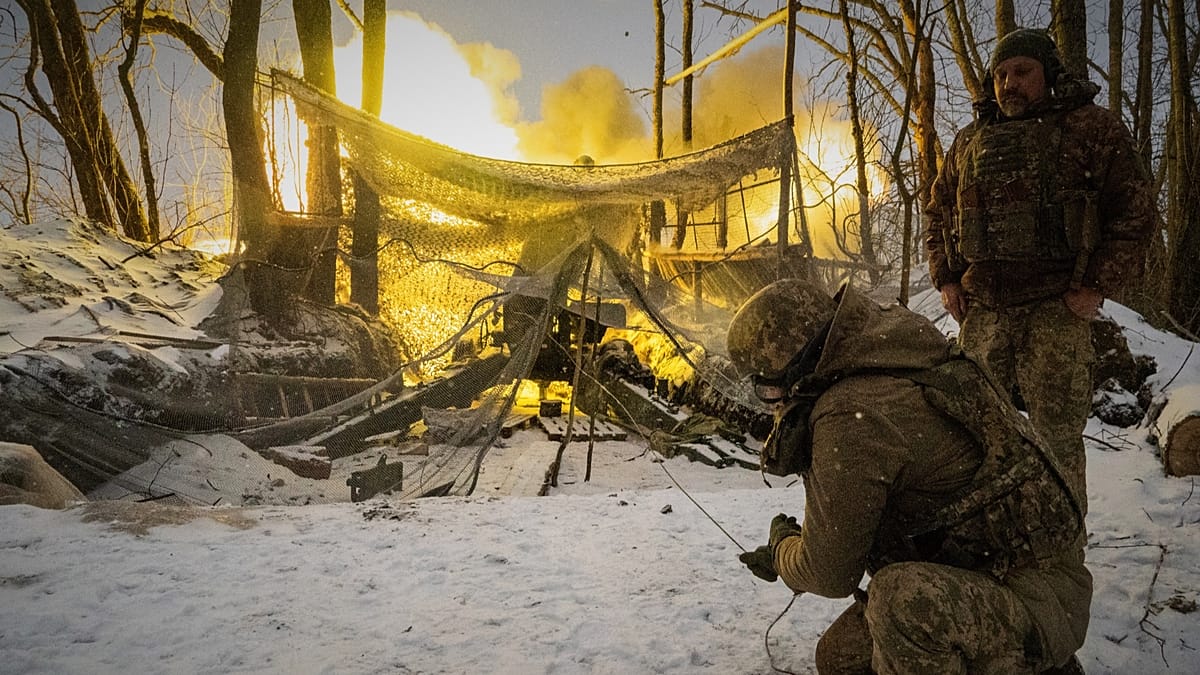
Ukraine frontline frozen in June as Russian momentum falters, June data shows

By staffJuly 3, 20262 Mins Read
Ukraine frontline frozen in June as Russian momentum falters, June data shows
Share
Facebook Twitter LinkedIn Pinterest Email

Published on 03/07/2026 – 15:02 GMT+2•Updated
15:03

The Ukraine war front line remained largely frozen in June, extending a longer-term trend of stalled Russian momentum, an analysis of data from the Institute for the Study of War (ISW) carried out by the AFP news agency showed on Friday.

The June data showed a Russian net gain of 30 square kilometres, focused in the northeastern Kharkiv region.

But those gains were largely down to previous Russian incursions being upgraded to advances, as more evidence came to light, said the ISW.

Ukrainian forces gained 11 square kilometres in the southern Zaporizhzhia region and 18 square kilometres in the central Dnipropetrovsk region.

“The extent and scope of the ongoing Ukrainian counterattacks in these oblasts are unclear,” said the ISW’s Geospatial Intelligence Team.

“The outcomes from these continuing combat operations remain unclear and will likely be reflected in the data in the coming weeks,” it added.

Moscow lost around 403 square kilometres in April and May. Russia’s advance has slowed since late 2025, hobbled by the increasing effectiveness of Ukraine’s frontline and mid-range drone strikes.

April was the first month in which its forces gave up more ground than they captured for two and a half years and Ukraine built on those gains in May.

Russian forces have advanced an average of 15 square kilometres per month so far in 2026, compared with 405 square kilometres per month in 2025.

The estimates exclude advances claimed by Russia but that the ISW has neither confirmed nor denied.

The ISW works with the Critical Threats Project, part of the American Enterprise Institute, another US think tank specialising in conflict analysis.

Moscow occupies just over 19% of Ukraine.

That includes around 7%, Crimea and parts of the industrial Donbas region, that was already under Russian or pro-Russian separatist control before the February 2022 full-scale invasion.

Most of Russia’s advances were made during the first weeks of the conflict.

Hundreds of thousands have been killed and millions forced from their homes since Russia invaded in February 2022.

The war, Europe’s deadliest since World War II, has caused more than 2 million military casualties, with Moscow’s forces bearing the brunt of the losses, according to a study published by a US think tank on Wednesday.

Additional sources • AFP

Share. Facebook Twitter Pinterest LinkedIn Tumblr Email

Keep Reading

The last neutrals: Can four EU states adapt to Europe’s defence shift?

Europe’s biggest debates – Migration, Mercosur, and housing on The Ring

Suspect accused of killing woman found in suitcase in Greece gives statement

€1 million lottery ticket recovered among 6 tonnes of rubbish in Italy

Spain’s Interior Ministry denies confirming reports of suspected jihadists among Ceuta arrivals

‘I showed it our vegetables – it flew at me,’ Ukrainian vendor hunted by Russian FPV drone recalls the attack

Spanish media: Authorities reportedly identify suspected jihadists among Ceuta arrivals

Spain says 70,000 of 72,000 migrants who crossed into Ceuta have already returned

From TikTok videos to political claims: How misleading information spread during the Ceuta crisis

Editors Picks

The last neutrals: Can four EU states adapt to Europe’s defence shift?

August 6, 2026

Younger children who use social media heavily get worse grades, study finds

August 6, 2026

The hidden cost of global flight disruptions – POLITICO

August 6, 2026

Why are Commission staffers so miserable? – POLITICO

August 6, 2026

Subscribe to News

Get the latest Europe and world news and updates directly to your inbox.

Latest News

1,000 complaints made to EU Commission’s anti-harassment team – POLITICO

August 6, 2026

Why people want a job at the European Commission — and why so many end up miserable – POLITICO

August 6, 2026

Malta leads fight against EU bid to tax Big Gambling – POLITICO

August 6, 2026
Facebook X (Twitter) Pinterest TikTok Instagram
© 2026 Daily Guardian Europe. All Rights Reserved.
  • Privacy Policy
  • Terms
  • Advertise
  • Contact

Type above and press Enter to search. Press Esc to cancel.