
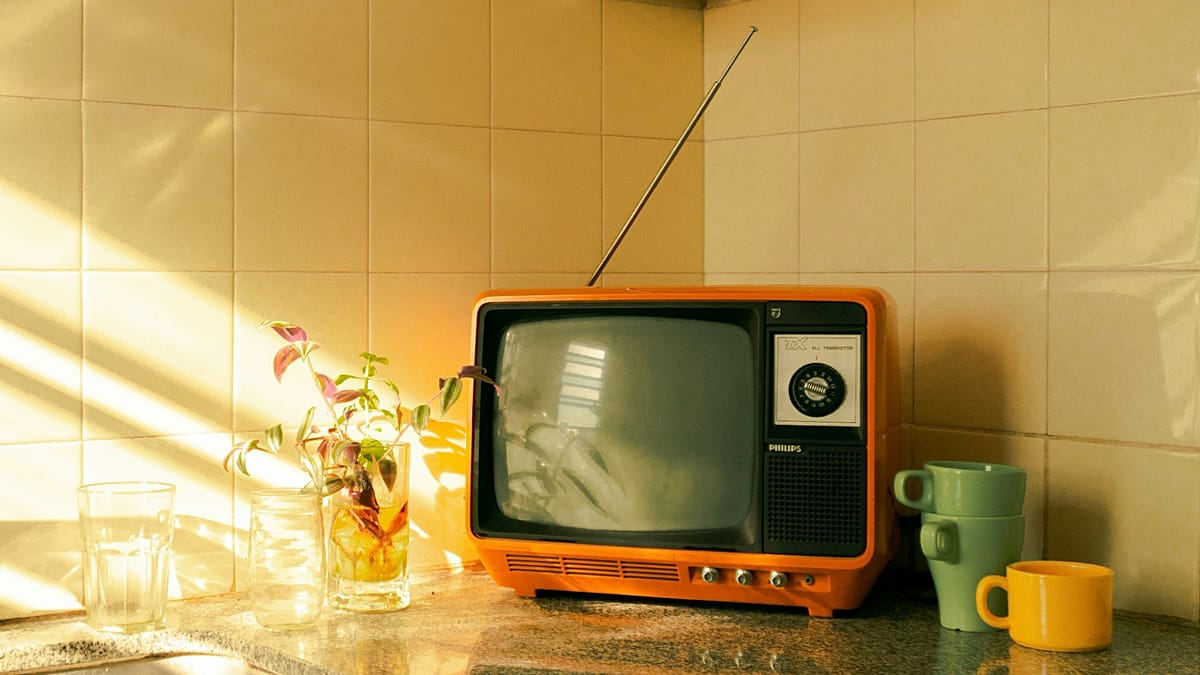
Today is World Television Day, even if the concept of ‘sitting down to watch TV’ is becoming more abstract by the year. Nowadays, fewer families congregate around a single screen to zap between channels, as more and more people prefer their shows on demand and on their computer screens. It’s the era of TV… without the TV.
Over the last 10 years, the small ‘discomforts’ that made watching television its own experience have gone. The inconvenience of waiting for your show to come on air was killed by streaming.
And there’s no need to even flip through channels to discover new stuff anymore, because many people prefer algorithm-driven platforms that serve up personalised recommendations based on viewing history and preferences (and all the other information your browser harvests in secret).
For about 50% of people globally, the concept of ‘TV’ is synonymous with sites like Netflix, HBO, and YouTube instead of the big box of static in the living room. This turned casual viewing into a highly tailored experience: 80% of titles viewed on Netflix are selected through algorithmic suggestions rather than user searches.
TV isn’t a shared, schedule-based programming anymore. It’s a constantly adapting menu of shows and clips curated for each viewer. And that’s not all that’s changed.
Streaming as a default
What began as a supplementary service (Netflix used to mail DVDs and YouTube used to host amateur clips) has evolved into the dominant ecosystem for series, movies, documentaries, live sports, and more.
Whereas in 2015 traditional TV (cable, satellite, broadcast) still held the majority share of viewership, by 2025 streaming accounts for over 60% of total TV time in many Western markets. Legacy networks have launched their own apps (e.g., Peacock, Max, Paramount+) to compete for attention against Netflix and the like.
And streaming brought along a new behavioural shift: ‘binge-watching’. Back in 2015, most series were still released week-by-week, so viewers followed narratives gradually – good for water cooler chat, aka creating shared cultural moments tied around episodes and finales.
But by 2025, that rhythm has been disrupted. Streaming platforms have trained viewers to expect immediacy because entire seasons drop at once, and it’s common to finish them in a weekend or in a single sitting.
Surveys show that more than 70% of viewers identify as regular binge-watchers, consuming 3 or more episodes in a row. This, in turn, influenced the business model: writers now structure episodes with the assumption that viewers won’t wait a week in between, and platforms have features like auto-play to keep people engaged.
TV without the TV
By 2025, ‘watching TV’ can mean pulling out your phone during a commute or watching from a tablet in bed. It’s not a physical concept anymore but rather a type of content.
Since 2015, millions of households have cancelled cable or satellite subscriptions, citing price, lack of flexibility, and better options elsewhere. As of 2025, fewer than 50% of households in many countries still subscribe to pay-TV, and younger audiences often skip it entirely.
Meanwhile, the rise of smart devices means that phones, tablets, laptops, and smart TVs are now interchangeable screens for consuming shows: surveys report that mobile video viewing makes up over 70% of total global video plays.
The rise of second screens
Perhaps the most insidious change is that watching TV is not a single-focus activity anymore, since most viewers, especially those under 40, engage in what’s called ‘second-screening’: using a phone or tablet while the TV plays. Roughly 85–90% of viewers report using another device while watching TV.
Producers know this and, like with binge-watching, this has influenced production and content design, like more visually ‘pause-worthy’ scenes, subtitles, and a general ‘dumbing down’ of the dialogue so that the action is easy to understand while paying less attention.
International shows take top spot
Not all the changes are (cognitively) negative. In 2015, TV viewing was still mostly national. While some international shows broke through, most audiences stuck to content made in their own country. Subtitles and dubbing were barriers, and global hits were the exception, not the rule.
But by 2025, this has reversed. Thanks to streaming platforms with worldwide reach, global content is now the norm. Look at the success of Squid Game or Money Heist; it was made possible through streaming.
Importantly, audiences have grown more open-minded. In surveys, up to 40% of global viewers said they prefer or enjoy watching international content, with some regions like Latin America and Southeast Asia showing even higher numbers. This means that platforms now invest heavily in regional originals, not just to serve local audiences but to export those stories globally.