
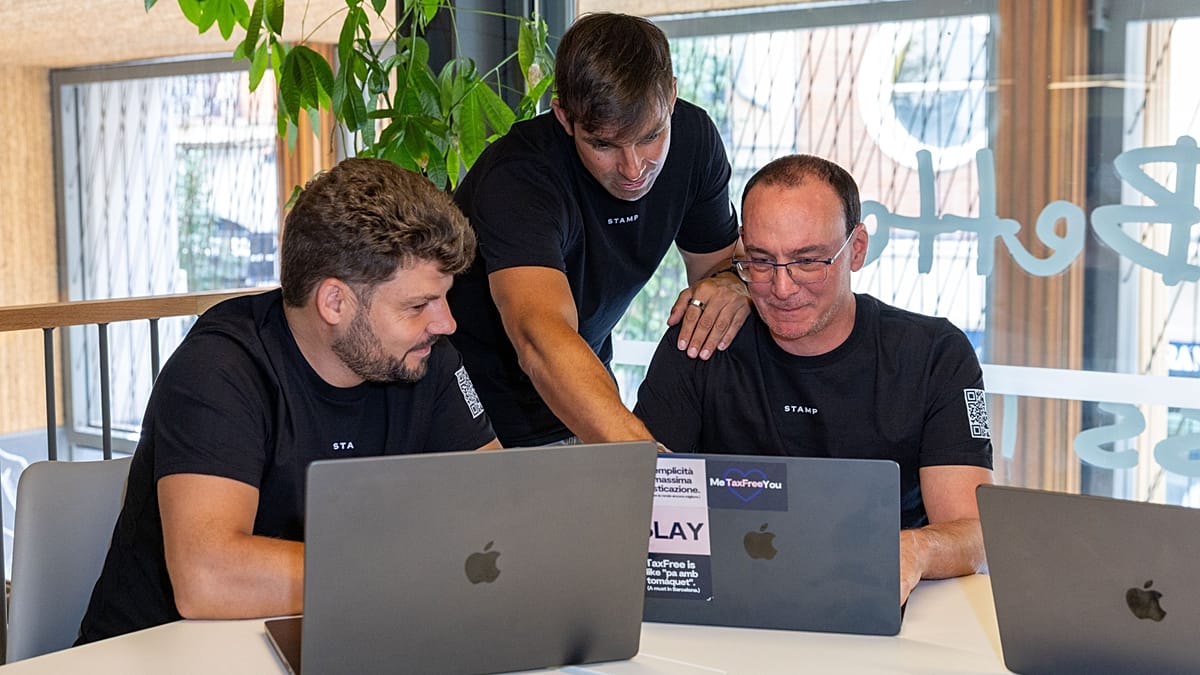
The clunky tax-refund system that calls itself “tax-free” is being challenged by Spanish fintech company STAMP. The firm has launched a campaign pushing for tourists to avoid paying VAT at the till — triggering a debate in the tourism and retail sector about whether the whole system needs to be reformed.
Spain, like many EU countries, continues to use the term “tax-free” for services that, in practice, function as deferred VAT refunds to non-EU tourists.
Although this label is widely displayed in shops, visitors pay the full amount for the item in a shop. They then receive part of the tax back when they exit the country, subject to verification processes and the intervention of intermediaries.
This approach originated in the 1980s, when technological and administrative constraints prevented real-time validation of outgoing goods. Namely, vendors could not be sure that a good bought in Spain was actually going to leave Spain and thus be effectively treated as an export that was not subject to EU or Spanish VAT.
Spain saw around 94 million international tourists in 2024, with a total expenditure of more than €126 billion. In the first half of 2025, tourist numbers have risen even higher when compared with the same period last year.
However, only a fraction of this consumption goes through the VAT refund system because not all purchases are eligible.
Industry experts also suggest that many people opt out due to complexity, lack of available information, or because they consider the final benefit of the refund to be limited.
Most of the volume managed, around 80%, comes from the luxury sector, which leaves out small and medium-sized businesses that could have access to a useful tax incentive as a commercial tool.
A cumbersome process
According to Abel Navajas, CEO of Spanish fintech STAMP, the problem lies not in the regulations, but in “an old system that generates a slow and confusing experience for tourists”.
Despite increased digitalisation, claiming back the tax still requires the initial payment of VAT, the management of forms, and the intervention of operators who apply commissions.
In 2019, the VAT refund process became fully digitalised via DIVA, whereby the customer gets an electronic refund document in the shop and then validates it at DIVA kiosks at the airport or port before leaving.
But even with DIVA, you still pay VAT upfront, and you need to interact with an operator like Global Blue, Planet, or PieVAT to actually get your money back.
With added commissions, the traveller generally ends up recovering between 40% and 60% of the tax.
Amid growing international competition, where Spanish cities are looking to boost their tourism and retail offerings, proposals such as the one created by STAMP have emerged as a means to modernise Spain’s “tax-free” deals.
According to the start-up, this has several benefits. First of all, the tourist obtains the savings immediately, and the business knows the cost of the service in advance, meaning they can use it as a sales tool. The incentive also makes it easier for all types of establishments, not just luxury retailers, to participate.