
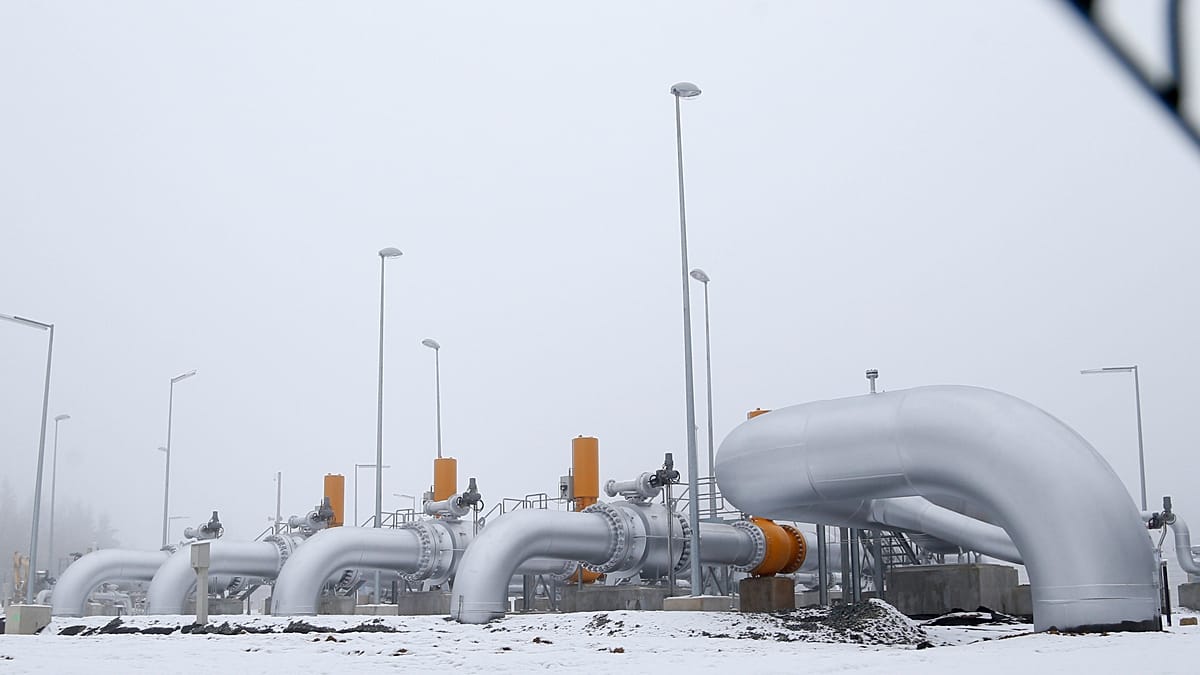
The benchmark European gas price, traded on the Dutch TTF hub, rose by as much as 45% to around €46 per megawatt-hour in early afternoon trading.
UK natural gas prices also surged, with the NBP benchmark climbing sharply in tandem with continental markets.
High market volatility has driven sharp minute-by-minute swings.
The sharp increase follows US and Israeli strikes on Iran, which have heightened tensions in a region critical to global energy flows.
QatarEnergy announced early Monday afternoon that it had halted liquefied natural gas production linked to the giant North Field gas reservoir following an attack on its facilities, but gave no further details as to the extent of the impact on operations.
Strait of Hormuz disruption raises global concerns
A large proportion of the world’s energy supply comes from the Middle East, and before the announcement from Qatar, the seaborne oil and gas transport was at the centre of market fears.
The Strait of Hormuz, a narrow maritime passage largely controlled by Iran, is one of the world’s most important energy chokepoints for oil and LNG, including exports from Qatar.
Iran has moved to block traffic through the strait following the strikes, raising concerns about supply interruptions.
“In modern history, the Strait of Hormuz has never been actually closed, albeit a temporary slowing of traffic has occurred,” said Maurizio Carulli, global energy analyst at Quilter Cheviot.
He added that “about 20% of global oil supply transits through the Strait of Hormuz and 38% of seaborne crude oil trade.”
Carulli does not expect oil shipping companies to send through their vessels until “the military situation de-escalates”, due to the risk of ship damage or seizures, as well as temporary unavailability of insurance cover.
“Satellite data shows that oil tanker transit had virtually halted over the weekend, a precautionary measure by shipping companies,” he added.
Any sustained disruption could affect LNG shipments from Qatar, which supplies around 12% to 14% of Europe’s LNG imports.
Europe exposed to global competition
While Europe does not rely primarily on Qatari gas, analysts say the indirect impact could still be significant.
If supplies to Asia are disrupted, buyers there may seek alternative cargoes, increasing global competition for LNG.
This would likely push prices higher worldwide, including in Europe.
Qatar, the world’s third-largest LNG exporter after the United States and Australia, has become an increasingly important supplier to Europe since Russia’s invasion of Ukraine in 2022 forced European countries to reduce their dependence on Russian pipeline gas.
Low storage levels increase vulnerability
Europe’s relatively low gas storage levels have added to market anxiety.
Storage across the European Union is currently below 30% capacity as the winter heating season draws to a close, compared with around 40% at the same point last year.
Germany and France, the bloc’s two largest economies, are among the most vulnerable.
Germany’s gas storage facilities were 20.5% full as of Saturday, while France’s stood at 21%, according to data from Gas Infrastructure Europe.
Lower reserves leave countries more vulnerable to supply disruptions and price volatility, particularly if global LNG markets tighten further.