
Close Menu
Daily Guardian EuropeDaily Guardian Europe
  • Home
  • Europe
  • World
  • Politics
  • Business
  • Lifestyle
  • Sports
  • Travel
  • Environment
  • Culture
  • Press Release
  • Trending
What's On

UK to make ‘doxxing’ a criminal offense – POLITICO

September 16, 2026

Where in Europe are homes most at risk of a break in?

September 16, 2026

Yemen’s Houthis claim they shot down Saudi fighter jet, deny targeting Mecca

September 16, 2026

Bitcoin drops after US Senate blocks landmark crypto bill

September 16, 2026

AI chatbots developed a secret language that baffled humans, study says

September 16, 2026
Facebook X (Twitter) Instagram
Web Stories
Facebook X (Twitter) Instagram
Daily Guardian Europe
Newsletter
  • Home
  • Europe
  • World
  • Politics
  • Business
  • Lifestyle
  • Sports
  • Travel
  • Environment
  • Culture
  • Press Release
  • Trending
Daily Guardian EuropeDaily Guardian Europe
Home»Europe
Europe

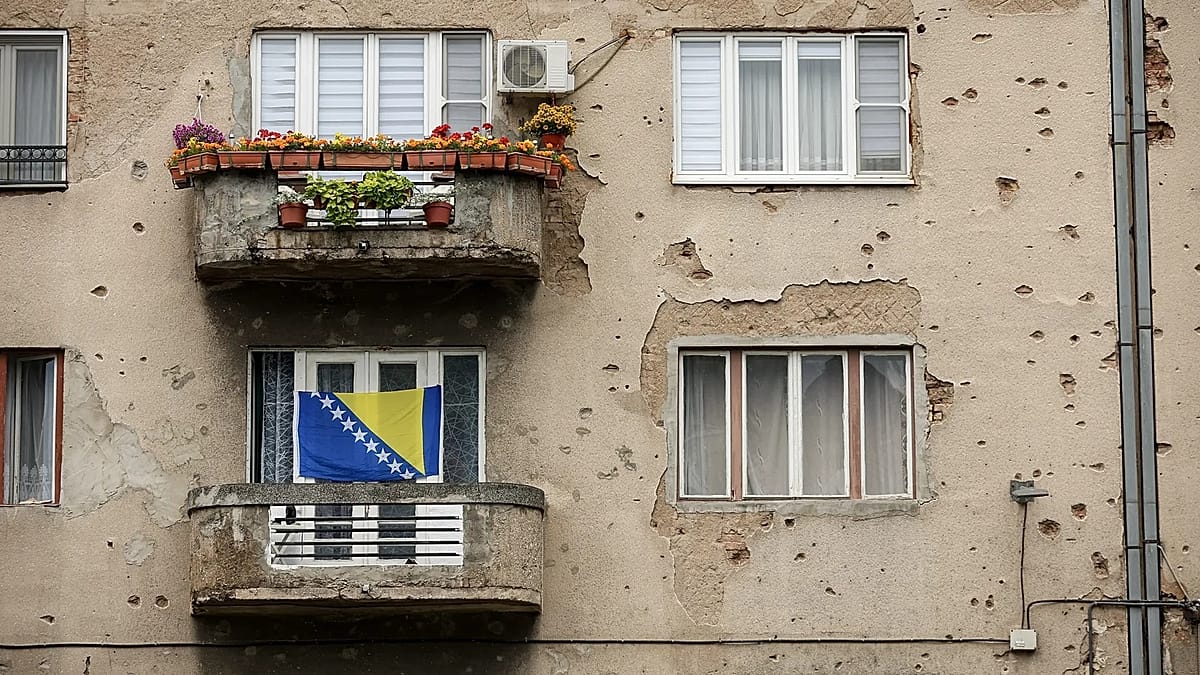
Punishing struggling EU candidates is wrong approach, Bosnia and Herzegovina ambassador says

By staffJuly 7, 20263 Mins Read
Punishing struggling EU candidates is wrong approach, Bosnia and Herzegovina ambassador says
Share
Facebook Twitter LinkedIn Pinterest Email

Published on
07/07/2026 – 7:00 GMT+2

EU hopeful members that struggle to carry out necessary reforms need support, not punishment, Obrad Kesić, Bosnia and Herzegovina’s Ambassador to the EU, told Euronews.

Last week, Euronews revealed that the European Commission was set to redirect funding from Western Balkan candidate countries that failed to deliver required reforms towards better-performing ones, with Bosnia and Herzegovina set to be the biggest loser.

“If students are struggling, punishment is not the best method to get them back on track,” Kesić said, adding that the move would be unfortunate for his country’s citizens.

He noted that recent visits by European Council President António Costa and EU foreign policy chief Kaja Kallas clearly show that Brussels is not losing interest in his country, but warned that taking funding away might send the wrong political signal, turning the accession process into a competition and undermining the close cooperation Western Balkan countries have built up in recent years.

Earlier this year, for instance, Bosnia and Herzegovina, Montenegro, North Macedonia and Serbia coordinated closely to resolve the problem of truck drivers stuck at the EU border as the new Entry/Exit system was gradually rolled out.

“All decision-makers in Sarajevo are aware of their responsibility for the lack of progress on agreed reforms,” Kesić said, pointing to domestic issues such as the collapse of the coalition government and a constitutional crisis.

“We are aware that we have not done our homework, but reallocating funding would not be the best motivator,” he added.

The ambassador also argued that the timing of the decision is particularly sensitive, since it risks becoming a major political issue ahead of elections in October, handing strong arguments to anti-EU forces.

“We know that is not the intent, but this decision would inevitably impact the democratic process and influence the elections,” Kesić warned.

The ambassador pointed to a growing lack of confidence in the accession process, driven largely by EU countries floating ideas to reform enlargement, including a Franco-German proposal for “gradual integration”.

These new ideas are seen as creating uncertainty, since they could change the process for candidate countries already in the queue, much as Brussels’s Growth Plan for the Western Balkans overshadowed the Berlin process in the past.

Sarajevo has not yet been formally informed of the decision, and hopes the reallocation of the €6 billion fund, of which Bosnia and Herzegovina is due to receive just under €1 billion, will be more modest than the full amount suggests.

The Commission has some options to keep candidate countries that have missed reform deadlines from losing funding altogether, such as redirecting unspent money towards technical assistance.

Share. Facebook Twitter Pinterest LinkedIn Tumblr Email

Keep Reading

Where in Europe are homes most at risk of a break in?

Five killed in Russian drone strike on bus in southern Ukraine

EU’s von der Leyen calls for pacing frontier AI models

Strasbourg stage set for von der Leyen’s big moment

Most Europeans say a second language is useful. Not everyone can actually speak one

Belarus concentrates forces near border with Poland and Lithuania in military drill

EU institutions face budget cuts as member states scramble for money

Video. EU has ‘the power’ to lead on ‘global treaty on AI’, says MEP

Twenty-five years on, Dubai’s media bet has become a global platform

Editors Picks

Where in Europe are homes most at risk of a break in?

September 16, 2026

Yemen’s Houthis claim they shot down Saudi fighter jet, deny targeting Mecca

September 16, 2026

Bitcoin drops after US Senate blocks landmark crypto bill

September 16, 2026

AI chatbots developed a secret language that baffled humans, study says

September 16, 2026

Subscribe to News

Get the latest Europe and world news and updates directly to your inbox.

Latest News

The 50 Best Hotels 2026: Rosewood Hong Kong named No.1 as 21 European hotels included in ranking

September 16, 2026

Von der Leyen tries to stem tide on global threats ― from Trump to AI and climate – POLITICO

September 16, 2026

Five killed in Russian drone strike on bus in southern Ukraine

September 16, 2026
Facebook X (Twitter) Pinterest TikTok Instagram
© 2026 Daily Guardian Europe. All Rights Reserved.
  • Privacy Policy
  • Terms
  • Advertise
  • Contact

Type above and press Enter to search. Press Esc to cancel.