
Close Menu
Daily Guardian EuropeDaily Guardian Europe
  • Home
  • Europe
  • World
  • Politics
  • Business
  • Lifestyle
  • Sports
  • Travel
  • Environment
  • Culture
  • Press Release
  • Trending
What's On

Ireland’s budget cuts weaken EU, Commission warns – POLITICO

October 12, 2026

Energy ceasefire: Confusion in Kyiv, support from allies, silence from Moscow and fresh strikes

October 12, 2026

Live – Europe Today: Trump claims Ukraine-Russia energy ceasefire as Baltics stay on alert

October 12, 2026

Rockies, Route 66 and railway hotels: Why 2027 is the year to explore the US by train

October 12, 2026

Lumière festival 2026 in Lyon: Stars share their first cinema memories

October 12, 2026
Facebook X (Twitter) Instagram
Web Stories
Facebook X (Twitter) Instagram
Daily Guardian Europe
Newsletter
  • Home
  • Europe
  • World
  • Politics
  • Business
  • Lifestyle
  • Sports
  • Travel
  • Environment
  • Culture
  • Press Release
  • Trending
Daily Guardian EuropeDaily Guardian Europe
Home»Europe
Europe

Where in Europe are homes most at risk of a break in?

By staffSeptember 16, 20263 Mins Read
Where in Europe are homes most at risk of a break in?
Share
Facebook Twitter LinkedIn Pinterest Email
By&nbspAlessio Dell’Anna&nbsp&&nbspvideo by Maud Zaba

Published on
16/09/2026 – 11:34 GMT+2

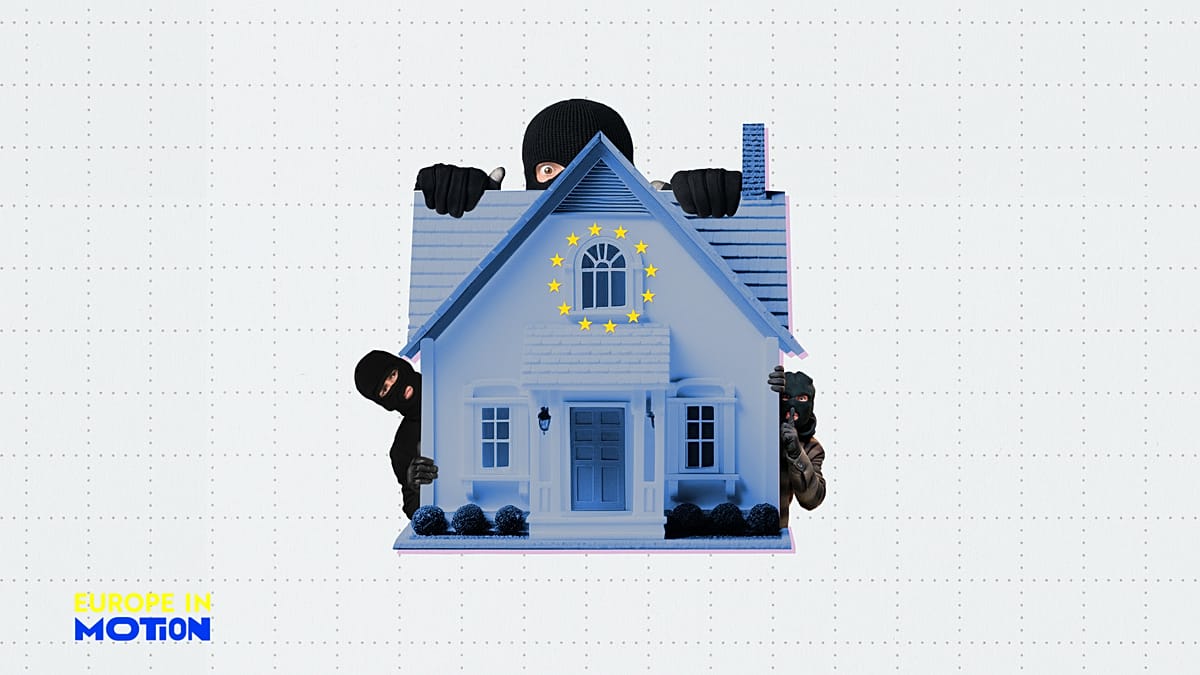
European homes and businesses appear to be getting safer.

The number of break-ins across the EU has dropped by more than a third in just a decade (35%), falling to 1.2 million from to 2014 to 2024, according to new Eurostat data.

These figures cover both residential and business premises, yet despite the good news, Europe continues to be a battleground between intruders and private citizens and business owners, with many countries having a significant rate of burglaries relative to their populations.

Austria faces a huge wave of burglaries, with the highest rate in the EU: 700 per 100,000 people reported in 2024, with Sweden (601) and Luxembourg next (568).

Which countries enjoy the lowest burglary rate?

Intruders are far less prolific in Lithuania. The country reports a 24/100,000 people burglary rate, followed at the bottom of the table by Bulgaria (46) and Slovakia, the only EU countries below 100.

Lithuania has also seen the steepest decline in break-ins compared to 2014, down by an impressive 79%, followed by Bulgaria with a 78% decline, and Greece, with burglaries down 71% from its peak in 2015.

The picture is less optimistic in Spain. The country saw the smallest fall in burglaries, only down 21% since 2014, according to a Europe in Motion calculation.

France is only slightly better, with a 23% decrease. It’s also the country most affected by burglaries in general, with more than 300,000, closely followed by Germany, and far below by Spain, which experienced 143,000 burglaries yearly.

How are Europeans taking matters into their own hands?

European citizens are better equipping themselves against burglary threats, particularly through the purchase of security alarms.

Between 2015 and 2025, EU production of security alarms grew from 30.1 million items in 2015 to 68.3 million items in 2025, according to EU Trade Explorer.

Ireland is one of the most remarkable examples.

The country’s Central Statistics Office reported that the use of domestic security technology — such as alarms, CCTV, video intercoms and securised frames and fixtures grew from 17% in 2022 to 30% in 2024.

In general, across the EU, the UK, Switzerland and Norway, around 20 million alarm systems for private properties and small businesses are installed, according to consultancy firm Berg Insight, with a global penetration of 8%.

However, that’s much smaller in comparison with the North American market (US+Canada), where the reported concentration of alarm systems is three times higher (24%).

Share. Facebook Twitter Pinterest LinkedIn Tumblr Email

Keep Reading

Energy ceasefire: Confusion in Kyiv, support from allies, silence from Moscow and fresh strikes

Czech PM Babiš’s ANO faces strong challenge in first round of Senate election

Man who planned to attack Poland’s prime minister has been arrested, interior minister says

‘Up to our people’ to pick leader, Zelenskyy responds to Trump’s pledge for new elections in Ukraine

Hochvogel mountain at risk of major collapse as 400,000 cubic metres of rock threatens to break away

Nepal flash floods sweep away houses, five people missing

French Social democratic primary: Raphaël Glucksmann wins big in first round

Ten of thousands urge EU for climate action at Brussels demonstration

Police clear Guano beach camp in Ceuta days before royal visit

Editors Picks

Energy ceasefire: Confusion in Kyiv, support from allies, silence from Moscow and fresh strikes

October 12, 2026

Live – Europe Today: Trump claims Ukraine-Russia energy ceasefire as Baltics stay on alert

October 12, 2026

Rockies, Route 66 and railway hotels: Why 2027 is the year to explore the US by train

October 12, 2026

Lumière festival 2026 in Lyon: Stars share their first cinema memories

October 12, 2026

Subscribe to News

Get the latest Europe and world news and updates directly to your inbox.

Latest News

How can Europe leverage laws to secure cloud sovereignty? – POLITICO

October 12, 2026

North Korea fires ‘several ballistic missiles’ into Sea of Japan, Seoul’s military says

October 12, 2026

Which European countries are hit the hardest by annual rent inflation and why?

October 12, 2026
Facebook X (Twitter) Pinterest TikTok Instagram
© 2026 Daily Guardian Europe. All Rights Reserved.
  • Privacy Policy
  • Terms
  • Advertise
  • Contact

Type above and press Enter to search. Press Esc to cancel.