
Published on •Updated
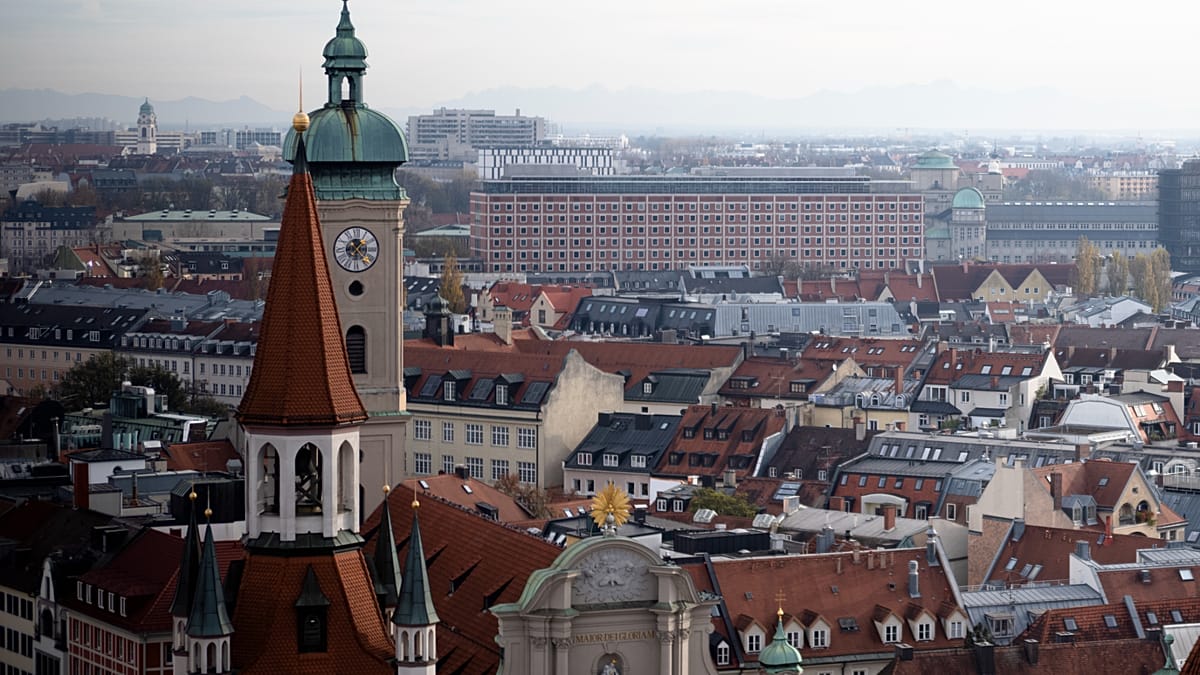
Munich, long known for the Oktoberfest and Bayern Munich, is fast becoming one of Europe’s leading centres for defence technology, as young firms building AI-powered drones and military software cluster around the Bavarian capital.
The boom is underpinned by a dramatic rise in German government spending. Germany’s federal budget for 2026 allocates roughly €82.7 billion to defence, an increase of about €29.4 billion on the previous fiscal plan, with troop numbers set to rise by up to 10,000.
Including an off-budget special fund created to modernise the armed forces, total defence spending reaches around €108 billion euros for 2026 — a roughly 24% year-on-year jump that, according to the Stockholm International Peace Research Institute, marks the first time since 1990 that Germany’s military spending has clearly exceeded 2% of GDP.
Firms including drone maker Quantum Systems, AI defence group Helsing, and interceptor-drone specialist Tytan Technologies are among dozens of military-tech players now based around Munich.
Quantum Systems, founded in 2015, supplies drones to Ukraine’s armed forces and has expanded into land and sea systems. Tytan, founded in 2023 by two Technical University of Munich graduates after a Ukraine hackathon, has grown its staff tenfold and is opening a new production site.
“Our founders had a very straightforward mission — restoring the economics of European air defence,” said Nemo Farber, Tytan’s chief manufacturing officer.
Industry figures point to the city’s combination of engineering talent, technical universities and a supportive political climate.
“Munich and the greater Munich area offer a great combination of skills, talent and history,” said Martin Karkour, chief revenue officer of spy drone maker Quantum Systems.
“We have engineering capabilities, we have software and AI capabilities, robotics capabilities — it is a great combination that would be hard to replicate somewhere else.”
Munich’s Chamber of Commerce and Industry says the number of pure defence startups in the region has doubled to around 60 in recent years, while displaced workers from the region’s struggling car industry are increasingly moving into defence roles.
Challenges remain: firms report lengthy security vetting, slow permitting for new production facilities, and complaints that budgets still favour traditional heavy weaponry over autonomous systems.
Defence expert Maximilian Epp from the chamber of commerce highlighted that “startups really struggle when growth is there, and orders are there, and they want to ramp up production, but they can’t fully exploit their production potential because the permits for new warehouses and production facilities haven’t come through yet.”
Munich mayor Dominik Krause credits the region’s success to collaboration between large and small firms and strong links between universities and state authorities.
The industry’s rapid growth also carries risks for its leaders. The head of Bavarian drone maker Donaustahl reportedly went into hiding over an alleged Russian assassination plot, while a 2024 plot against Rheinmetall’s chief executive was foiled.
“We are aware of the situation we are operating in, and we have the measures in place,” said Quantum’s chief revenue officer, Martin Karkour.
Additional sources • AFP