
Close Menu
Daily Guardian EuropeDaily Guardian Europe
  • Home
  • Europe
  • World
  • Politics
  • Business
  • Lifestyle
  • Sports
  • Travel
  • Environment
  • Culture
  • Press Release
  • Trending
What's On

Video. Michaelmania hits Mexico as fans honour the King of Pop’s birthday

August 31, 2026

“Never achieved before”: meteorologist analyses MTG-I2 leap to forecast disasters

August 31, 2026

China will stop Russia from going nuclear, Finland’s Stubb says – POLITICO

August 31, 2026

Why is the EU looking for new member states? Ask the Euronews AI chatbot

August 31, 2026

UN racial discrimination committee presents legal case for broad slavery reparations

August 31, 2026
Facebook X (Twitter) Instagram
Web Stories
Facebook X (Twitter) Instagram
Daily Guardian Europe
Newsletter
  • Home
  • Europe
  • World
  • Politics
  • Business
  • Lifestyle
  • Sports
  • Travel
  • Environment
  • Culture
  • Press Release
  • Trending
Daily Guardian EuropeDaily Guardian Europe
Home»Lifestyle
Lifestyle

“Never achieved before”: meteorologist analyses MTG-I2 leap to forecast disasters

By staffAugust 31, 20263 Mins Read
“Never achieved before”: meteorologist analyses MTG-I2 leap to forecast disasters
Share
Facebook Twitter LinkedIn Pinterest Email

On 28 August, the MTG-I2 (Meteosat Third Generation Imager-2) satellite lifted off from Europes Spaceport in Kourou aboard an Ariane 6 rocket, on the launchers ninth mission and its first flight to a geostationary transfer orbit. With this launch, ESA and Eumetsat complete the first operational trio in the Meteosat Third Generation constellation, positioned 36,000 kilometres above the equator to keep constant watch over the weather in Europe, the Mediterranean and North Africa.

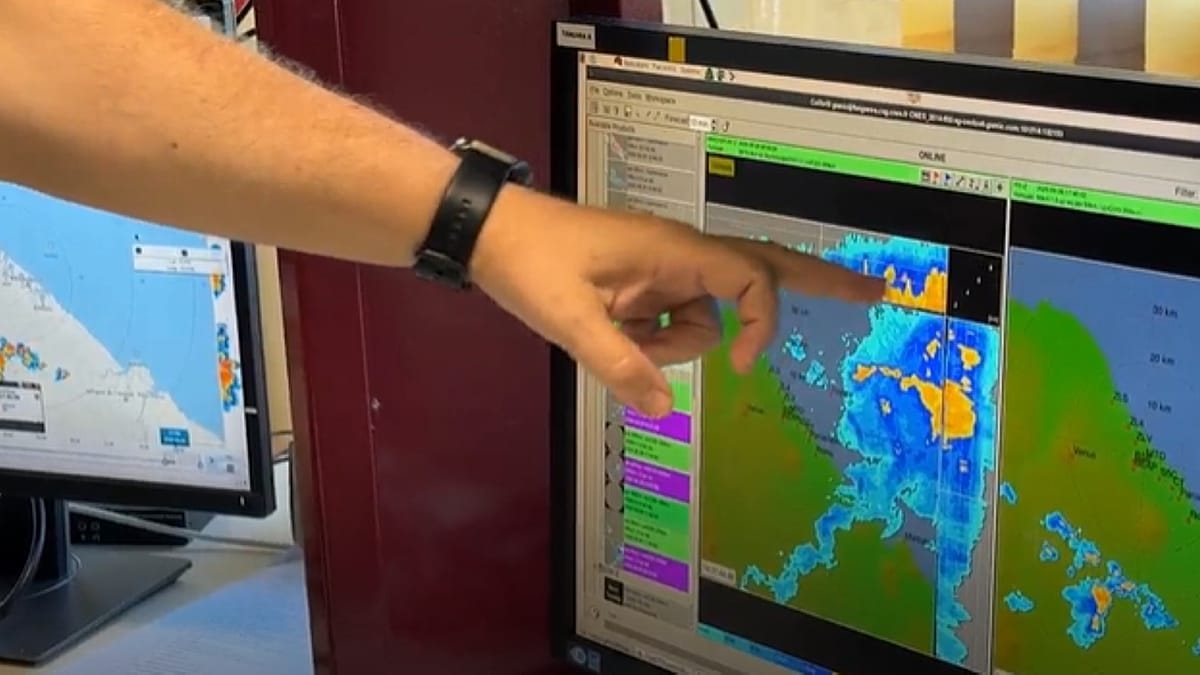
To understand what is really changing with this satellite, we spoke to someone who has spent decades interpreting satellite images in his daily work: Panos Giannopoulos, a meteorologist at the Hellenic National Meteorological Service (HNMS) and weather presenter at SKAI Media Group.

“When I started working 25 years ago, we only had one image every 30 minutes, with three channels; it was the first generation of Meteosat, launched two decades earlier,” he recalls. The second generation, he explains, marked a clear difference: 12 channels and images every ten minutes – every five over Europe – which also made it possible to combine channels to detect fog, dust, volcanic ash and track the evolution of storms, from their birth until they dissipate.

With the third generation, to which MTG-I2 belongs, the leap forward is even greater. The new satellite will scan the upper quarter of the Earth, centred on Europe, every two and a half minutes, something which, according to Giannopoulos, “has never been achieved before anywhere in the world, not even in the United States”. It is a change which, he admits, may overwhelm human analytical capacity: “I do not know whether meteorologists on our own can make full use of all that information, but with the help of artificial intelligence, these images every 2.5 minutes can greatly improve very short-range forecasting.”

This new generation of satellites also carries a lightning detector, something Meteosat has never had before, capable of taking 1,000 samples per second in a very narrow band of the spectrum. And it does not arrive alone: MTG-S, the second satellite in the family, launched in 2025, is already operating in orbit, measuring humidity and temperature profiles in the atmosphere. “Up to now we have depended above all on weather balloons launched every 12 hours from a limited number of locations. That satellite has been delivering data for less than a year, and they are already being fed into global prediction models,” the meteorologist notes.

The MTG-I2 will still take around six months to complete commissioning before it is integrated and calibrated alongside its two sister satellites. From then on, expected around April 2027, the three will operate as a single system. For Giannopoulos, the verdict is clear: “This third generation of Meteosat will have an impact both on very short-range forecasting – the next two or three hours – and on the usual one-to-ten-day range.”

Share. Facebook Twitter Pinterest LinkedIn Tumblr Email

Keep Reading

Lake Ontario or Lake America? Google Maps results differ in Canada, US and across the world

Who is the man set to lead Apple into the world of artificial intelligence?

Inside Kourou: how a satellite is readied to watch Europe’s skies and prevent natural disasters

Inside Kourou: how Europe’s satellite is prepared to watch skies and prevent natural disasters

Waymo in Munich: Could autonomous vehicles make Europe’s roads safer?

Is Twitter back? Ex-employee fights to revive the blue bird

No more doomscrolling till dawn: Meta sets curfews for teen Instagram use

MTG-I2 satellite launches on Ariane 6, completing Europe’s new weather satellite constellation

ESA signs major first contract with Spain’s PLD Space under European Launcher Challenge

Editors Picks

“Never achieved before”: meteorologist analyses MTG-I2 leap to forecast disasters

August 31, 2026

China will stop Russia from going nuclear, Finland’s Stubb says – POLITICO

August 31, 2026

Why is the EU looking for new member states? Ask the Euronews AI chatbot

August 31, 2026

UN racial discrimination committee presents legal case for broad slavery reparations

August 31, 2026

Subscribe to News

Get the latest Europe and world news and updates directly to your inbox.

Latest News

Lake Ontario or Lake America? Google Maps results differ in Canada, US and across the world

August 31, 2026

‘Spider-Man: Brand New Day’ dethrones ‘Titanic’ and nears all-time box office Top Three

August 31, 2026

EU climate chief warns China dependence will make EU’s green transition more costly

August 31, 2026
Facebook X (Twitter) Pinterest TikTok Instagram
© 2026 Daily Guardian Europe. All Rights Reserved.
  • Privacy Policy
  • Terms
  • Advertise
  • Contact

Type above and press Enter to search. Press Esc to cancel.