
Hello, this is Mared Gwyn holding the newsletter pen in Brussels. This morning: Eurozone finance ministers gather amid mounting economic pressures, and EU ambassadors make another push to break the Russia sanctions deadlock.
Economic jitters: Finance ministers from eurozone countries gather in Dublin, Ireland, today, against a fraught backdrop of mounting energy costs, rising inflation and weak growth.
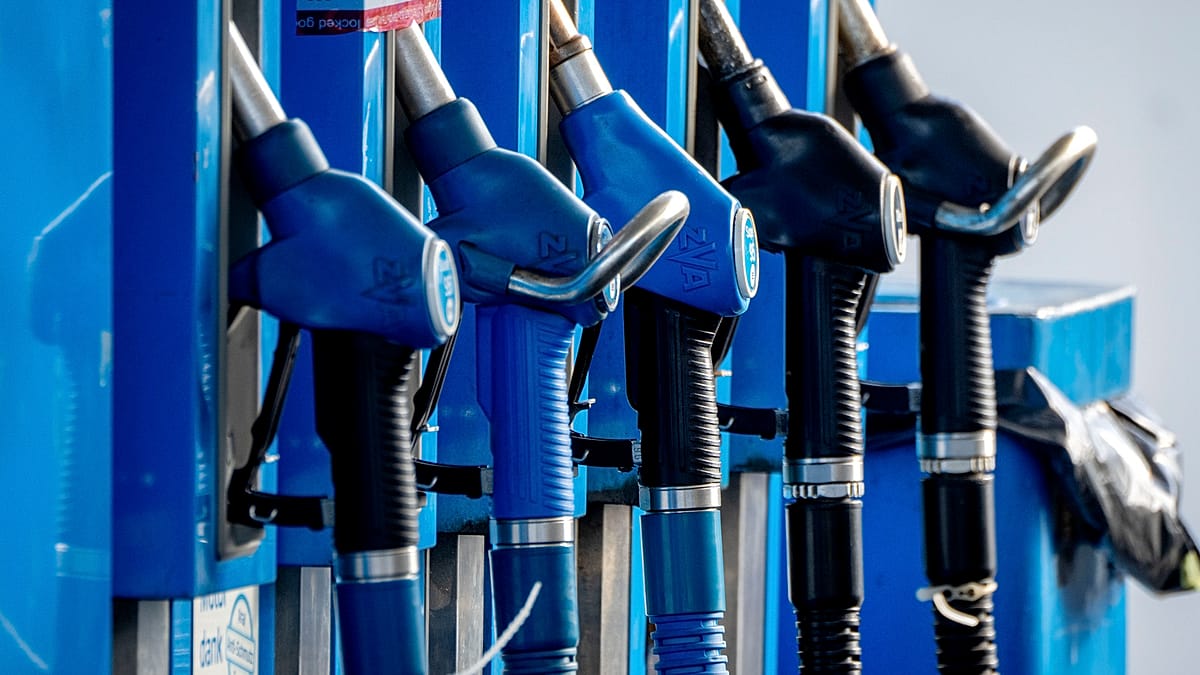
Painful at the pump: Oil prices have surged rapidly in recent days, driven by a reduction in global supplies and exacerbated by recent attacks on Saudi Arabia’s East-West pipeline, which have been attributed to the Iran-backed Houthi rebels.
European leaders are rushing to mitigate the rising prices and their impact on the broader economy. French President Emmanuel Macron has ordered a “mobilisation” to tackle fuel prices, as my colleague Marta Pacheco explains.
Windfall tax on the table: Finance ministers could today respond to calls from some capitals for a windfall tax on energy companies.
Speaking to our correspondent Shona Murray in Dublin ahead of the meeting, Irish Finance Minister Simon Harris — mindful of the neutrality required while chairing the EU Council presidency — spoke plainly about the soaring profits being posted by energy companies as ordinary taxpayers struggle to fill their tanks.
“Energy companies are making extraordinarily large profits on the back of this energy crisis,” he said. “And they’re not making those profits on the basis of being more enterprising or being innovative.”
“This isn’t about rewarding enterprise. They’re making the profits because of the chaos that we’re seeing in the energy markets as a result of the strait of Hormuz being closed.” Watch.
Not about Ukraine: Harris also disputed US President Donald Trump’s claims that petrol and diesel prices were skyrocketing due to Ukraine’s targeting of Russia’s refineries, which are part of the Kremlin’s war machine. “The reason there’s a major energy crisis in the world right now is because the Strait of Hormuz is closed,” he said.
The volatility of the global bond market and signs of rising inflation are also of concern to eurozone ministers, our economy reporter Eleonora Vasques writes, with European Central Bank (ECB) President Christine Lagarde set to join the discussions after the institution raised interest rates on 10 September.
All 27 EU finance ministers and central bank governors will also meet today and tomorrow for informal talks on the same issues, joined by finance ministers from Canada, the UK, Ukraine and Switzerland, as well as International Monetary Fund (IMF) director Kristalina Georgieva.
Yet another try: Meanwhile in Brussels, EU ambassadors will meet this morning to try, once again, to renew the individual sanctions against Russia, which are due to expire next week if no deal is struck in time, Jorge writes.
The chief obstacle remains that France wants to remove oligarch Alisher Usmanov from the blacklist in an attempt to secure the freedom of several French citizens detained in Azerbaijan. The demand has put Brussels in an unprecedented conundrum: never before have the EU sanctions been entangled with a prisoner release.
While some diplomats feel sympathy for Paris, others wonder why Azerbaijan cares so much about Usmanov. The vast majority, though, remains opposed to delisting the billionaire. “We need the regime to stand,” a diplomat said. “Couldn’t this really be solved in another way, without delisting heavy Russian oligarchs?”
Consultations intensify: France, as the bloc’s second-largest member state, carries considerable weight around the table and its veto is something that you can’t just shake off. Intense consultations have been going on between capitals to find a palatable solution for everyone. The Irish presidency of the EU Council and the External Action Service (EEAS) are also involved.
As of now, the contours of a unanimous agreement are still blurred. Also, let’s not forget that Slovakia also wants Usmanov out, though for different reasons.
Fresh support: Jorge also reports that the European Commission will disburse €3.3 billion for Ukraine to procure missiles and drones later today. Von der Leyen confirmed the move on Thursday after talks with President Zelenskyy over Ukraine’s budget deficit, which Brussels is still trying to pin down.
US drawdown: Meanwhile, the Pentagon is weighing a drastic withdrawal of as many as 25,000 troops from Europe, reducing the US’s military presence on the continent by about a third, NBC News reported overnight citing seven current and former US and Western officials.
While no final decision has been taken, according to the report, the recommendation is set to be laid out to Defence Secretary Pete Hegseth as part of a six-month review of US military presence in Europe later today.
Analysis: Bruised by Trump, the EU and Canada find solace in each other’s arms
The blossoming EU-Canada alliance cannot be understood without the long shadow of Donald Trump, who has alienated both sides with his punitive tariffs, annexationist threats and scathing attacks.
The breakup has been painful, to say the least. After all, both the EU and Canada have long defined the United States as their closest ally, their main security provider, their trade partner of choice. But Trump’s return to the White House abruptly overturned these long-held assumptions, forcing them to reckon with their place in a cruel, cold world.
Bruised and battered by the mercurial commander-in-chief, Brussels and Ottawa this week found solace in each other’s arms, my colleague Jorge Liboreiro writes in his post-Strasbourg analysis.
More from our newsrooms
Brussels seeks ‘credible’ outcome in EU-China talks after key negotiators’ call. The European Commission stepped up pressure on China on Thursday, calling for tangible results with Beijing following a one-hour video call between Trade Commissioner Maroš Šefčovič and his Chinese counterpart, Wang Wentao. Peggy Corlin has the details.
Tusk: Intelligence sees Russian plan for drone strikes on Poland, allies. The Polish Prime Minister has outlined the “most likely” scenario for the months ahead, warning of serious events and hybrid attacks on Poland and other Ukraine backers, Aleksandra Galka Reczko reports.
Trump determined to end Iran war soon, US president’s senior adviser tells Euronews. Massad Boulos, senior adviser to the US president on Arab and Middle Eastern affairs, has told Euronews that Donald Trump is working to end the months-long war. More from Jane Witherspoon.
We’re also keeping an eye on
- Eurogroup ministers meet in Dublin, followed by an informal gathering of EU finance and economy ministers.
- European Commission Executive Vice-President Teresa Ribera attends a Conference on International Antitrust Law and Policy in the US.
- NATO Military Committee Conference starts in Copenhagen, Denmark.
- Polish Prime Minister Donald Tusk heads to Kyiv.
That’s it for today. Jorge Liboreiro, Vincenzo Genovese, Shona Murray, Eleonora Vasques and Marta Pacheco contributed to this newsletter. We’ll be back on Monday.