
Published on •Updated
Lithuania is calling for an overhaul of the European Union’s voting system following Hungary’s announcement it is blocking two key decisions in relation to Ukraine because of problems with Budapest’s access to cheap Russian oil through the Soviet-era Druzhba pipeline.
Ahead of Monday’s foreign affairs meeting in Brussels, Hungarian Foreign Minister Péter Szijjártó posted on X: “At tomorrow’s Foreign Affairs Council, the EU aims to adopt the twentieth sanctions package. Hungary will block it.
“Until Ukraine resumes oil transit to Hungary and Slovakia via the Druzhba pipeline, we will not allow decisions important to Kyiv to move forward”, Szijjártó said.
This means Budapest is blocking a €90 billion EU loan to Kyiv that was agreed and endorsed by all 27 member states before Christmas.
Ukraine is due to run out of money by early April and needs the capital to run the country as well as support the military as it enters the grim milestone of five years of war.
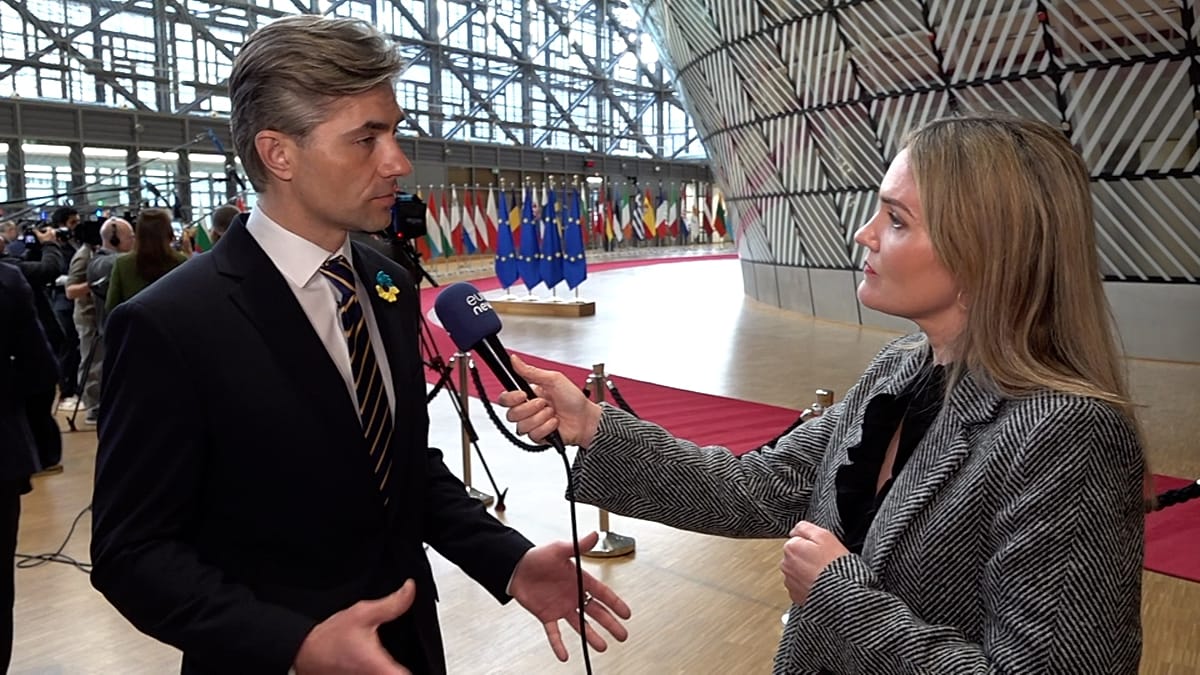
“We were expecting that everything was already prepared for the fourth anniversary and we will be ready to deliver new sanctions package, and also the €90 billion loan to Ukraine”, Lithuanian Foreign Minister Kęstutis Budrys told Euronews’ Europe Today show.
Given that one of the policies’ main goals was to show that “Europe is solid, Europe is resolved and we can deliver”, Hungary’s obstruction “is really frustrating”, Budrys said.
Hungary is known as a serial disrupter in the EU, frequently threatening to block crucial polices – often relating to Ukraine’s accession to the EU, or the EU’s material support for Kyiv while it defends itself against Russia.
No more unanimity?
EU officials and member states have long questioned whether unanimous voting for matters of foreign policy is practical anymore.
It happens “so many times, this exploitation of the principle of unanimity”, said Budrys. “We have to review the very decision-making process, or we have to review, the powers of one of the member states. We have to go into the discussion about the decision-making and common foreign security policy and whether we should move to QMV” (qualified majority vote).
A “qualified majority” is a vote at the Council of the EU that meets two criteria: 15 out of 27 members voting together who collectively represent 65 percent of the EU’s population. This standard removes power from member states who use their veto to hold up legislation for their own purposes.
But Budrys floated another idea: that Hungary’s voting rights could be removed in certain areas given its constant flouting of norms and rules critical for the functioning of the union.
“Another thing is the principles that we have in Article 7, what allows us to reduce the voting rights of one of them member if we cannot proceed further,” said Budrys.
The Article 7 process is designed to hold any member state deemed in breach of the EU’s core values to account. It can be triggered by one-third of member states, the European Commission and the European Parliament.
But once triggered, the actual process of removing a state’s voting rights is far more difficult to achieve – and it has failed in the past in relation to Hungary’s previous alleged transgressions.
Nonetheless, Budrys warned continuing down the current path will spell the “end for the EU as a geopolitical actor in the future”.
“This is what is at stake.”