
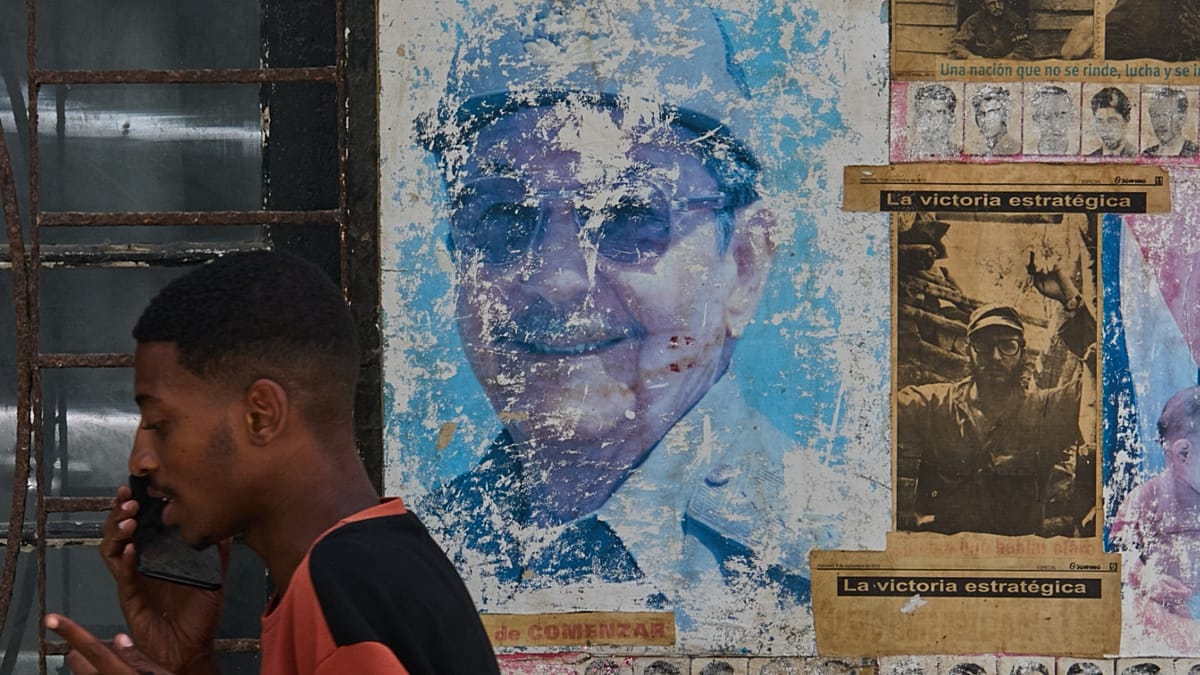
The indictment announced this week by the United States against former Cuban president Raúl Castro is the latest episode in the pressure campaign that the Trump administration has waged for months against the island’s communist government. Castro was charged over his alleged role in the 1996 downing of two light aircraft operated by the Miami-based group Brothers to the Rescue. At the time, Castro was defence minister, while his brother, Fidel Castro, leader of the Cuban Revolution and the dominant figure in the island’s politics for more than half a century, was running the country as president.
Today, at 94, Raúl Castro remains a central figure within Cuba’s power structure, even after formally stepping back from front-line politics. The younger brother of Fidel Castro, the pair led the revolution that toppled dictator Fulgencio Batista in 1959 and put in place the system that still governs the island.
Who is Raúl Castro?
The Castro brothers were born in Birán, in eastern Cuba, the sons of a Galician landowner who had emigrated to the island. Fidel Castro quickly became the political and ideological face of the revolutionary movement, while Raúl Castro from early on took on a more military and organisational role. Both took part in the 1953 attack on the Moncada barracks, a failed attempt at an uprising against the dictatorship of Fulgencio Batista that ended with their arrest and subsequent exile in Mexico.
From there they reorganised the movement and prepared their return to Cuba. In 1956 they landed on the island aboard the yacht Granma with a small group of insurgents, among them the Argentine Ernesto “Che” Guevara. After suffering heavy initial losses, the survivors withdrew to the Sierra Maestra, where they launched a guerrilla war that gradually built popular support, especially among rural communities and sectors disaffected by the corruption and repression of the Batista regime.
Over the next two years, the guerrillas combined military actions with a political and propaganda strategy that progressively weakened the government. By late 1958, the collapse of Batista’s army and the loss of domestic support forced Batista to flee the country. On 1 January 1959, the revolutionary forces entered Havana, sealing their victory.
After seizing power, Fidel Castro monopolised Cuba’s political leadership for decades, first as prime minister and then as president, rapidly reshaping the country’s political and economic system. Raúl, for his part, was put in charge of the Revolutionary Armed Forces, becoming defence minister in 1959, a post he held for almost half a century. From that position he built much of Cuba’s military and intelligence apparatus and was regarded as the regime’s second most powerful figure.
Raúl Castro’s presidency and the thaw with the US
When Fidel’s health began to deteriorate in 2006, Raúl provisionally took over the presidency and two years later was formally appointed head of state. Although he kept the one-party system intact, he pushed through a series of limited economic reforms aimed at easing the island’s structural crisis. Under his leadership space was opened up for small private businesses, restrictions on travelling abroad were relaxed and the population gained greater access to the internet and mobile phones.
One of the most significant moments of his presidency came in 2014, when, together with then US president Barack Obama, he led the historic diplomatic thaw between Washington and Havana. The rapprochement allowed embassies to reopen and restored diplomatic relations after more than half a century of hostility. Barely two years later, the two leaders would symbolically cement this thaw with a historic meeting in Havana.
However, Donald Trump’s arrival in the White House reversed much of that progress. Trump tightened economic sanctions and once again put Cuba at the heart of regional ideological confrontation.
A tightly managed generational handover
In 2018, Raúl Castro formally handed the presidency to Miguel Díaz-Canel, an electronics engineer and Communist Party official who became the first Cuban head of state from outside the Castro family since 1959. His appointment was presented as a step towards a generational transition within the system, although carefully overseen by the old guard of Castroism.
Díaz-Canel’s rise did not mean a break with the existing political model. On the contrary, his leadership has been marked by ideological and institutional continuity, with the Communist Party retaining its central role and no opening to political pluralism. During his first years in power he also shared the spotlight with Raúl Castro, who remained first secretary of the Communist Party, the post with the greatest real influence in the Cuban system, until 2021.
Even after formally stepping down from that post, many analysts agree that Raúl Castro has continued to wield decisive influence from behind the scenes, particularly through his long-standing ties to the Revolutionary Armed Forces, seen as one of the main pillars of power in Cuba and a key player in strategic sectors of the economy.
The next Venezuela?
Washington’s current offensive increasingly resembles the strategy recently deployed against Nicolás Maduro in Venezuela: legal pressure, economic sanctions, diplomatic isolation and a growing threat of international prosecution against the ruling elites. The indictment of Raúl Castro, over events that took place almost three decades ago, marks an unprecedented escalation in the historically tense relations between the United States and Cuba, and reflects the Trump administration’s attempt to weaken the historic core of Castroism.
The US strategy now combines economic pressure on a Cuba mired in a severe energy crisis and shortages with legal action targeting symbolic figures of the regime. From Washington, several officials have hinted that the goal goes beyond demanding accountability for the downing of the aircraft in 1996 and is aimed directly at speeding up a political transition on the island.