
Close Menu
Daily Guardian EuropeDaily Guardian Europe
  • Home
  • Europe
  • World
  • Politics
  • Business
  • Lifestyle
  • Sports
  • Travel
  • Environment
  • Culture
  • Press Release
  • Trending
What's On

Jafar Panahi: ‘Every minute’s delay in helping Iranian people means more innocents are killed’

January 13, 2026

European leaders vow to hit Iran with sanctions after regime kills protesters – POLITICO

January 13, 2026

Russia launches major attack on Ukraine, targeting power grid and killing four

January 13, 2026

Ørsted up 5% as US judge clears restart of stalled US wind farm

January 13, 2026

Malaysia to take legal action against Elon Musk’s X and xAI over misuse of Grok chatbot

January 13, 2026
Facebook X (Twitter) Instagram
Web Stories
Facebook X (Twitter) Instagram
Daily Guardian Europe
Newsletter
  • Home
  • Europe
  • World
  • Politics
  • Business
  • Lifestyle
  • Sports
  • Travel
  • Environment
  • Culture
  • Press Release
  • Trending
Daily Guardian EuropeDaily Guardian Europe
Home»Business
Business

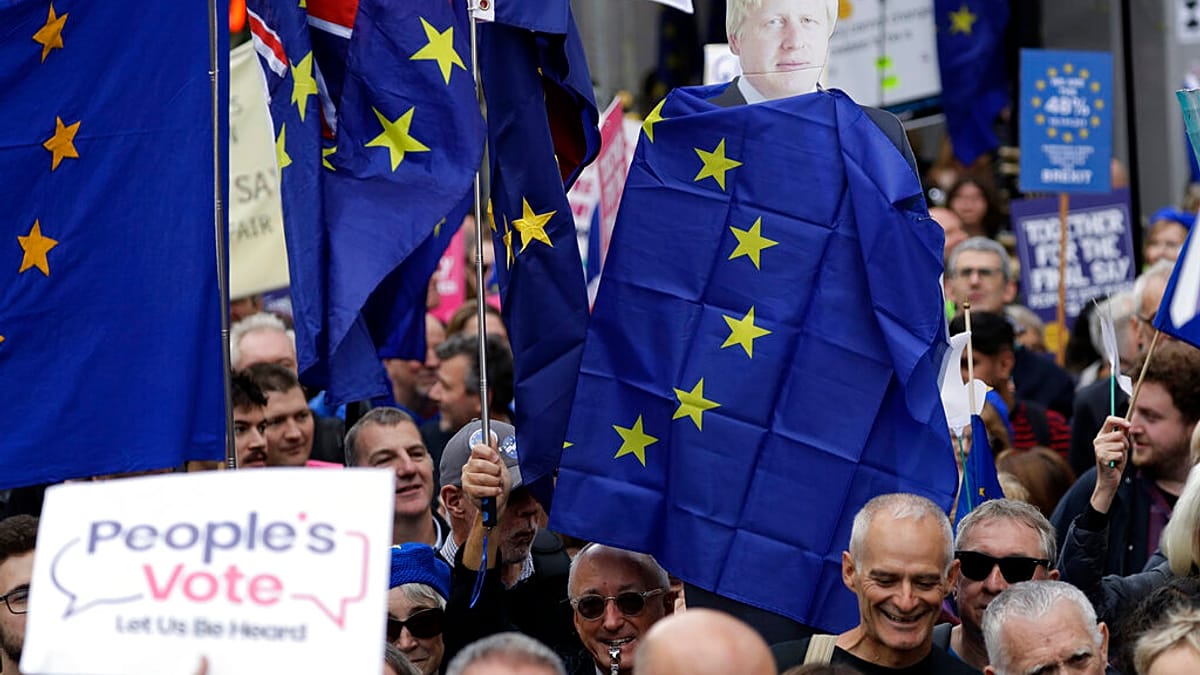
A decade of Brexit: Britain falls behind peers in trade and growth

By staffDecember 3, 20253 Mins Read
A decade of Brexit: Britain falls behind peers in trade and growth
Share
Facebook Twitter LinkedIn Pinterest Email

Published on
03/12/2025 – 17:24 GMT+1

Nearly a decade after the Brexit referendum, the UK has diverged sharply from its pre-2016 trajectory through a slow, grinding erosion of investment, productivity, and global standing.

That’s according to a new report by the Decision Maker Panel, a research initiative hosted at King’s College London.

“We estimate that by the start of 2025, the UK economy was approximately 8% smaller than it would have been without Brexit, based on macro data, and 6% smaller using firm-level micro data,” the study said.

The authors describe a prolonged period in which political volatility and shifting commercial rules froze or delayed decisions that normally drive growth. Instead of investing and hiring, firms braced for the next announcement or change in trading conditions.

Across the country, investment plans were shelved and managerial time was spent on risk assessments and Brexit preparation rather than developing new products or expanding operations, researchers said.

“Investment is estimated to have been 12–18% lower, employment 3–4% lower, and productivity also 3–4% lower than it would have been if the UK had not voted to leave the EU,” the study claimed.

The damage was also uneven. The businesses most deeply integrated into European supply chains — including many of the UK’s most productive exporters — felt the sharpest blow, weakening sectors that historically powered national growth.

The researchers characterise the UK’s departure from the EU as a kind of reverse trade reform, one that raised barriers rather than dismantling them as is custom in a globalised economy.

Yet trade flows did not collapse immediately after the referendum. For some years the UK operated under existing rules, masking the deeper shift underway. The real rupture came once the post-Brexit Trade and Cooperation Agreement took effect, with no significant impact before that.

As the decade progressed, the UK’s performance began to slip against its international peers. Growth lagged, living standards stagnated, and the country fell down the economic league tables.

UK GDP per capita is now estimated to have grown “between 6% and 10% less than other similar countries”, placing the UK “around the 10th percentile” among advanced economies.

The report warns that many early forecasts, while directionally correct, underestimated how long uncertainty would last and how deeply it would seep into corporate decision-making.

What policymakers once treated as a temporary adjustment, the authors argue, has morphed into a structural shift still working its way through the economy.

Taken together, the findings describe a Britain reshaped less by a single political moment than by years of diverted energy, diminished confidence, and weakened competitiveness. Nearly ten years on, the effects of Brexit show little sign of fading.

Share. Facebook Twitter Pinterest LinkedIn Tumblr Email

Keep Reading

Ørsted up 5% as US judge clears restart of stalled US wind farm

Iran’s Revolutionary Guard control the economy – here’s why the currency suffers

Half of Europeans seek a new job in 2026, but most feel unprepared to find one 

Warner Bros rejects fresh takeover offer from Paramount in favour of Netflix

Flight of the bullions: Why did Maduro move gold to Switzerland?

Italy seeks carbon border tax freeze on fertilizers, raising stakes for Mercosur deal

Morgan Stanley files to launch Bitcoin and Solana ETFs as Wall Street embraces crypto

French inflation eases on energy costs ahead of eurozone data release

UK productivity puzzle: Zombie firms fail, but jobs remain scarce

Editors Picks

European leaders vow to hit Iran with sanctions after regime kills protesters – POLITICO

January 13, 2026

Russia launches major attack on Ukraine, targeting power grid and killing four

January 13, 2026

Ørsted up 5% as US judge clears restart of stalled US wind farm

January 13, 2026

Malaysia to take legal action against Elon Musk’s X and xAI over misuse of Grok chatbot

January 13, 2026

Subscribe to News

Get the latest Europe and world news and updates directly to your inbox.

Latest News

US State Department threatens UK over probe into Elon Musk’s X – POLITICO

January 13, 2026

North Korea’s Kim shakes up security detail amid ‘decapitation’ fears

January 13, 2026

US Pentagon embraces Elon Musk’s Grok AI chatbot despite global backlash

January 13, 2026
Facebook X (Twitter) Pinterest TikTok Instagram
© 2026 Daily Guardian Europe. All Rights Reserved.
  • Privacy Policy
  • Terms
  • Advertise
  • Contact

Type above and press Enter to search. Press Esc to cancel.