
In boxes stored at a secret location in Le Havre, nearly 38,000 pairs of counterfeit trainers that arrived from China in 2011 had been awaiting their fate. Because behind these shoes lies one of the longest legal proceedings customs officers have ever had to handle.
After fifteen years of legal wrangling, the French importer was finally sentenced in December 2025 to a customs fine of 1.56 million euros, 260,000 euros for customs-related money laundering, as well as three years in prison, two of them suspended.
Customs officers in Le Havre can therefore finally turn the page, and also free up some space in their warehouse!
According to Anthony, a customs officer working on this site, counterfeiting is a real problem, a real scourge, because any product can be counterfeited. Luxury goods, especially those made by big French brands, but also everyday consumer products, soaps, shampoos and, above all, toys, which are hugely popular and can be counterfeited almost instantly.
Should these products have been destroyed, or could they have been given a second life?
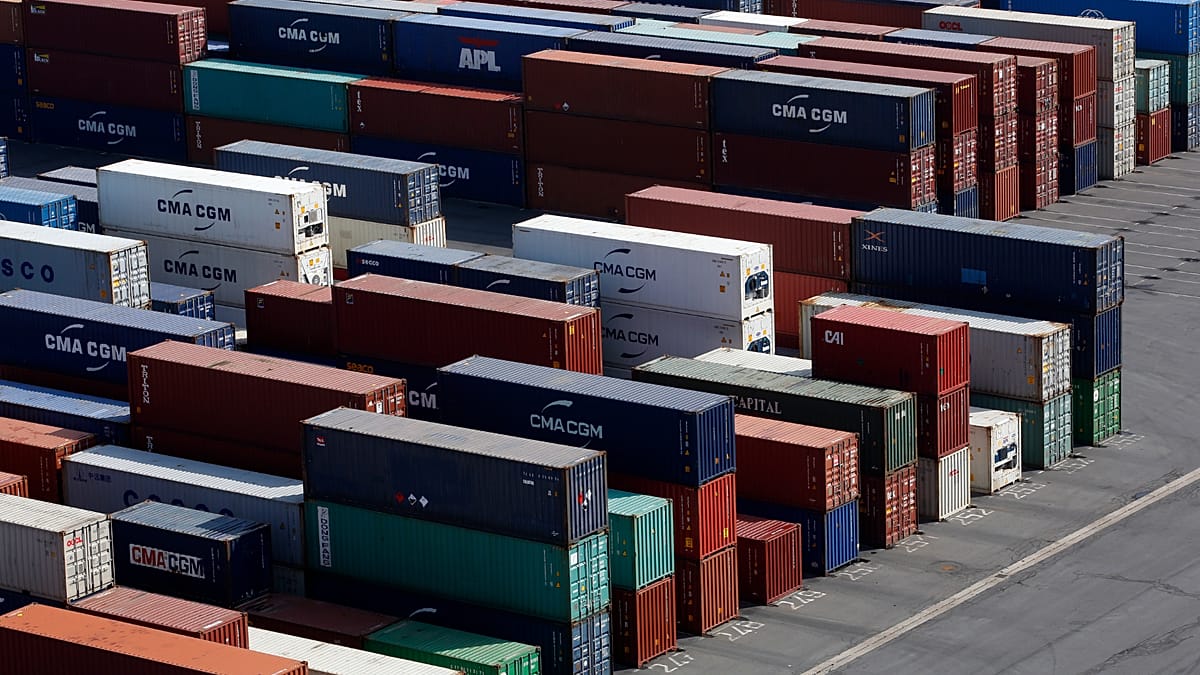
In Le Havre, France’s main container port, seizures of counterfeit goods are nevertheless commonplace. Shoes, clothing, toys, tech products and even car parts: everything can be copied and sold on at a premium.
Last year, more than 20 million counterfeit products were seized in France, nearly 1.2 million of them in Le Havre. A highly lucrative trade that is attracting more and more organised criminal networks.
For customs, there is no hesitation: these goods can neither be resold nor redistributed. The law forbids it. Once seized, they are systematically destroyed to prevent them from re-entering commercial circuits.
This debate regularly resurfaces: on the one hand, the destruction of thousands of pairs of shoes surprises or outrages those who see it as massive waste in the face of hardship, and on the other, customs officials point out that these counterfeits, often failing to meet safety standards, may contain toxic or hazardous materials.
The destruction operation took place on 3 June in the port city, at a specialist centre under contract to customs.
In no time, two mobile cranes grabbed and crushed the shoes with their grapples before dumping them into a shredder. The shredded pieces spat out at the other end will then be incinerated or recycled.
According to Stéphane Peterson, regional director at UNIFER Environnement, which is in charge of these operations, this pile of waste at the end of the process can have several destinations; in this particular case, it will be recovered through incineration, carried out in collaboration with a local partner. In other situations, we can also treat this type of residue to produce a solid fuel, an extremely high-calorific material that will mainly feed the boilers in cement works.
A highly unexpected fate for these shoes from China: after a fifteen-year wait, their final stop was neither a shop nor a wardrobe, but an industrial shredder.