
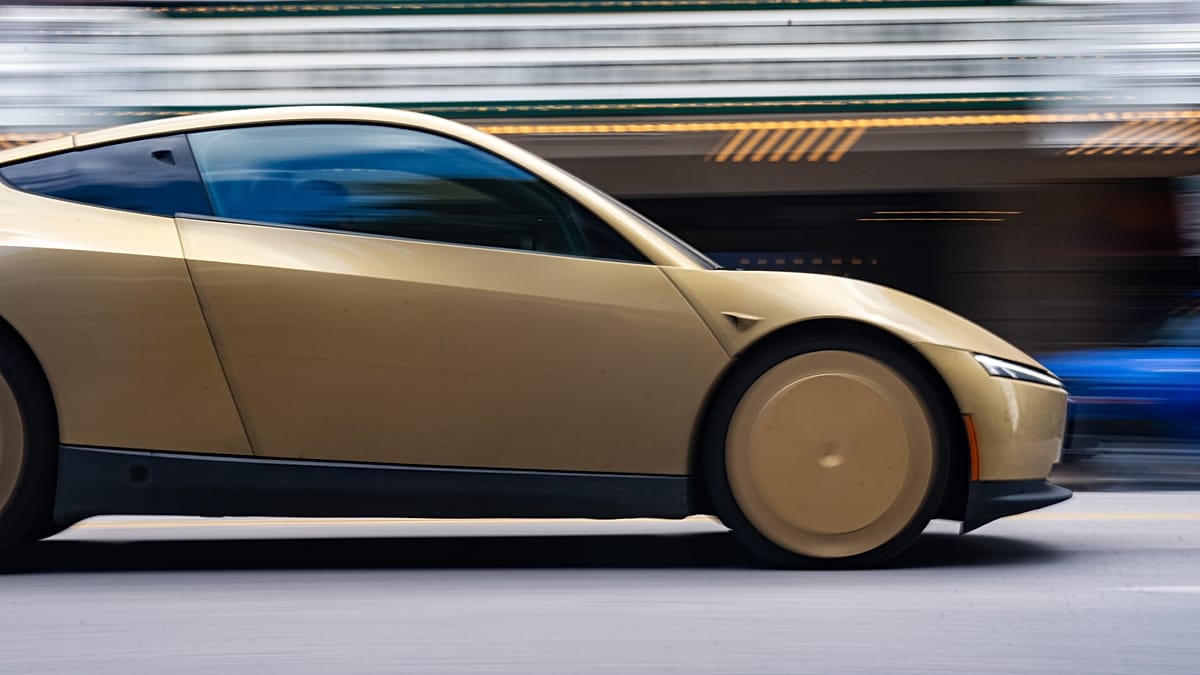
Several car companies across the world have attempted to launch robotaxis in the last few years. However, more often than not, these plans have been quickly abandoned, with companies doing quiet U-turns shortly after announcing them.
Tesla, one of the biggest poster companies for robotaxi promises, has faced a slowing rollout in the last few months, driven by the requirement to increase safety and unresolved operational and software challenges.
However, Tesla is hardly the only company facing these problems, with a number of European car companies like Volkswagen, BMW and Mercedes-Benz seeing considerable hurdles in their robotaxi plans as well.
Why is it so difficult for companies to launch robotaxis in Europe?
While legacy carmakers have seen minor advancements in robotaxis lately, progress still remains slow and uneven for widespread launches.
Volkswagen first announced its commercial robotaxi partnership with Uber back in April 2025. This was after it also introduced its autonomous driving subsidiary, VW ADMT in July 2023.
This July, the company finally launched its first actual pilot passenger robotaxi service via its subsidiary Moia in Hamburg.
Despite this pilot, full commercial rollout of Volkswagen’s robotaxis in Europe still faces considerable challenges, such as strict regulatory timelines, high hardware costs and mandatory safety monitor requirements, among others.
European and German road regulations require trained safety monitors to stay behind the wheel during public tests. This makes it highly unlikely for Volkswagen to receive fully driverless commercial certification until at least 2027.
Europe also continues to take a more cautious approach to unproven software, compared to the US and China. This risk-averse oversight means that real-world algorithm training is often delayed.
Local safety watchdogs and crash-investigation guidelines in Europe could also struggle to keep pace with rapid commercial robotaxi rollouts, adding another layer of complexity.
High hardware costs and software complexity have slowed rollouts further. BMW has paused its “eyes off” Personal Pilot Level 3 features on flagship models because of soaring costs and low demand.
Instead, it has now shifted focus toward advanced Level 2 Plus/DCAS assisted driving, where the driver remains responsible for the car and maintaining attention on the road.
Similarly, Volkswagen ended a prior joint development alliance with Bosch, due to higher costs.
Consumers are also increasingly unwilling to pay more for only limited autonomous features, which has stalled business cases for driverless fleets in many cases.
Rising competition between European players like Mercedes-Benz and tech-driven partnerships like the Uber-Autobrains/Wayve tie-up has squeezed the assisted and automated driving market further.
Strong existing urban public transport networks across most European cities has also moved the focus towards stronger transit integration rather than more ride-hailing options.
China’s advantage
While Europe continues to struggle with autonomous driving features and commercial robotaxi rollouts, China already has robotaxis in several of its cities like Beijing, Wuhan, Shenzhen, Guangzhou and Shanghai.
These services operate mainly within specified geofenced pilot areas and suburban districts, rather than across entire metropolitan centres, with cities like Wuhan and Shenzhen even having extensive commercial fleets running 24/7.
Users can hail rides through mainstream platforms and booking apps such as WeChat and Alipay.
This has led to one key question: What is China doing right regarding robotaxis, that Europe still isn’t?
One of the biggest reasons China is seeing explosive growth in robotaxis is due to widespread government support, as state policies back autonomous driving development under national tech goals.
Another reason is that even though they also face safety issues, such as a licensing pause following a technical traffic disruption in Wuhan in April this year, permit issuance is now steadily bouncing back, as of July.
As such, China is not letting occasional technical roadblocks slow the overall trajectory and growth of robotaxis across its cities.
The domestic car manufacturing sector and EV supply chain has also boosted significant opportunities to gain cheaper hardware and scale production.
Similarly, cities like Beijing and Guangzhou also provide plenty of opportunities to train software in chaotic urban centres and help algorithms understand unpredictable pedestrian and vehicle behaviour.
Chinese consumers have displayed a greater willingness to ride in and trust driverless vehicles compared to European and other Western markets too.