
Published on •Updated
A vast majority of EU member states criticised the reopening of the Russian pavilion at the Venice Biennale during a “heated discussion” among the bloc’s culture ministers on Tuesday in Brussels.
Many ministers also expressed support for the European Commission’s move to freeze a €2 million grant to the Biennale Foundation for allowing Russia’s participation, several diplomats told Euronews.
The issue was raised by Latvian Minister of Culture Agnese Lāce, who called for preventing what she described as “the instrumentalization of cultural institutions by Russia.”
According to people in the room, a total of 14 ministers denounced Russia’s presence but stopped short of directly criticising Italy, which was represented at the meeting by Ambassador Marco Canaparo in place of Culture Minister Alessandro Giuli.
Several countries, such as Belgium, Spain and Poland, argued that culture cannot be used to whitewash the war of aggression launched by Russia against Ukraine and stressed the importance of avoiding any sanction circumvention by Russian individuals involved in the exhibition.
The Commission and Cyprus’s EU rotating presidency called for a suspension of funding, reallocating the Biennale’s money to Ukraine’s reconstruction.
Brussels has so far strongly condemned the Biennale’s decision to allow Russia to reopen its national pavilion, claiming that culture “should never be used as a platform for propaganda” and warning that the Russian stand could become a “platform to individuals who have actively supported or justified the aggression against Ukraine.”
In April, the Commission initiated proceedings to cut funding, notifying the Biennale of a breach of the grant’s conditions, which, if not addressed, could lead to the suspension or termination of the grant.
The foundation maintains that the event should remain “a place of dialogue, openness and artistic freedom” and that it cannot prevent a country from participating, as any state recognised by the Italian Republic can apply to join the exhibition.
Russia maintains a pavilion within the exhibition area and, under the rules, can independently decide whether to take part in each edition of the Venice Biennale. Its last participation was in 2019, as Russian artists withdrew in 2022 and the country did not present a pavilion in 2024, instead lending its space to Bolivia.
Russia’s participation in 2026 sparked controversy within the Italian government, as Culture Minister Alessandro Giuli boycotted the opening ceremony, while vice prime minister Matteo Salvini defended the “freedom of art” and even paid a visit to the Russian pavilion.
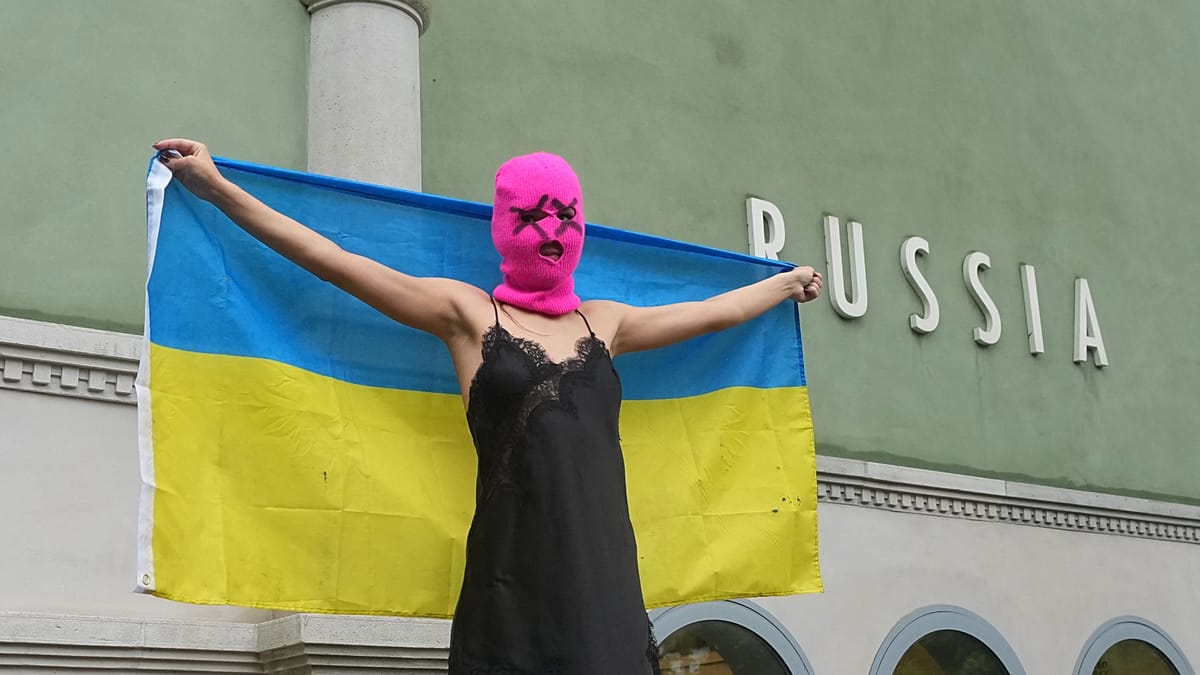
This year’s edition opened on Saturday, amid protests for the participation of Russia and Israel. The Russian dissident collectives Pussy Riot and Femen displayed slogans against Vladimir Putin while wearing balaclavas and topless.
The Biennale’s international jury, which will assign the main awards to the pavilions, collectively resigned after criticism for its decision to exclude from prizes those countries whose leaders are currently accused of crimes against humanity by the International Criminal Court.