
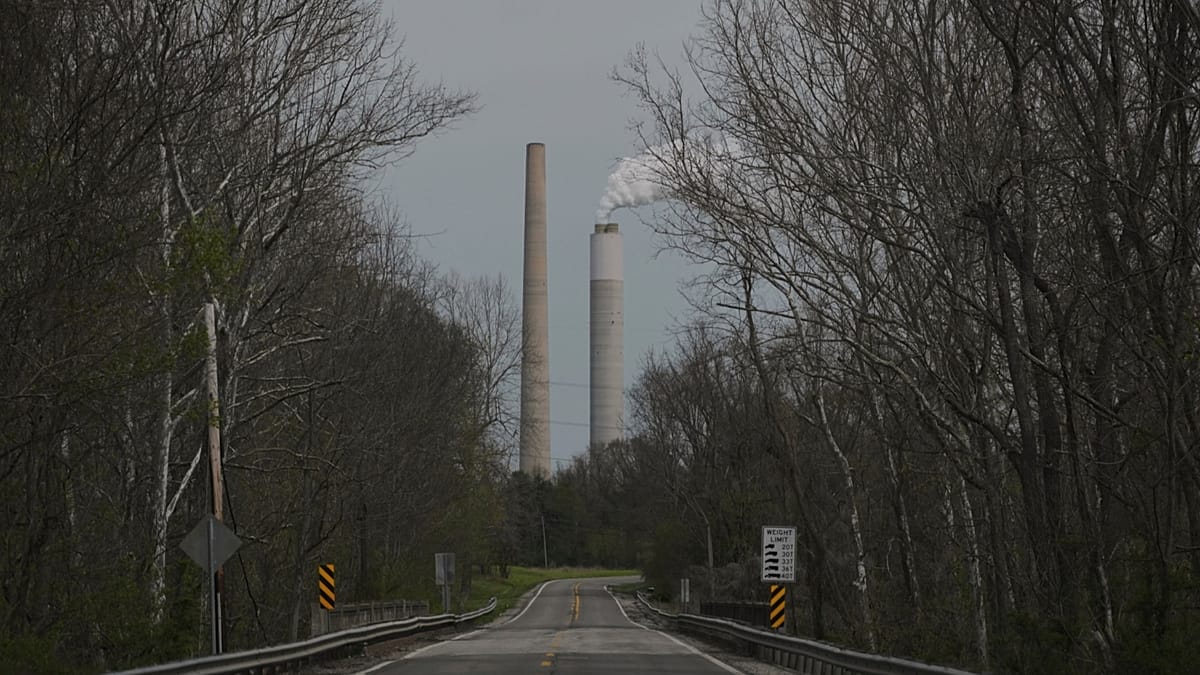
An increasingly concentrated group of fossil fuel giants is dominating global emissions and “actively sabotaging” climate action to weaken government ambition.
New analysis from Carbon Majors’ dataset found that just 32 companies were responsible for 50 per cent of the world’s CO2 emissions in 2024, down from 36 a year earlier.
2024 was the hottest year on record, and the first to exceed 1.5℃ above pre-industrial levels. Copernicus recently confirmed that 2025 was the third-hottest year globally and in Europe, with climate change pushing temperatures over 1.5℃ for the first time in a three-year period.
Experts are now calling for accelerated investment in green energy, arguing that “misleading” fossil fuel firms can no longer hold the world back.
Is it time for a fossil fuel phaseout?
Transitioning away from fossil fuels quickly became a flashpoint discussion at last year’s COP30 summit in Belém, despite not being on the official agenda.
More than 90 countries, including the UK, Germany and the Netherlands, backed the idea of a roadmap that would allow each nation to set out its own targets to phase out fossil fuels. Lula da Silva was also vocal about the issue, calling on the world to “start thinking about how to live without fossil fuels”.
Despite momentum, all mentions of fossil fuels were scrubbed from the final deal in the last hours of the summit.
Carbon Majors found that 17 of the top 20 emitters in 2024 were firms controlled by nations that went on to block this roadmap. This includes Saudi Arabia, Russia, China, India, Iraq, Iran, and Qatar.
“Each year, global emissions become increasingly concentrated among a shrinking group of high-emitting producers, while overall production continues to grow,” says Emmet Connaire, a senior analyst at Influence Map, which hosts the Carbon Majors platform.
“Simultaneously, these heavy emitters continue to use lobbying to obstruct a transition that the scientific community has known for decades is essential.”
Hope for a fossil fuel-free future now lies outside of the UN’s remit. In April, more than 85 countries will meet at Colombia’s Global Fossil Fuel Phaseout conference, which will be co-hosted with the Netherlands.
The world’s top polluters
In 2024, the top five state-owned emitters were Saudi Aramco, Coal India, CHN Energy (owned by China), National Iranian Oil Co., and Gazprom (owned by Russia).
Together, the companies were responsible for 18 per cent of global fossil fuel and cement CO2 emissions. Coal India, CHN Energy, National Iranian Oil Co, and Gazprom all increased their emissions in 2024 compared to 2023.
The top five investor-owned emitters were ExxonMobil, Chevron, Shell, BP and ConocoPhillips, which accounted for 5.5 per cent of global fossil fuel and cement CO2 emissions in 2024.
Shell and BP are privately owned in the UK, while ExxonMobil, Chevron and ConocoPhillips are all investor-led American corporations. COP30 marked the first time in history that the US failed to send a representative to the UN summit, before Trump withdrew his administration from a slew of climate treaties earlier this year.
The UK’s energy secretary Ed Miliband has long called for the transition away from fossil fuels and towards “homegrown clean energy” as part of the country’s net zero targets.
A drive towards green energy
“Large emitters are on the wrong side of history,” says Christiana Figueres, former UNFCCC executive secretary.
“When we need to accelerate progress to the clean energy future that would give us greater energy security, affordability and freedom – these emitters continue to block our way.
“While clean energy and electrification are already receiving nearly twice the investment of fossil fuels globally, carbon majors are clinging on to outdated, polluting products and continue to mislead the public on the urgent real-world consequences of their actions.”
Tzeoporah Berman, chair and founder of the Fossil Fuel Treaty Initiative, argues that the analysis proves that fossil fuel firms are “actively sabotaging” climate action and weakening government ambition.
“Their increasing output and blatant opposition to a fossil fuel phase-out, as witnessed at COP30, reveal a systemic barrier to progress,” she adds.
“This is precisely why a fossil fuel treaty is not merely an option, but the indispensable mechanism to hold these giants accountable, break their stranglehold on climate policy, and ensure a fast and fair global transition away from the products threatening our very existence.”