



It’s been over 13 years since a country last joined the European Union. Now, there are nine official candidate countries, some of which, such as Albania, expect negotiations to conclude as early as 2027.
But what does EU enlargement actually mean for the economy and investment opportunities? Does having more members mean more complexities? Does an influx of cheap labour spell disaster for incumbent members? And who stands to gain the most?
In this episode of The Big Question, Angela Barnes is joined by Jan Růžička, Chief External Affairs Officer at PPF Group, a privately held investment group founded in the Czech Republic, to discuss the biggest opportunities and risks of EU enlargement.
What are the biggest commercial opportunities presented by EU enlargement?
When predicting the biggest opportunities arising from this latest wave of accession, Jan looked to past successes. The largest enlargement took place in 2004, when 10 new countries, including his own, the Czech Republic, joined the EU.
Countries with cheap labour, a skilled workforce and traditional industries, such as Poland and the Czech Republic, have boomed over the past two decades. Jan therefore believes that countries like Moldova and Ukraine, which share similar attributes, have good prospects following accession.
“Five-six years ago, people said, ‘Do we need defence? Do we need heavy machinery? Do we need steel factories? Now again, it’s very important.”
“In the case of Ukraine, of course, the defence tech, this is something that we don’t have so much now in Europe. So I now see, for example, Ukrainians not only asking for investments, but I see Ukrainian investors coming to Europe,” Jan added.
He also stressed the importance of joining the single market, which would allow SMEs to access support.
“Sixty-five percent of our economy, including EU 15, EU 27, candidate countries, are small businesses. They are driving our economies and they are the reason for which we, bigger companies, are successful.”
“EU enlargement will let grow the businesses of small and medium-size companies which then will drive valuation of ourselves as well,” Jan continued.
Are enlargement candidate countries appealing to investors?
PPF Group, the independent, family-owned investment group for which Jan works, already has investments in businesses in the candidate countries of Serbia, Moldova and Ukraine.
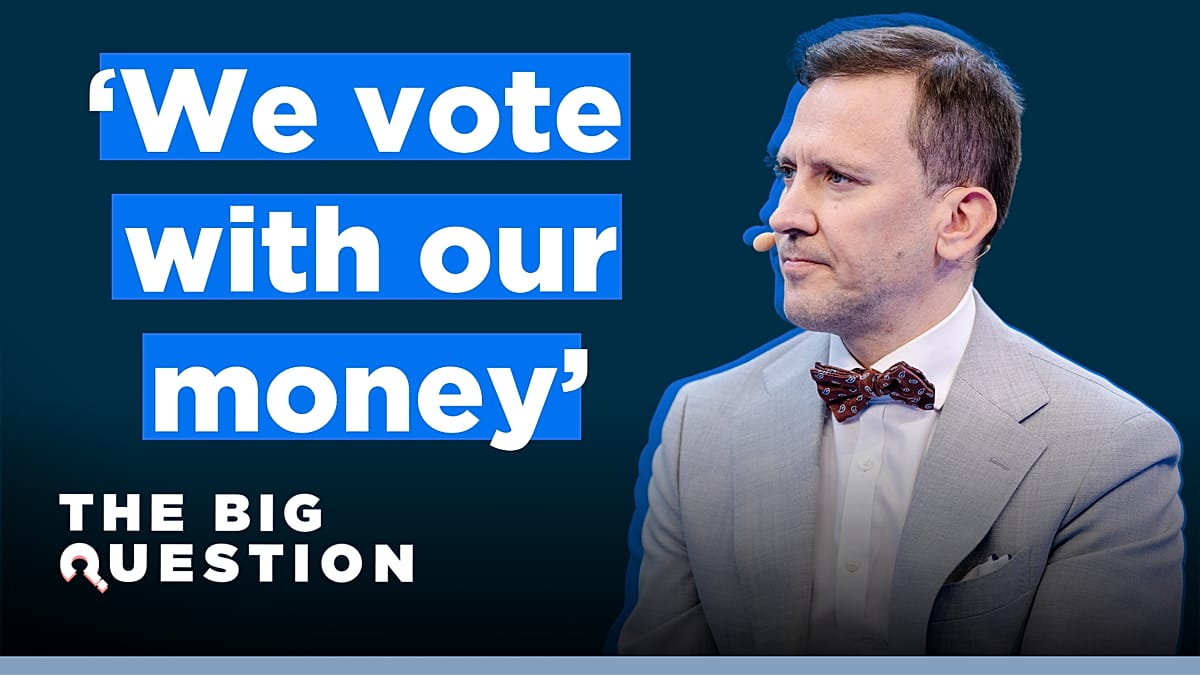
“We as PPF, we vote with our money. We are divesting from Asia and investing much more here,” Jan explained.
“Not only because this is a great single market, but rule of law, democracy, predictability, all of this is positive. The European market is the best market in the world.”
Despite Jan’s enthusiasm for EU enlargement and the benefits it could bring to both candidate countries and incumbent members, he acknowledged that the process is not without risks.
He particularly criticised the slow pace at which the Commission is conducting negotiations, arguing that this is discouraging investment.
“I think that the biggest risk is to lose the momentum. […] Let’s not forget that you don’t need 27 members to agree. You need 28 as we learned in Iceland, so we need to have some popularity of the EU in those countries and we are losing it,” Jan explained.
(In case you’re not familiar, Iceland was granted candidate status in 2010, with negotiations suspended in 2013. In August 2026, a referendum saw voters reject the resumption of its EU accession process. You can read more about that here.)
To prevent a loss of momentum and enthusiasm during negotiations, Jan suggested granting candidate countries certain limited access rights.
“Maybe it’s only the single market, maybe it’s some freight agreement plus, but this is better than to wait for full enlargement.”
The Big Question is a series from Euronews Business where we sit down with industry leaders and experts to discuss some of the most important topics on today’s agenda.
Watch the video above to see the full discussion on EU enlargement and investment.