


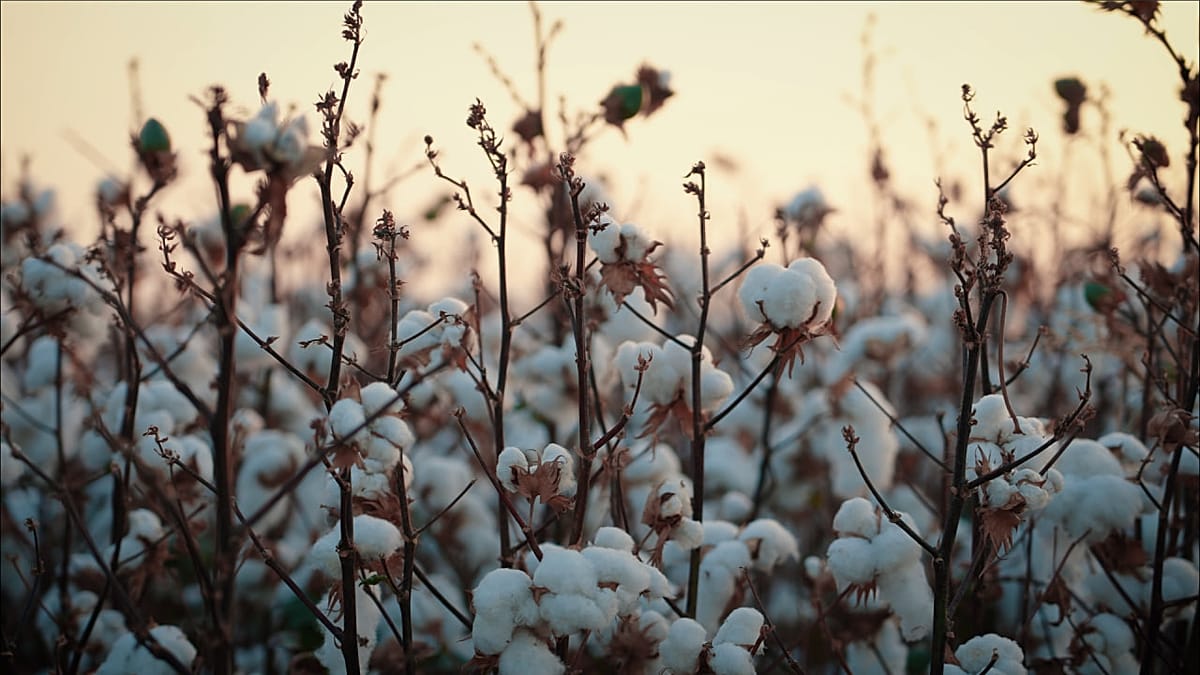
Uzbekistan says it harvested more than five million tonnes of raw cotton in 2026, its largest crop since gaining independence in 1991. Officials put the increase at around a quarter from last year. President Shavkat Mirziyoyev has set a higher yield target for 2027.
Agriculture Minister Ibrokhim Abdurakhmonov told journalists that the 2025 harvest stood at around four million tonnes. This year’s crop also exceeded the government’s initial target of 4.5 million tonnes.
Uzbekistan attributes the increase to new cotton varieties, revised planting methods and wider use of harvesting machines. The government says the area planted with cotton has fallen by 38% in recent years and average yields have risen from 2.1 to 5.6 tonnes per hectare.
More than 3,000 machines picked around 85% of the crop in 30 to 35 days, according to the government. It said machines picked the entire crop in Jizzakh and Syrdarya.
From raw cotton to finished textiles
The higher output comes as Uzbekistan expands domestic processing, aiming to turn more of its cotton into yarn, fabrics and clothing at home.
“We used to sell only cotton fibre,” Abdurakhmonov told journalists, describing the shift towards manufacturing.
“How do we create added value? New brands, new clothing, new domestic production. We are seeing good businesses emerge,” he said.
Much of this activity takes place through cotton-textile clusters linking farms, processors and manufacturers.
According to the World Bank, Uzbekistan has had enough capacity to process its entire raw cotton crop into yarn since 2023. That represents a shift away from dependence on exports of unprocessed fibre.
The Bank estimates that the textile industry employed around 600,000 people in 2024, up from 188,000 in 2018. Many of those workers are women and young people.
Labour reforms
Uzbekistan has also changed how it harvests cotton. For decades, teachers, students and public-sector employees were mobilised for compulsory work in the fields.
From 2017, Uzbekistan introduced reforms aimed at ending forced labour and changing how cotton was produced.
In March 2022, the International Labour Organization said systemic forced and child labour had been eliminated during the 2021 harvest. Its monitoring found that 99% of cotton pickers interviewed had worked voluntarily.
That same month, the Cotton Campaign lifted its call for a global boycott of Uzbek cotton, which 331 international brands and retailers had backed.
The government expects cotton farmers to earn a combined net profit of 13–14 trillion Uzbek soums (about €1bn) from this year’s harvest, although the final figures have yet to be confirmed.
Addressing the water challenge
Water use remains a major challenge for cotton farming in Uzbekistan’s dry climate. Agriculture accounts for about 90% of the country’s water consumption, according to the World Bank.
President Mirziyoyev said cotton farming used half as much water as it did in the 1990s, attributing the reduction to water-saving technologies.
Abdurakhmonov said farmers were switching from flooding fields to drip irrigation, estimating that the technology could reduce water use by around 40%.
“Previously, we flooded the fields, and the soil could not breathe. Microbial activity had declined. Now the soil is recovering,” he said, adding that farmers were also rotating cotton with wheat to improve soil conditions.
The government says it is also changing how it grows cotton in areas with salty soils and seeking to reduce fertiliser use.
The target for 2027
Following the record harvest, Mirziyoyev has set a target of raising the national average cotton yield from 5.6 to between 6.5 and seven tonnes per hectare in 2027.
The planned measures include higher-yielding varieties, agricultural drones, artificial intelligence and more efficient irrigation systems. How those measures will affect farmers’ incomes and water use remains to be seen.