
Close Menu
Daily Guardian EuropeDaily Guardian Europe
  • Home
  • Europe
  • World
  • Politics
  • Business
  • Lifestyle
  • Sports
  • Travel
  • Environment
  • Culture
  • Press Release
  • Trending
What's On

Ban it or build it? Europe considers how to regulate social media

November 5, 2026

Iran trolls Vance over midterm defeat analysis – POLITICO

November 5, 2026

North Korea tells EU to ‘mind its own business’ after draft UN resolution on human rights

November 5, 2026

Rheinmetall shares plunge more than 17% after profit warning over order delays

November 5, 2026

Europe is betting €525 million on chip design start-ups

November 5, 2026
Facebook X (Twitter) Instagram
Web Stories
Facebook X (Twitter) Instagram
Daily Guardian Europe
Newsletter
  • Home
  • Europe
  • World
  • Politics
  • Business
  • Lifestyle
  • Sports
  • Travel
  • Environment
  • Culture
  • Press Release
  • Trending
Daily Guardian EuropeDaily Guardian Europe
Home»Lifestyle
Lifestyle

Video. ‘Zeptoverse’: CERN scientists uncover evidence of extraordinarily rare particle decay

By staffNovember 5, 20261 Min Read
Video. ‘Zeptoverse’: CERN scientists uncover evidence of extraordinarily rare particle decay
Share
Facebook Twitter LinkedIn Pinterest Email

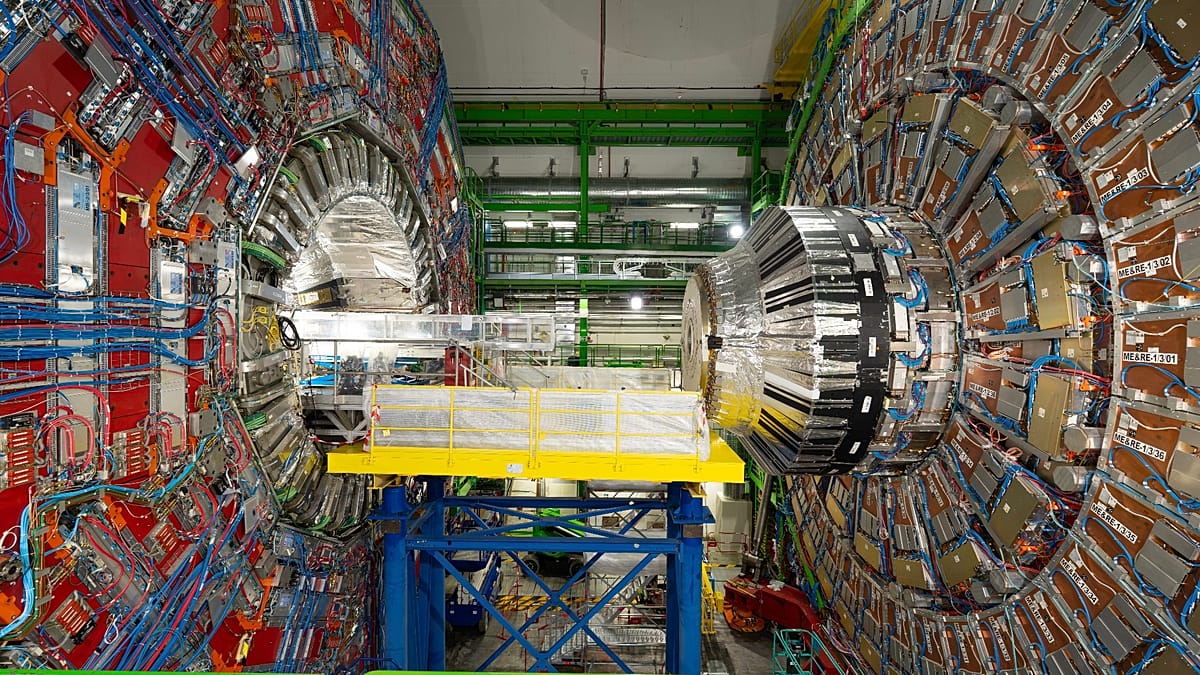
Scientists at CERN have found evidence of an extraordinarily rare particle decay, offering a glimpse into a largely unexplored world known as the ‘zeptoverse’.

The discovery was made using the Large Hadron Collider, which smashes protons together to produce particles that scientists can study.

Researchers focused on beauty particles, short-lived particles created in these collisions. They found evidence of an extremely rare process in which one of these particles transforms into other particles, something predicted to happen just once in every 10 billion cases.

This incredibly small scale is what scientists call the ‘zeptoverse’: an unexplored frontier of the subatomic world, where researchers hope to discover new fundamental particles.

Scientists believe exploring this tiny world could also help answer some of the biggest questions in physics, including the nature of dark matter and dark energy, which together account for around 95% of the universe.

Share. Facebook Twitter Pinterest LinkedIn Tumblr Email

Keep Reading

Ban it or build it? Europe considers how to regulate social media

Europe is betting €525 million on chip design start-ups

NASA astronauts cast US election votes from the International Space Station

Apple begins AI trial in China, powered by Alibaba

‘Sovereign AI agents’ could evade every kill switch and threaten national security, report warns

US midterm elections: Backlash to AI data centres reaches ballot boxes

Supermarket cyberattacks in Europe hit Italy’s Coop stores in Catania and Palermo

Italy holds emergency talks as supermarket fridge attacks spread across Europe

UK likely to face AI-powered cyberattacks on critical infrastructure by 2028, cyber chief warns

Editors Picks

Iran trolls Vance over midterm defeat analysis – POLITICO

November 5, 2026

North Korea tells EU to ‘mind its own business’ after draft UN resolution on human rights

November 5, 2026

Rheinmetall shares plunge more than 17% after profit warning over order delays

November 5, 2026

Europe is betting €525 million on chip design start-ups

November 5, 2026

Subscribe to News

Get the latest Europe and world news and updates directly to your inbox.

Latest News

French National Assembly unanimously rejects budget bill – POLITICO

November 5, 2026

Video. Ukraine: Russian drone and missile attack sparks fire in Kyiv region

November 5, 2026

Video. ‘Zeptoverse’: CERN scientists uncover evidence of extraordinarily rare particle decay

November 5, 2026
Facebook X (Twitter) Pinterest TikTok Instagram
© 2026 Daily Guardian Europe. All Rights Reserved.
  • Privacy Policy
  • Terms
  • Advertise
  • Contact

Type above and press Enter to search. Press Esc to cancel.