


Ukraine is pressing allies to take immediate decisions on air defence at next week’s NATO summit, warning that delays in supplying Patriot interceptors are costing lives as Russia intensifies ballistic missile attacks.
Kyiv has appealed to nearly 40 partner countries to urgently transfer Patriot missiles from existing stockpiles in July, offering to backfill them later with deliveries already contracted for Ukraine.
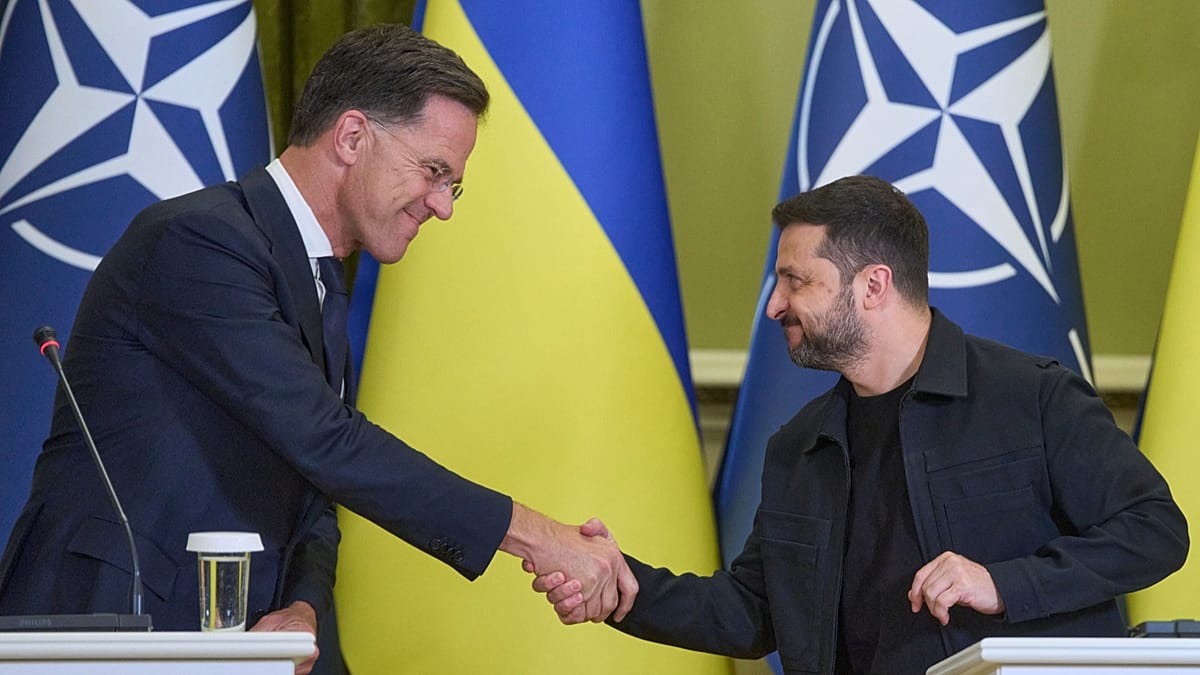
The push ahead of the summit, which President Volodymyr Zelenskyy is due to attend, follows one of the deadliest Russian strikes on Kyiv in recent months, which killed at least 30 people overnight on 2 July.
Speaking at the site of a damaged residential building in the capital’s Darnytskyi district, Zelenskyy said delayed deliveries had come at a human cost.
“If our partners had delivered what they promised on time, we could have saved more homes and, frankly, more lives,” he said.
The US-made Patriot system remains Ukraine’s only effective defence against ballistic missiles, but officials say supplies of interceptors have fallen critically low. According to Ukraine’s defence ministry, while Kyiv has already signed contracts for hundreds of PAC‑2 Patriot missiles to be provided with German support, deliveries are not expected to begin for several years.
People familiar with the discussions said Ukrainian officials have told NATO allies that during recent attacks only a handful of interceptors were available to counter dozens of incoming missiles – a stark contrast with the results that played out when sufficient stocks allowed entire salvos to be shot down.
Kyiv insists that such large-scale aerial assaults also clearly demonstrate exactly where funds need to be channelled.
Manufactured in the US by Raytheon and Lockheed Martin, Patriots have been widely relied upon by US allies, not least in the Gulf, as well as by Ukraine. But the US and Israel’s war on Iran has depleted almost a third of the global stockpile of Patriot interceptors: according to some estimates, Gulf states have collectively fired more than 1,100 of them in the past few months.
Compounding the problem, production remains limited. According to Zelenskyy, Lockheed Martin produces roughly 600 interceptors a year, or about 60 to 65 per month. Ukrainian officials say Russia is producing around 120 ballistic missiles monthly, alongside other systems, and has increasingly tailored its strikes to exploit gaps in Ukraine’s air defence, at times launching around 30 ballistic missiles in a single night.
Ukraine’s expectations for NATO
Kyiv’s main battleground in Ankara is expected to be the summit declaration.
Euronews sources familiar with the matter said Kyiv wants European NATO member states to endorse a clearly defined financial commitment for military support fixed for at least two years and explicitly framed as a minimum baseline rather than a ceiling.
Second, Ukraine wants to see concrete steps to strengthen air defence – the most crucial and the most urgent issue amid Russia’s use of jet-powered drones and ballistic missiles.
This could include immediate donations from stockpiles, financed procurement of new interceptors, and something that Kyiv has long been pushing for: decisions on licencing and industrial co‑operation that embed Ukraine in a future European missile‑defence architecture.
At their recent summit in Évian-les-Bains, France, the G7 leaders adopted a joint statement saying they were “ready to consider” issuing military production licenses to Ukraine.
Having successfully mounted a mid- and long-range strike campaign against Russian military and energy sites in occupied Crimea and Moscow – Russia’s most protected areas in terms of air defence – Ukraine hopes to continue the license discussion in Turkey next week.
A Euronews source said that Kyiv’s goal in Ankara is to shift NATO’s perception of Ukraine “from aid recipient to security provider”. The high‑level official said many allies now privately acknowledge that Ukraine has become a net contributor to Euro‑Atlantic security, both by degrading Russia’s conventional forces and by sharing expertise on drone and missile defence after incidents affecting NATO territory.
Ukraine’s recent offers of security support to Gulf states following Iranian strikes, they added, have reinforced that perception.
What Kyiv now seeks is for the summit declaration to codify this change with explicit language recognising Ukraine as a “contributor to security”.
For Ukrainian officials, that wording matters beyond symbolism: it underpins arguments for deeper integration into NATO defence‑planning mechanisms, access to more sensitive exercises and training, and a more permanent role for Ukraine in the alliance’s future posture – even without full membership on the table.