

Published on
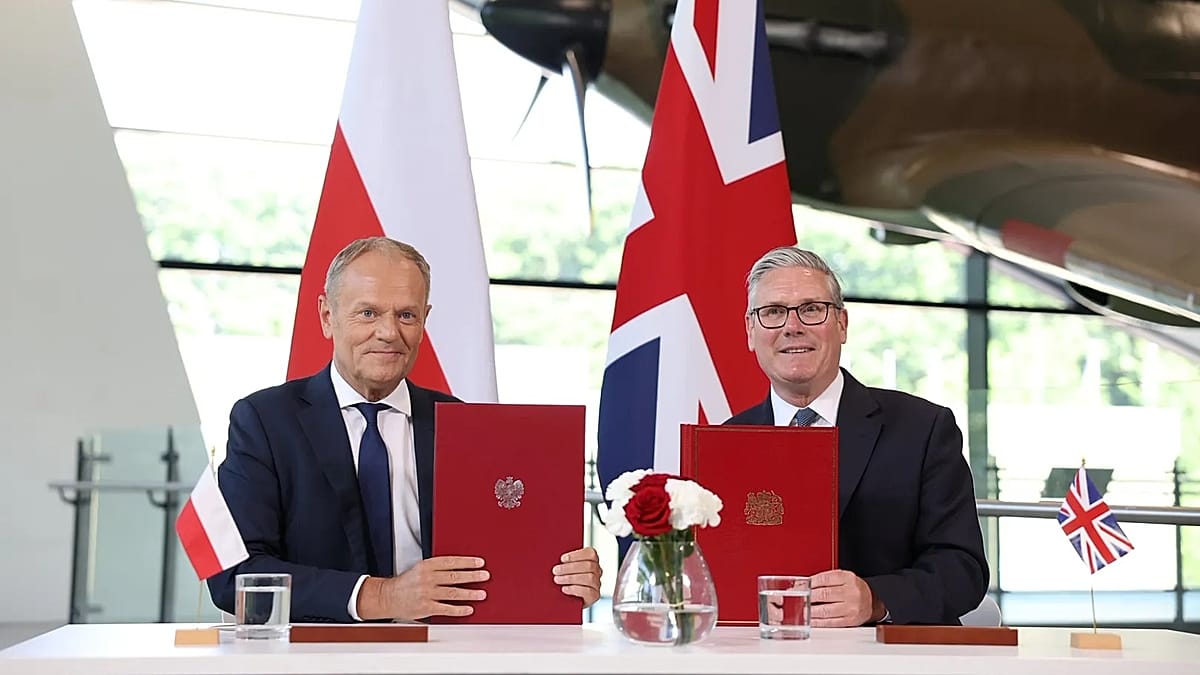
Polish Prime Minister Donald Tusk and his British counterpart Keir Starmer on Wednesday inked a “major” new defence and security treaty as the embattled UK leader continues to rebuild relations with Europe.
The pair met in London to finalise the agreement, which aims to bolster British borders, tackle organised crime, boost collective defence and further deepen cooperation with the European Union, which the UK voted to leave in 2016 following a divisive referendum campaign.
In a post on X, Cezary Tomczyk, Poland’s secretary of state of the Ministry of Defence, shared a video of the two leaders as they posed together after signing the deal, writing: “History is unfolding before our eyes”.
Tomczyk said the agreement also included lines on “clear and specific provisions on military assistance in the event of a threat, technology transfer, cooperation on cybersecurity, and identifying Russia as the greatest threat to Europe.”
It follows similar new treaties the UK has signed with Germany and France and is part of Starmer’s strategy to strengthen ties with the EU.
The UK PM has been under huge pressure in recent weeks following calamitous results for his Labour party in local elections earlier this month.
But the prime minister has cut a defiant figure despite calls for him to step down, saying in the aftermath of the elections that he would “face up to the big challenges” and restore hope to the country.
The UK’s decision to leave the European Union has become a hot topic once again across the nation, as Labour figures jostle for position ahead of a potential leadership contest.
Former health secretary Wes Streeting labelled the Brexit vote a “catastrophic mistake” earlier this month as he announced he would stand in any leadership race.
“Leaving the European Union was a catastrophic mistake,” Streeting said while on stage at the Labour Party’s Progress conference. “It’s left us less wealthy, less powerful and less in control than at any point before the industrial revolution.”
“We need a new special relationship with the EU, because Britain’s future lies with Europe, and one day, one day, back in the European Union,” he added.
Kemi Badenoch, the head of the opposition, said such calls were “a sign of a Labour party that does not have a plan for the country.”
“They want to go back and refight wars which were settled a long time ago,” the Conservative leader said.