
From the poetry of medieval Azerbaijan to contemporary novels reaching readers from across different continents, Baku’s relationship with the written word is rooted in centuries of cultural exchange.
Today, that literary heritage is finding new expression as authors, publishers and readers from Europe, Asia and beyond came together in the Azerbaijani capital for the twelfth year running.
The 12th Baku International Book Fair saw 32 countries taking part in an event which was not simply about discovering the latest books.
It was an opportunity to explore how literature connects hearts and minds across languages, generations, and geographical barriers by blending and sharing ideas and stories.
At a time when technology is transforming how tales are told, published, and consumed, the fair also questioned how books will remain an intrinsic and vital part of our futures.
Where history meets the modern word
Azerbaijan’s literary traditions stretch back centuries and have been shaped by its position at the crossroads of Europe and Asia.
The 12th-century poet Nizami Ganjavi features heavily.
He was born in what is now Azerbaijan and became one of the most influential literary figures of the Persian-speaking world, with his works travelling the globe. He continues to be celebrated today.
Centuries later, writers and poets include Muhammad Fuzuli, who contributed to a rich literary tradition that developed across different languages and cultural influences.
This heritage provides a historical and rich backdrop to the country’s modern relationship with international literature, where translation, publishing partnerships and literary festivals help stories reach audiences far beyond local borders and countries of origin.
For Iranian novelist Parinoush Saniee, literature offers a way of exploring the relationships between individuals and the societies in which they live.
Her internationally recognised novel The Book of Fate follows the life of an Iranian woman through decades of personal and political change, examining themes of identity, family, education and the expectations placed upon women.
Saniee explained that she initially assumed her work would only resonate regionally, but she was quickly surprised by the global reaction.
“The first translation of my book was into Italian,” Saniee recalled.
“When I saw all that reception and various journalists came from different places, I asked them what was interesting about the book for you. They said it was close to us. We also had such experiences. It was very relatable.”
Although rooted in Iranian society, the questions raised in her writing resonate far beyond its borders. The works have been translated into numerous languages and demonstrate how literature can offer readers an understanding of lives and experiences different from their own.
She observed this same phenomenon when the novel became a bestseller in Norway, proving that universal themes of suffering and endurance translate seamlessly.
“Human suffering, lifestyles, issues, and problems are overall very impactful for humanity, and we all understand it,” Saniee stated. “Therefore, it doesn’t matter where it is from.”
Reaching younger minds
British author Darren Simpson, meanwhile, approaches storytelling through the imagination of younger readers.
He is known for novels such as Scavengers and The Memory Thieves, where he creates unusual worlds and characters exploring friendships, belonging, identity and the challenges of growing up.
Simpson echoed the sentiment that human emotion makes storytelling cross borders effortlessly, noting that children across the globe seek the exact same things from a narrative.
“When I see children from all around different countries connect to my stories in the same way, it speaks to me about the universal nature of a lot of feelings about people’s needs and their desire to connect,” Simpson explained.
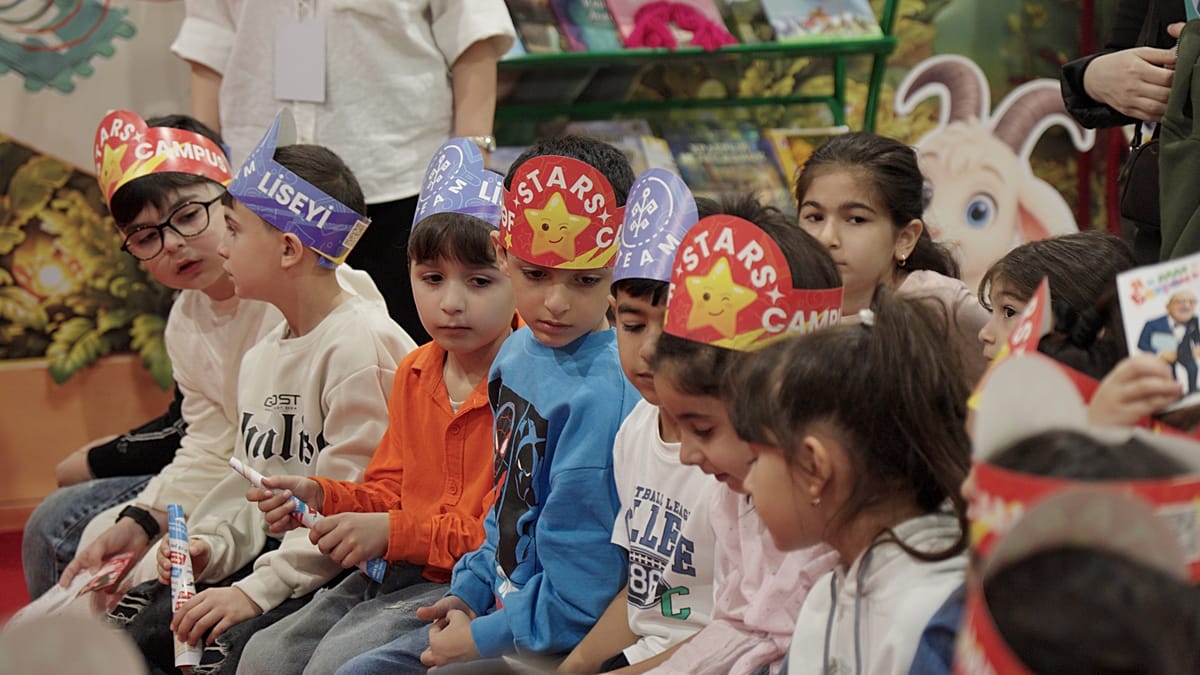
His works reflect the importance of children’s literature at a time when arguably young people have an unprecedented choice of digital entertainment and books are not necessarily the most popular choice. Yet, he highlighted that the local reception at the fair had been incredibly inspiring.
“I have been struck in Azerbaijan by how much passion there is here in the young readers,” he added.
Championing local voices
Alongside its international offerings, the fair is also celebrating the locals who have helped to shape Azerbaijan’s contemporary literary identity.
One of those is Reyhan Yusifgizi, a prominent voice in Azerbaijani children’s science fiction who brings a unique academic background in computer science to her writing.
When discussing how to cultivate reading habits in a digital age, Yusifgizi explained that increasing a child’s interest requires a two-step approach.
“First, this depends on the author,” Yusifgizi noted. “They must write well, write in a modern way. With simple language, they must interest the child.”
However, she stressed that the second factor is often the most fundamental.
“The parent directly influences the child. The parent stands between the author, the book, and the child,” she said.
“First of all, the parent must demonstrate it through their own experience, their own example. They need to read.”
Azerbaijani writer and publicist Elmira Akhundova reflected on the profound emotional weight that physical books carry compared to fleeting digital news. For her, literature’s ultimate purpose is to promote peace and multiculturalism.
“What is at the end of the most difficult, the saddest book? It is light,” Akhundova said.
“It is a call towards tolerance. We must hear these humanistic calls and instill them in our young generation,” she told Euronews.
She challenged the next generation to seek out complex, philosophical narratives rather than settling for easy entertainment, noting that every story should ultimately lead the reader towards hope.
“A book must absolutely be geared toward humanism,” she added, asserting that no matter what, a book “must be on the sunny side of the street.”
The future of the written word
It is recognised that the relationship between books and their readers is changing.
Digital publishing, audiobooks and new forms of storytelling are reshaping the literary landscape, but rather than replacing traditional physical books entirely, there is an advantage to the technological advancements.
Books can now travel at lightning speed. A touch of a button can transport us to another universe, and perhaps that is what makes an international literary gathering even more relevant today.
Beyond the book stands, authors are choosing to move from the desktop to have those important physical discussions, drawn together by that love of narrative.
And what better place to have those conversations than the gateway between East and West?