
Published on
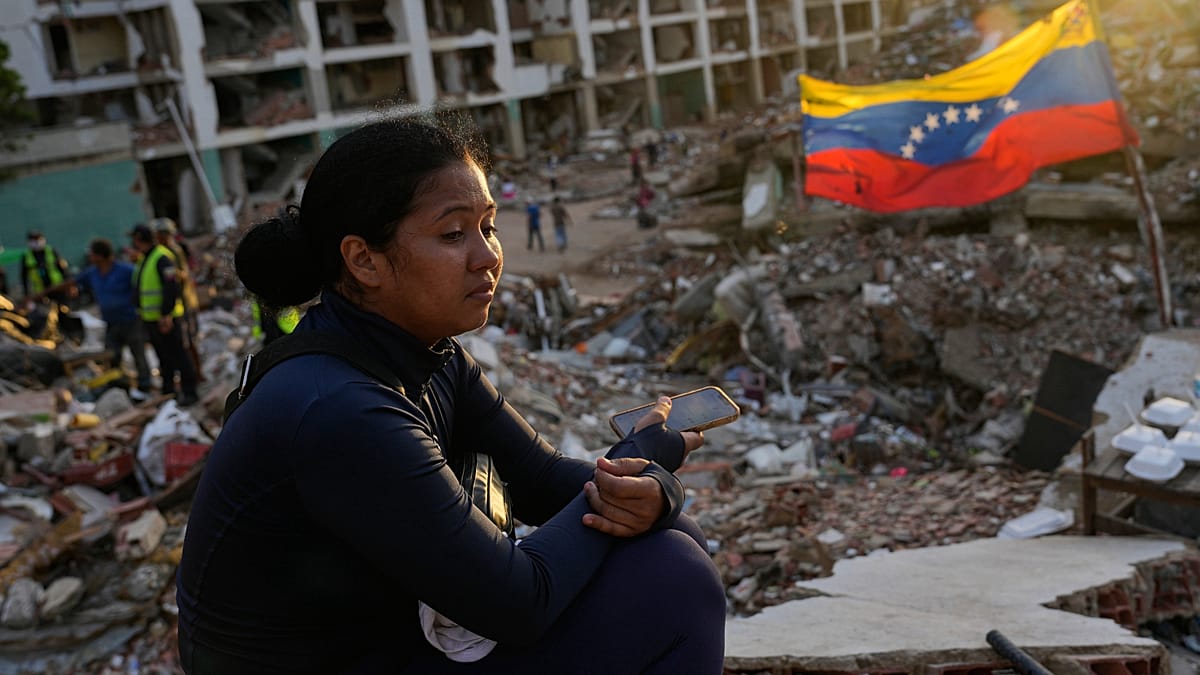
Thirty days have passed since the two earthquakes, of magnitude 7.2 and 7.5, shook northern Venezuela within just 39 seconds on the night of 24 June. What the authorities described at the time as an unusually rare seismic phenomenon, a seismic doublet, has, as the weeks have gone by, turned into one of the worst natural disasters the country has experienced in more than a century.
A month on, the figures are still moving, although at a much slower pace than in the first few days, and there are still gaps the government has yet to fill. The most recent official toll, released last Friday by the president of the National Assembly, Jorge Rodríguez, puts the number of dead at 5,546 and the number of injured at 16,740.
The latter figure has barely budged for weeks, which suggests medical teams are no longer receiving new serious cases, while the death toll continues to rise as debris removal work progresses and forensic identification of bodies advances, many of them buried without being identified in mass graves set up in cemeteries in La Guaira.
The most sensitive figure, however, is the one the Venezuelan government is not updating. Since 25 June, the day after the seismic doublet, the authorities have not provided a new official figure for the missing, which at that point stood at 157 people. In that vacuum, a citizens’ initiative has emerged, Desaparecidos del Terremoto de Venezuela, which centralises reports from relatives and keeps a register of nearly 29,500 people whose whereabouts are unknown. That gap between what the state acknowledges and what citizens themselves are documenting is one of the most questioned aspects of the way the emergency has been handled.
Material damage and displacement
Beyond the lives lost, the earthquake has left a significant economic scar. A World Bank report published last week estimates direct physical damage at around 19.6 billion dollars.
Of that amount, 9.3 billion correspond to homes destroyed or severely damaged, 5.2 billion to public infrastructure, including hospitals, schools and other essential facilities, and nearly 5 billion to commercial and industrial buildings.
On the ground, the latest official count records:
- 856 buildings affected, 190 of which collapsed completely
- The number of people left without housing stands at 17,907, of whom 23,122 remain in 107 temporary camps set up in Caracas and La Guaira,
- 128,324 families have received some form of assistance from the authorities since the start of the emergency.
Since the main quake, 1,405 aftershocks have also been recorded, some strong enough to complicate work on structures that had already been weakened.
One month on, life is trying to resume
As the weeks go by, the search-and-rescue phase has given way to debris clearance and reconstruction, a process which the authorities themselves acknowledge will take months, if not years.
Some basic services, such as electricity in certain parts of La Guaira, were restored about two weeks after the quake, but normality remains partial. Organisations such as Médecins Sans Frontières are keeping mobile clinics operating at ground zero to meet healthcare needs that the public system, already weakened before the earthquake, is unable to cover fully.
The tragedy also struck at a politically sensitive moment for Venezuela, which is undergoing a transition following the arrest of former president Nicolás Maduro at the beginning of the year, with Delcy Rodríguez heading an interim government that has yet to set a date for elections.
The way international aid is being managed, including cooperation from countries such as Israel and efforts to unblock Venezuelan assets with United States support, is emerging as one of the factors that will determine the pace of reconstruction in the coming months.