




Uzbekistan is targeting at least $5bn (€4.3bn) in IT and AI service exports by 2030, as the country tries to turn artificial intelligence from a digital policy priority into a wider economic sector.
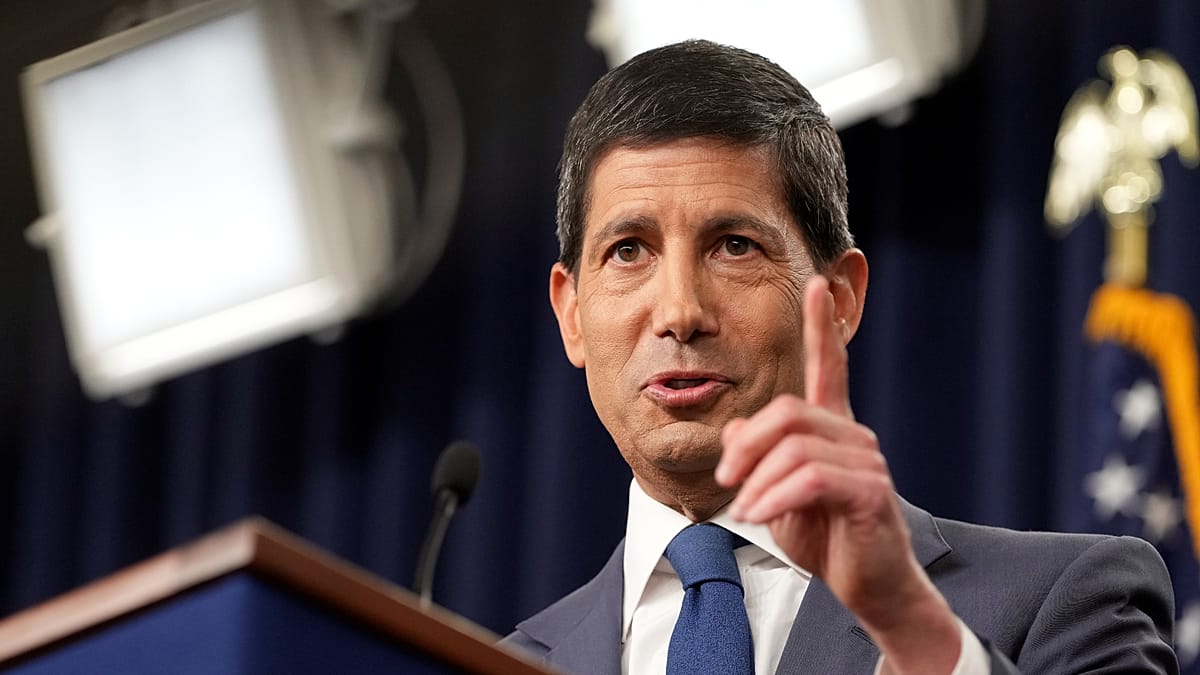
Annual IT exports have grown from less than $1m (€850,000) in 2017 to nearly $1bn (€850m), according to Sherzod Shermatov, Uzbekistan’s Minister of Digital Technologies, who said the next stage will depend on skills, investment and the ability to apply AI across businesses and public services.
Officials, investors and AI specialists outlined the challenge in interviews with Euronews on the sidelines of the Tashkent International Investment Forum, as demand grows for computing capacity, digital services and workers able to use AI tools in everyday economic activity.
From outsourcing to AI services
Uzbekistan’s digital economy is developing in a country with a young and increasingly connected population. The country had 9.6 million people aged 14 to 30 at the start of 2025, according to official statistics, while internet penetration stood at 89% by the end of 2025.
This gives Uzbekistan a potential domestic base for digital training, but the economic target is external. Service exports by IT Park participants reached $191.8m (€169m) in the first quarter of 2026, according to the National Statistics Committee, as Uzbekistan tries to expand from outsourcing into higher-value digital services.
Shermatov said the country wants to attract companies looking for talent, delivery centres and multilingual teams able to serve foreign markets from Uzbekistan.
The goal, he added, is not only to help companies reduce outsourcing costs, but also to support “expanding to third markets through Uzbekistan.”
That includes start-ups as well as established IT companies. According to Shermatov, foreign start-ups can qualify for support if they create back-office operations and jobs in Uzbekistan, while the government is also seeking more companies built around AI.
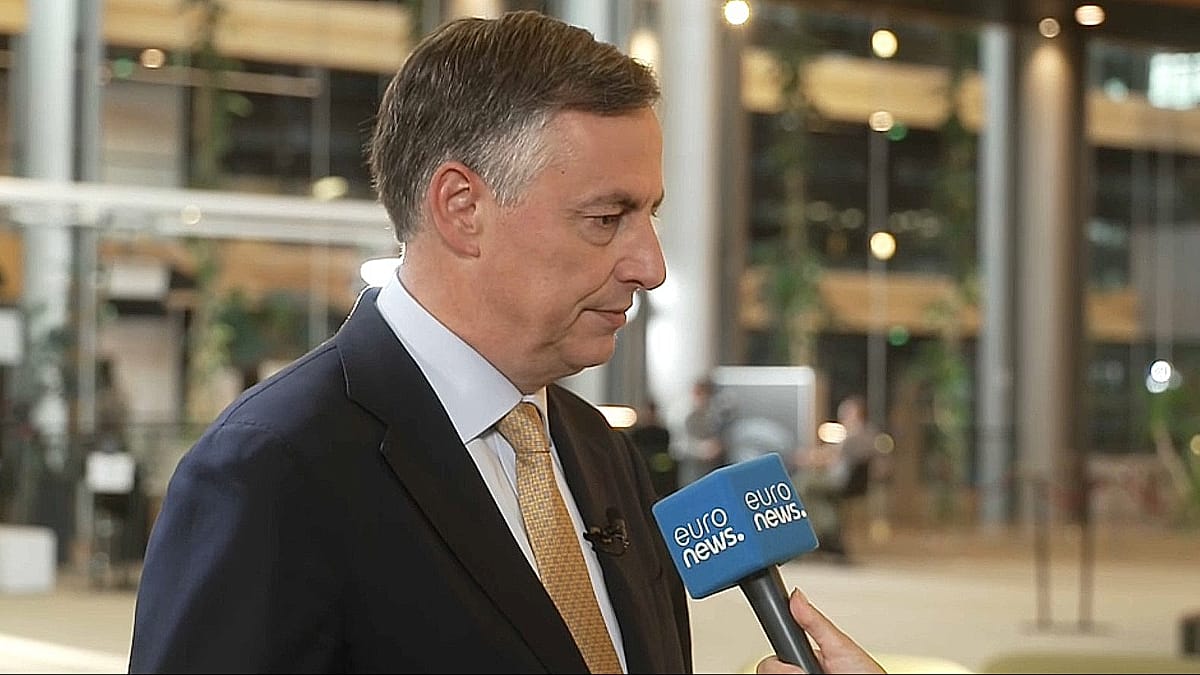
Benedict Macon-Cooney, Chief AI and Innovation Officer at the Tony Blair Institute for Global Change, said countries such as Uzbekistan may find opportunities in AI services and applications rather than trying to compete directly with the United States or China in building the most advanced AI models.
The aim is to connect talent, companies and data infrastructure to services that can be sold beyond the domestic market.
Turning energy into digital services
Data centres remain central to Uzbekistan’s AI plans, but they are not the final destination. They are the infrastructure needed to support cloud services, AI tools and digital exports.
Shermatov linked the data-centre push directly to energy policy. “With AI, you need compute. For compute, you need energy,” he said. Instead of exporting electricity only as a raw resource, he added, Uzbekistan wants to sell it “in the form of AI data centre services.”
He also said investors in AI data centres can access incentives, including cheaper electricity, IT Park residency, a tax-free environment and exemptions from import duties on AI equipment.
Rajit Nanda, CEO of DataVolt, described the demand for data centres as being driven by the “explosive adoption of AI” by companies, governments and digital platforms. But he argued that infrastructure alone will not be enough.
“Capital, energy and talent are all equally important,” he said, adding that no single factor would be enough for AI adoption to succeed.
Skills for everyday AI use
Uzbekistan has already launched its “5 Million AI Leaders” programme, aimed at spreading AI literacy across schools, universities, teachers and public officials. Shermatov said more than one million people have completed the programme.
The aim is not only to train engineers. It is to prepare workers in different sectors to use AI tools in their own jobs.
Vladimir Norov, Chairman of the Central Asian Association for AI, said the region should focus not only on training engineers, but also on “basic understanding” and the ability to use the technology.
He identified education, healthcare, agriculture and logistics as areas where those skills could be applied across Central Asia.
Putting AI to work in government
For Macon-Cooney, the main challenge is implementation.
“This is always the challenge of government,” he said. It is about “translating actual pieces of paper into delivery and action.”
Some of the earliest gains may come from routine but important areas of public administration, including forms, compliance checks, tax administration and fraud detection.
Macon-Cooney said these areas can produce real savings if governments have strong data systems.
Wider adoption will also depend on trust. Fraud, cyberattacks and misuse of data can quickly damage public confidence, making cybersecurity part of the economic test facing Uzbekistan’s AI plans.