
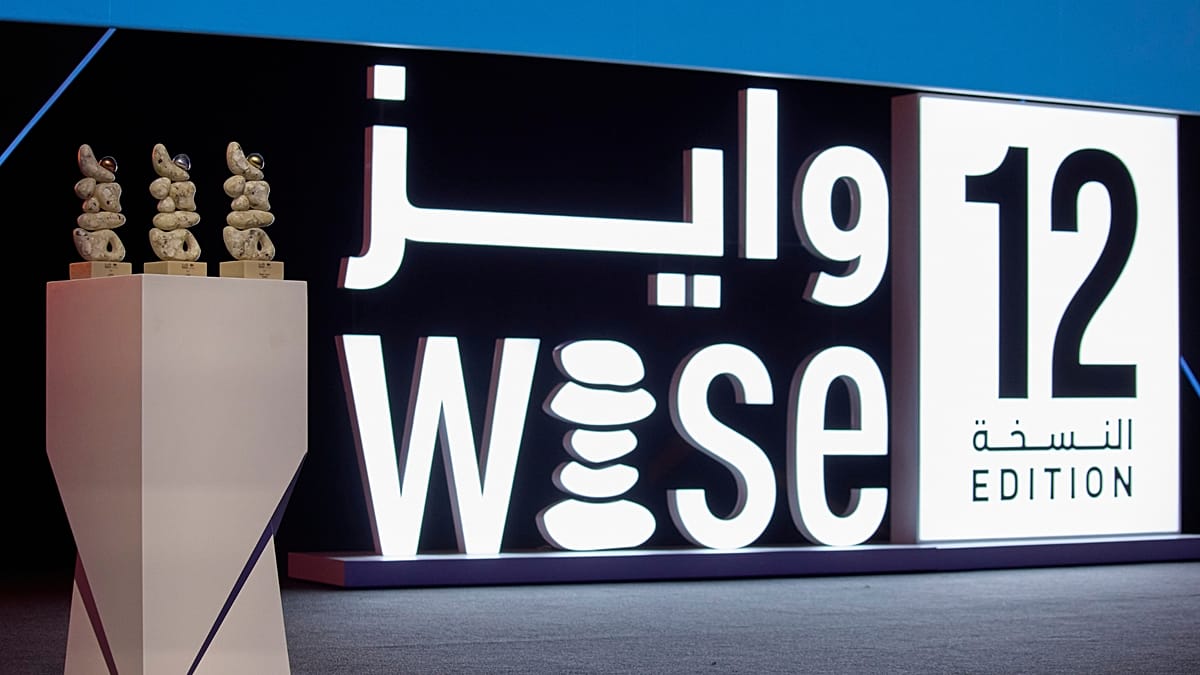
As artificial intelligence (AI) accelerates into classrooms around the world, education leaders meeting in Doha delivered a clear message: New technologies must deepen learning, not weaken the human foundation of education.
Thousands of policymakers, researchers, teachers, and technology experts gathered in Qatar’s capital for the 12th edition of the World Innovation Summit for Education, known as WISE. The event brought together participants from more than 100 countries to debate how systems can adapt to rapid technological change while protecting equity and human values.
From ambition to classroom reality
A central focus of the summit was how to scale artificial intelligence tools in real education systems rather than in isolated pilot projects. A high-level roundtable on expanding AI in learning warned that weak data governance, lack of teacher training and poor alignment with national curricula can quickly turn innovation into inequality.
Speakers argued that meaningful impact depends on teacher trust and cultural relevance, rather than technical sophistication alone. They stressed that tools designed far from classrooms often fail when they meet the realities of overcrowded schools and under-resourced systems.
Mana Mohammad Al-Ansari, chief of economic empowerment and education at the organisation Education Above All, said, “AI should behave after humanity, not before humanity”.
Systems under global strain
New findings from UNESCO’s Global Education Monitoring work were presented during the summit, highlighting widening gaps in digital access and education financing worldwide. The research pointed to mounting pressure on systems struggling with conflict, displacement and climate disruption.
A dedicated Arabic-language panel addressed education in conflict-affected regions, focusing on community-led responses and local resilience strategies. The discussion emphasised that education is increasingly being asked to serve as both a stabilising force and a tool for long-term recovery.
Future jobs being designed before they exist
Beyond AI, sessions explored deep technology and quantum computing, asking how education can prepare learners for industries that do not yet fully exist. Experts warned that traditional school and university pathways are too slow to match the pace of technological transformation.
Shahin Aman, Director of Advocacy at WISE, said, “We should apply human values at the core of what education is today”. The conversation underlined a shift from reactive education models to predictive, future-oriented skill development.
Google researcher Matthew Kam told the summit that “the jobs of the future won’t simply emerge on their own,” arguing that systems must actively predict new roles and train students before those roles become mainstream. The conversation underlined a growing shift from reactive education models to predictive, future-oriented skill development.
Teachers remain the backbone
Despite the focus on advanced technologies, many discussions returned to the same conclusion that teachers remain central to any successful reform. Panels on AI for professional development warned that digital tools can fail without strong institutional leadership and supportive policy frameworks.
Dr Margo Tripsa of Qatar Foundation’s Education Development Institute said, “Momentum isn’t sustained by courses alone; we need structure, leadership, and policy support.” Speakers warned that poorly designed systems could widen educational inequality rather than reduce it.
Global prize spotlight under Sheikha Moza
The summit closed with international recognition of education innovators, as Sheikha Moza bint Nasser, Chairperson of Qatar Foundation, presented the WISE Prize for Education. The prize, one of the world’s leading education awards, distributed a total of $1 million to global changemakers.
The top award went to TUMO from Armenia, which redesigns after-school learning through creative and technology-driven education. The second prize was awarded to Iqrali.jo from Jordan, a platform that strengthens children’s Arabic literacy through parental engagement, while the third prize went to Darsel from the United States for its AI-powered mathematics tutoring designed for low-connectivity environments.
A warning at the close
Nobel laureate Abhijit Banerjee brought the summit to a close with a reminder that technology alone cannot fix education systems. “All children can learn if we meet them where they are,” he said, warning that poorly designed tools risk replacing deep learning with shortcuts.
Outgoing WISE chief executive Stavros Yiannouka described education as “a deeply human endeavour” even in a world of powerful new digital tools. His successor, Dr Asyia Kazmi, said the world is entering a period of “great promise” but also “great peril” unless innovation is guided by clear human values.