
“Cast off sadness and melancholy. Life is gentle, its days are few and it is only now that we must enjoy it.”
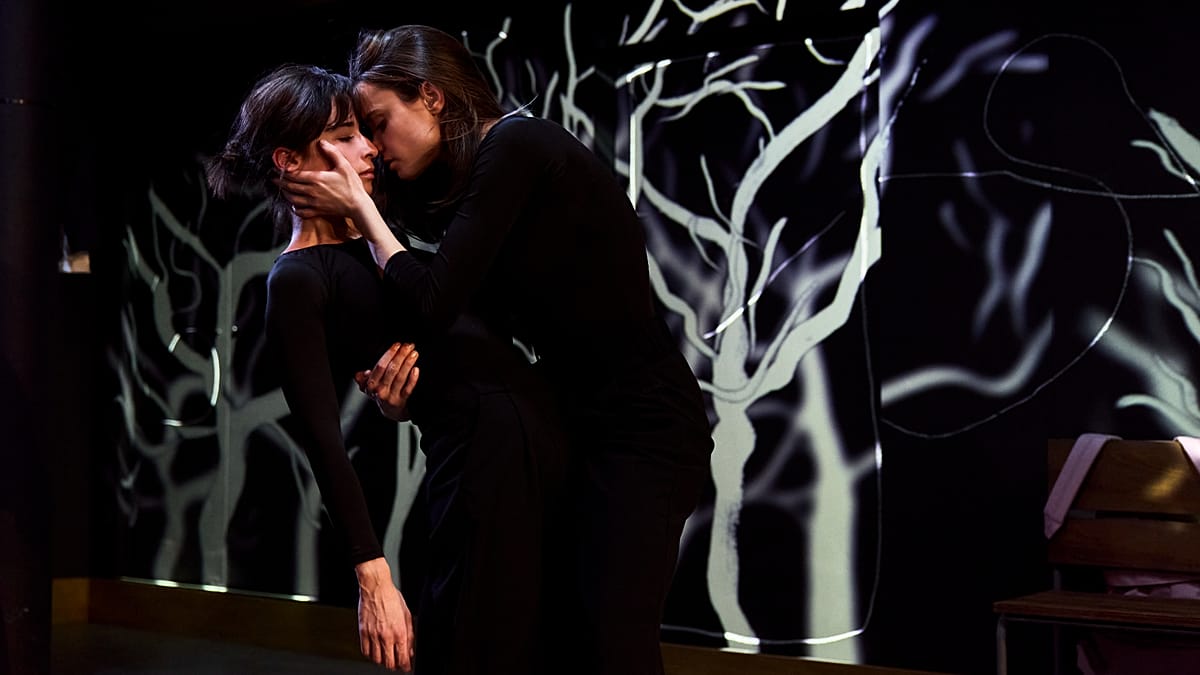
The poetry of Federico García Lorca inspires ‘Cry, wedding and blood’, a play being staged being staged at Madrid’s María Guerrero Theatre that reimagines “Blood Wedding” and other parts of Lorca’s work through sign language and deaf community culture.
Ángela Ibáñez Castaño, the first deaf director to lead a production at the National Drama Centre, has conceived this play from within sign language. Its protagonists are two deaf actresses: Emma Vallejo and Mari López.
This piece is a Lorca-style cry against different forms of discrimination and violence, reminding us that nothing is more tragic than the loss of dreams.
“Only mystery keeps us alive”
Two deaf teenagers are left alone in a classroom at their secondary school, while the rest of the group attend a performance that is not accessible. They decide that if they cannot go to the theatre, then the theatre must come to them.
That is how they give free rein to their dreams, improvising with Lorca’s texts. What begins as a game turns into a dreamlike journey, where the classroom is transformed and the poetry comes to life.
Through the symbolic universe of “Blood Wedding”, the protagonists explore desire, loss and the tragedy of youth cut short and of dreams dying, when you grow up with no role models and no spaces in which to imagine a future.
This dreamlike journey leads us into the mystery of creation, through a visual, poetic, bilingual show with live music that celebrates the indomitable power of theatre and the right to dream, whether out loud or in sign language.
Transcending invisible barriers
The play raises the issue of the barriers facing the deaf community. Will they manage to transcend those invisible barriers the protagonists have internalised? This is not only a tribute to Lorca. It is also a declaration of longing: that of two young women who, through art, imagine another possible place where their language and their way of seeing the world are at the centre, not the margins.
The protagonists of this play let their imagination take flight as they play at performing “Blood Wedding” and other texts by García Lorca, a poet who embodies those who have historically been silenced, like them.
‘Cry, wedding and blood’ is not only a tribute to the poet, but also a statement of intent: that of two young women who have grown up without role models and rebel against a reality that threatens their chances of development, their access to culture and their future happiness.
Four protagonists, all victims of violence
The action moves onto an imaginary plane, with a staging of Lorca’s “Blood Wedding”, a story of love, jealousy, betrayal and oppression. “The first time something is done anywhere, it sets a precedent,” says Ángela Ibáñez Castaño, the director of the play. “I hope it goes well and that opportunities open up for other deaf people. I hope this production marks a before and after.”
But it is not just a show so that “deaf people can enjoy it on equal terms”, she also hopes it will leave its mark on hearing audiences: “That the world and culture of deaf people will be a revelation, and that they will see how rich sign language is,” the director concludes.
The four female protagonists in the production experience different forms of violence that shape their lives. “The mother carries the scars of physical violence, as her husband and son were murdered. The bride faces a more structural violence that prevents her from marrying a man from a poorer family. And in the case of the two deaf teenagers, there is a normalised, invisible violence that stops them from developing in line with what they want and dream of,” explains the playwright, Iker Azkoitia.
The sensory experience of Cry, wedding and blood’
On stage, sign language merges with other forms of expression such as visual vernacular, visual poetry, signed dance, shadow theatre and puppetry, among others.
Mari López and Emma Vallejo, the actresses who bring the 11 characters in the production to life, explain what it means for them to work with a wide range of performing arts: “These are things we had never done before. Acting and training in them at the same time has been our main challenge,” says Mari López.
Music is a fundamental element in the play. Diego Illán and Josete Ordóñez join the two actresses on stage and perform the show’s soundtrack**.**
A commitment to accessibility
The premiere at the National Drama Theatre is part of its commitment to accessibility. As a publicly funded theatre, it assumes the responsibility to guarantee access to culture on equal terms, in line with the current legal framework, which recognises accessibility and participation in cultural life as fundamental rights.
The aim is to make access and participation easier, removing barriers and promoting a more open, diverse and shared cultural experience. As part of this effort, tactile visits are offered, designed especially for people with visual impairments, allowing a more direct, sensory encounter with the content.
In addition, several versions of the programme have been made available to meet different needs. The easy-to-read programme helps people with intellectual disabilities to understand the information more easily, while the braille programme includes a QR code giving access to an accessible digital version. Small gestures which, together, make a big difference.
‘Grito, boda y sangre‘ is a production by the National Drama Centre and will run until 1 March 2026 in the Sala de la Princesa at the María Guerrero Theatre.