
Published on
Shark bites dominated headlines earlier this year after four unprovoked attacks were recorded within just 48 hours along Australia’s east coast.
The series of disturbing incidents saw a 12-year-old boy rushed to hospital with critical injuries after swimming in Sydney Harbour on 18 January. He later died from the attack.
The next day, an 11-year-old had their surfboard destroyed by a shark at Dee Why Beach. Hours later, a man was attacked in the nearby suburb of Manly. On 20 January, a surfer “sustained a wound to his chest” after a shark struck around 300 km up the coast.
It has led to growing calls for shark culls and paved the way for persistent myths about the predators to come back into the limelight. However, one scientist is urging the public to look beyond the sensational headlines and focus on how our warming planet is impacting the species in our oceans.
How climate change is influencing shark attacks
Dr Nicholas Ray is a researcher in great white shark population dynamics at the UK’s Nottingham Trent University. In a recent blog post, he argues that the media often reports all shark incidents into a “single narrative of danger” despite the fact that Australia has more than 180 shark species. Each one has different behaviours and habitats.
Analyses of shark bite data from the recent spate of attacks found that many of the incidents occurred close to the shore, particularly near estuaries and around Sydney Harbour after heavy rainfall.
For every 1℃ rise in air temperature, the atmosphere can hold around seven per cent more moisture, which can lead to more intense and heavy rainfall. This can increase the likelihood of flooding, which can impact the salinity, temperature and visibility in coastal ecosystems.
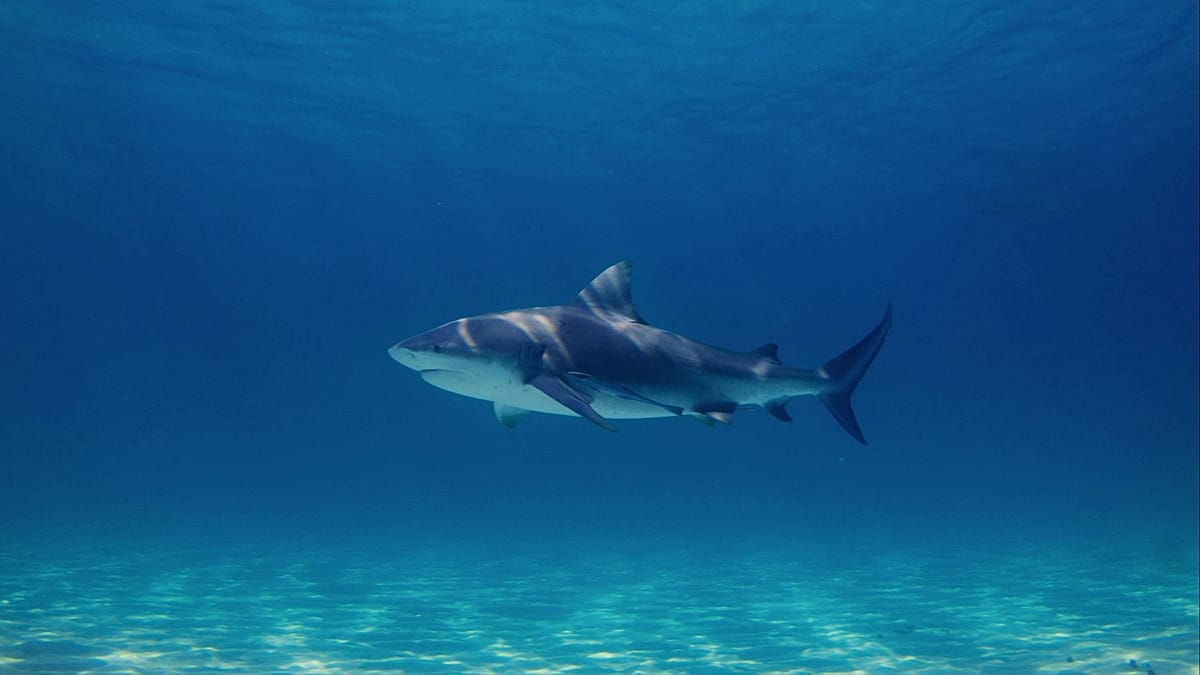
Bull sharks, which were the species involved in last month’s string of attacks, are attracted to flooded systems because their prey are displaced.
Urban runoff, altered river systems, sewage overflows and fishing activity all influence where prey species aggregate – which makes swimming or surfing near river mouths following floods a “high-risk activity”.
“Nutrient-rich runoff can draw baitfish into new areas and the bull sharks follow,” Dr Ray says.
“Research conducted in eastern Australia has documented bull sharks spending extended periods in places such as Sydney Harbour during warmer months, coinciding with rising water temperatures and increased freshwater inflow.”
Do sharks intentionally hunt humans?
White sharks are also responding to climate change, with studies showing their movements are closely linked to prey distribution and ocean conditions such as temperature fronts.
Dr Ray busts the myth that sharks “intentionally hunt humans”, explaining that most shark bites are classified as cases of mistaken identity or “exploratory behaviour”. This is because sharks rely on senses such as electroreception and vibration rather than sight.
“Shark bites are the outcome of complex interactions between climate change, ecosystem dynamics and human behaviour,” he adds.
“If we continue to frame every shark bite as proof that sharks are ‘turning on us’, we fail to ask more meaningful questions: what environmental conditions were present, how have we altered coastal systems, and how can we reduce risk without demonising wildlife?”