
Close Menu
Daily Guardian EuropeDaily Guardian Europe
  • Home
  • Europe
  • World
  • Politics
  • Business
  • Lifestyle
  • Sports
  • Travel
  • Environment
  • Culture
  • Press Release
  • Trending
What's On

EU to send commissioner for Mediterranean to Trump’s Board of Peace meeting – POLITICO

February 16, 2026

Peace talks round three: Ukraine-US-Russia Geneva meeting’s key topics

February 16, 2026

Dana Eden, co-creator of hit spy show ‘Tehran’, found dead in Athens hotel room

February 16, 2026

Rubio praises Orbán ahead of Hungary election – POLITICO

February 16, 2026

Video. Hawaii’s Kilauea volcano spews lava hundreds of meters into the air as it erupts again

February 16, 2026
Facebook X (Twitter) Instagram
Web Stories
Facebook X (Twitter) Instagram
Daily Guardian Europe
Newsletter
  • Home
  • Europe
  • World
  • Politics
  • Business
  • Lifestyle
  • Sports
  • Travel
  • Environment
  • Culture
  • Press Release
  • Trending
Daily Guardian EuropeDaily Guardian Europe
Home»Lifestyle
Lifestyle

Scientists solve mystery of little red dots seen by James Webb Space Telescope

By staffJanuary 16, 20262 Mins Read
Scientists solve mystery of little red dots seen by James Webb Space Telescope
Share
Facebook Twitter LinkedIn Pinterest Email

Published on
16/01/2026 – 7:01 GMT+1

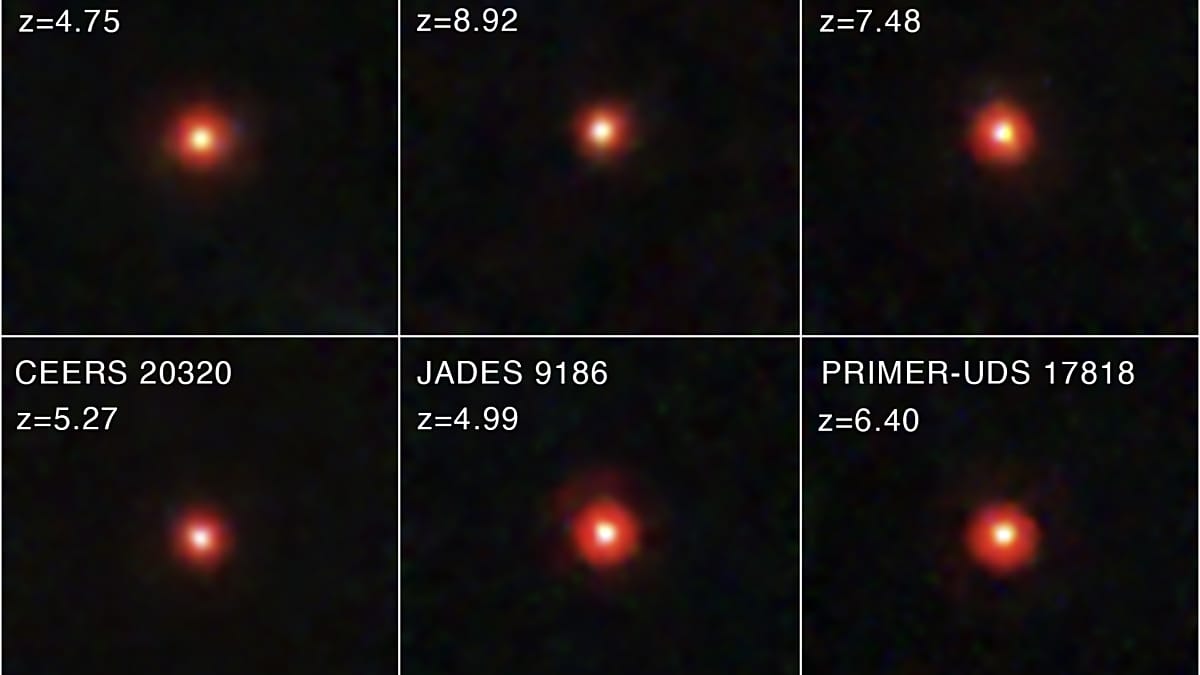
Astronomers say they have finally figured out the mysterious “little red dots,” first spotted in 2022 in images from NASA’s James Webb Space Telescope.

The objects puzzled researchers because their unusual light made it unclear what was powering them.

Early studies suggest the little red dots are extremely compact, distant galaxies and they were seen at very early times in the universe’s history, which become much rarer as the universe evolves.

The new analysis suggests the red dots are actually young supermassive black holes, a type of gigantic black hole, wrapped in gas.

Using James Webb’s advanced instruments, scientists examined how light from the galaxies is spread across different colours.

They found signs that the light is being scattered by dense, ionised gas, a process that can occur only very close to a black hole that is actively pulling in material.

As gas falls towards the black hole, it heats up and shines through the surrounding cocoon of gas, producing the red glow seen by the Webb Telescope.

The black holes are buried in dense material and therefore emit very little X-ray or radio radiation. This helps explain why they have only been seen by the Webb telescope.

The new study suggests the black holes have masses between about 100,000 and 10 million times that of the Sun.

While still enormous, they are far smaller than scientists previously thought and are the lowest-mass black holes known at such early times in the universe.

The study was published in the journal Nature.

Share. Facebook Twitter Pinterest LinkedIn Tumblr Email

Keep Reading

Austrian creator of viral OpenClaw joins OpenAI to build “next generation” of AI agents

Europe seen as key market for data sovereignty technology

Cold (space) war: why the US and the EU are still in the same boat

ChatGPT’s AI caricature social media trend could be a gift to fraudsters, experts warn

International astronauts launch to ISS after NASA’s first medical evacuation

ESA satellite finds ‘inside-out’ planetary system that challenges formation theories

From Baikonur to Beijing: How Kazakhstan is carving out new space horizons

Can Europe’s infrastructure handle the AI boom?

European Commission, Interpol and 100 others call to outlaw AI nudification tools

Editors Picks

Peace talks round three: Ukraine-US-Russia Geneva meeting’s key topics

February 16, 2026

Dana Eden, co-creator of hit spy show ‘Tehran’, found dead in Athens hotel room

February 16, 2026

Rubio praises Orbán ahead of Hungary election – POLITICO

February 16, 2026

Video. Hawaii’s Kilauea volcano spews lava hundreds of meters into the air as it erupts again

February 16, 2026

Subscribe to News

Get the latest Europe and world news and updates directly to your inbox.

Latest News

Likely French presidential candidate Mélenchon under fire after activist beaten to death – POLITICO

February 16, 2026

‘We want you to continue’: Rubio delivers Trump’s campaign message to Orbán in Budapest

February 16, 2026

UK real estate asking prices stay stable — but is it really a good time to buy?

February 16, 2026
Facebook X (Twitter) Pinterest TikTok Instagram
© 2026 Daily Guardian Europe. All Rights Reserved.
  • Privacy Policy
  • Terms
  • Advertise
  • Contact

Type above and press Enter to search. Press Esc to cancel.