
Published on •Updated
The United Nations cultural agency, UNESCO, has issued a fresh warning over the fate of heritage sites in Iran amid the ongoing US-Israeli war.
A recent meeting between UNESCO and Lebanon’s Directorate General of Antiquities discussed “immediate measures to strengthen the protection of vulnerable cultural properties across the country,” UNESCO said in a statement.
Last week, UNESCO confirmed that “several sites of cultural significance” in the region have been reported as impacted and damaged in the war. They renewed their call for maximum restraint to spare the “social foundation of societies” and reiterated the obligation of parties to respect international law.
Iran is home to 29 UNESCO-listed sites.
Among those damage are Tehran’s Golestan Palace, the Chehel Sotoun Palace in Isfahan, the Masjed-e Jame mosque in the same city, and the prehistoric sites of the Khorramabad Valley.
The head of Tehran city council’s heritage committee, Ahmad Alavi, said last week that airstrikes had damaged at least 120 culturally or historically significant sites across the country since the start of the war.
He named Tehran’s Marble Palace, Teymourtash house and the Saadabad Palace complex, one of the most-visited tourist sites of the capital.
Here are some of the key sites damaged by the escalating war.
Golestan Palace, Tehran, Iran
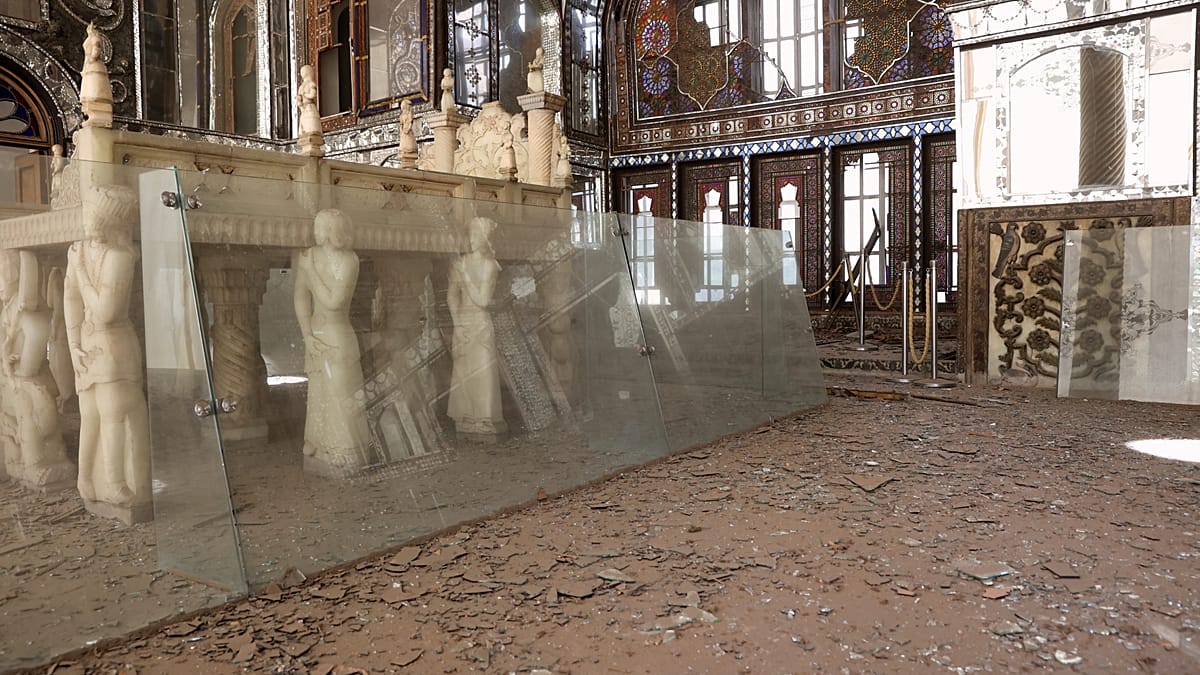
Debris from a US-Israeli airstrike on Tehran damaged the Golestan Palace. The Qajar-era palace’s mirrored ceilings, windows, and archways were impacted early last month, according to AP.
The damage triggered concern from UNESCO, which said it communicated the geographical coordinates of the World Heritage sites and sites of national significance to avoid harming them in the conflict.
Chehel Sotoun Palace, Isfahan, Iran
Strikes carried on the city of Isfahan targeting the governor’s building damaged the interior of the Chehel Sotoun Palace, which is in close proximity to the building. The 17th-century pavilion is part of the Persian Garden.
This came just a week after the Golestan Palace sustained damage.
Ali Qapu Palace, Isfahan, Iran
The Ali Qapu palace in Isfahan, due to its proximity to the governor’s building, also suffered as a result of strikes on the city. Damage to the interior, including the intricate tilework, has been reported.
Masjed-e Jameh, Isfahan, Iran
Shock waves from the strikes on Isfahan reportedly damaged the Masjed-e Jameh (Jameh Mosque), the oldest Friday mosque in Iran.
Tyre, Lebanon
The World Heritage site town of Tyre in southern Lebanon, once a Phoenician city, has been endangered by Israeli strikes in Lebanon. Parts of the site have been reported as damaged, according to a recent statement by UNESCO.