
Published on •Updated
Berlin has blamed Russia for an “attempted attack” at Leipzig airport last month.
In a press conference on Tuesday, German Interior Minister Alexander Dobrindt said an assessment of the incident “fits the known pattern of Russian hybrid operations in Europe.”
NATO member Germany, which supports Ukraine in its fight against Russia, has long accused Moscow of targeting it with a campaign of hybrid attacks involving espionage and sabotage, claims the Kremlin has rejected.
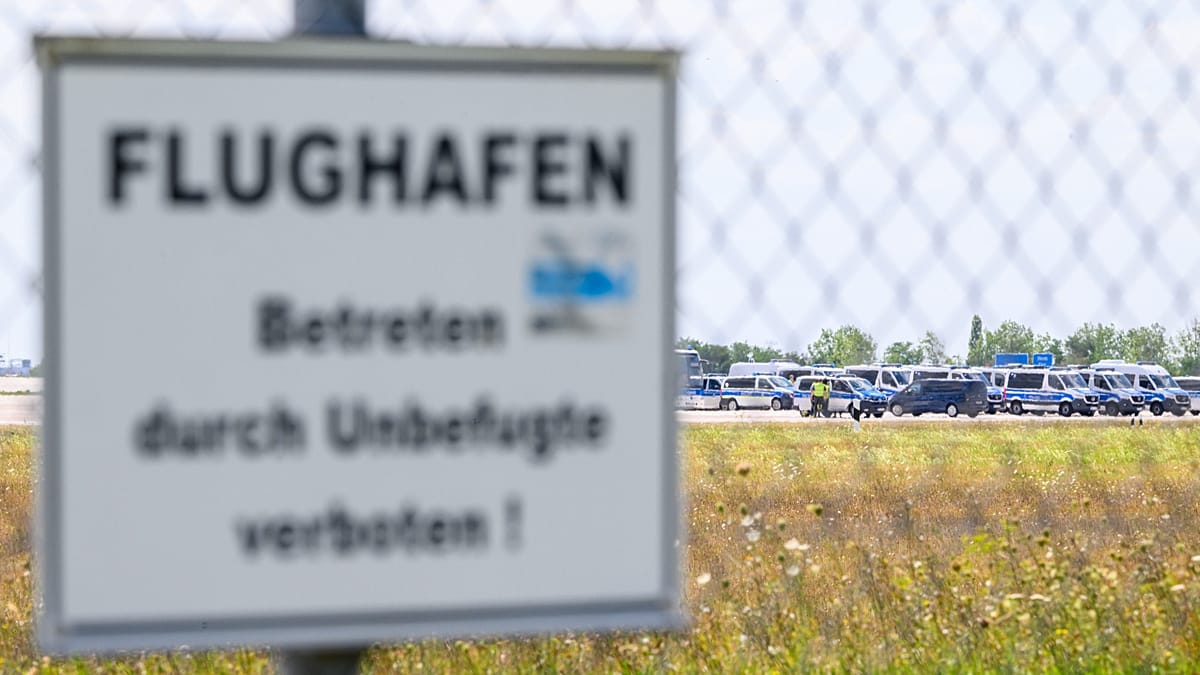
Germany has for months reported suspicious drone sightings over military and industrial sites, but an incident at Leipzig/Halle Airport on the night of 4-5 August raised the alarm as a drone found there carried explosives.
Police used a robot to defuse the device found near a Ukrainian cargo plane. Another drone was reportedly discovered weeks later near the airport, also with traces of an explosive substance.
The airport in eastern Germany plays a key role in the transport of military goods, including by the German military and NATO allies, and also serves as a base for Ukraine’s Antonov Airlines.
Chancellor Friedrich Merz later said Germany had increasingly “found itself in the crosshairs of hybrid attackers.”
But Berlin has so far refrained from blaming Russia for the incident while speaking only of the possible involvement of “foreign powers.”
Merz had warned on 25 August that the perpetrators of hybrid attacks against Germany would “pay for them,” without naming a target.
Der Spiegel said possible countermeasures could include the expulsion of Russian diplomats and the closure of Russia’s consulate in Bonn.
There has also been much discussion of whether Germany should shut down a Russian cultural centre in Berlin that security services believe is an intelligence hub.
The Russian House of Science and Culture in Berlin, a seven-story building opened in 1984 in what was then East Berlin, is located near the Russian embassy.
Conservative lawmaker and security policy expert Roderich Kiesewetter recently told Welt TV that the facility is assumed to be a hub for espionage.
He said more than 100 people lived there “with no one knowing who they are” and the building’s power consumption is disproportionately high.
It was “presumably filled with technical surveillance equipment”, he said, and used by “people who are not well-disposed toward Germany.”
Speaking after a meeting of European Union defence ministers in Ireland on Tuesday, Kaja Kallas, the bloc’s top diplomat, said Moscow was hitting Europe with increasing “kinetic hybrid attacks.”
“With this, Russia wants to scare us away from supporting Ukraine. They will not succeed,” she said.
“We will increase our support to Ukraine and invest in our own defence,” she continued, adding that the EU was “planning the most far-reaching sanctions against Russia yet.”
This is a developing story. Check back here for further details.
Additional sources • AFP