
Close Menu
Daily Guardian EuropeDaily Guardian Europe
  • Home
  • Europe
  • World
  • Politics
  • Business
  • Lifestyle
  • Sports
  • Travel
  • Environment
  • Culture
  • Press Release
  • Trending
What's On

Video. Italian police fire tear gas as protesters clash near Winter Olympics venue

February 7, 2026

Milan protesters rally against environmentally and economically ‘unsustainable’ Winter Olympics

February 7, 2026

Pressure for Ukraine-Russia deal mounts ahead of fall elections in US – POLITICO

February 7, 2026

Zelenskyy says US sets June deadline for peace deal, as Russia launches new attacks on energy sites

February 7, 2026

Video. Heavy snowfall in Japan leaves at least 45 dead, more than 500 injured

February 7, 2026
Facebook X (Twitter) Instagram
Web Stories
Facebook X (Twitter) Instagram
Daily Guardian Europe
Newsletter
  • Home
  • Europe
  • World
  • Politics
  • Business
  • Lifestyle
  • Sports
  • Travel
  • Environment
  • Culture
  • Press Release
  • Trending
Daily Guardian EuropeDaily Guardian Europe
Home»Environment
Environment

Rare phenomenon: Solar storm brings northern lights to Portuguese skies

By staffJanuary 21, 20262 Mins Read
Rare phenomenon: Solar storm brings northern lights to Portuguese skies
Share
Facebook Twitter LinkedIn Pinterest Email

By&nbspEuronews&nbspwith&nbspAP

Published on
20/01/2026 – 13:18 GMT+1

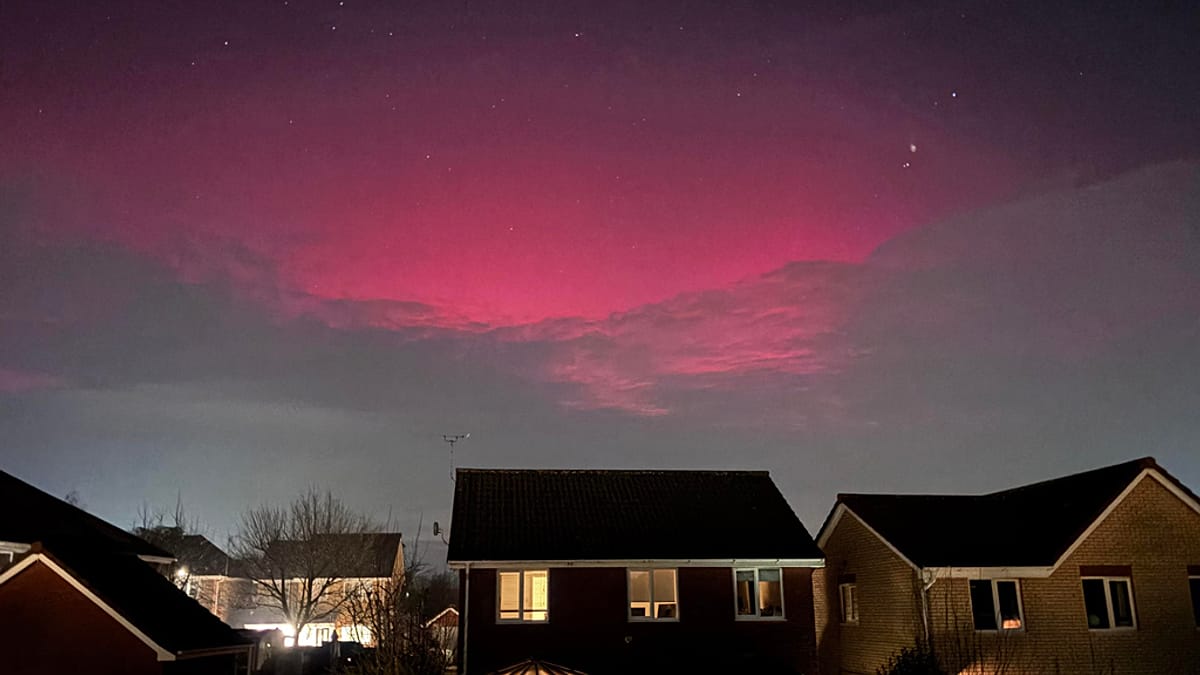
Portugal’s skies were treated to a rare and beautiful phenomenon on Monday evening as a solar storm brought the northern lights southward.

The auroras borealis was mainly visible in the north of the country, in places such as Vila Pouca de Aguiar, Bragança, Macedo de Cavaleiros, São Pedro do Sul and even Grândola.

Witnesses took to social media to share images of pink skies.

As well as Portugal, the phenomenon has been reported in other European countries where it is also uncommon, such as Germany and the United Kingdom.

What brought the northern lights to Portugal?

The rare event was triggered by a solar storm on 19 January

Forecasts from the US Space Weather Prediction Centre (SWPC) pointed to intense geomagnetic storms and solar radiation, according to Shawn Dahl, the centre’s service coordinator.

On the social network X, the service indicated that “a severe S4 level solar storm” began on Monday which, according to the organisation, “is the largest solar storm in more than 20 years”.

In this event, the sun releases large amounts of energy, plasma and charged particles. When they come into contact with the Earth’s magnetic field, these can create the aurora borealis and aurora australis.

Geomagnetic storms can also interfere with satellites

According to the SWPC, geomagnetic storms can also interfere with satellite operations, GPS communications and other infrastructure.

Shawn Dahl indicated that the current storm should weaken during the day on Tuesday, although severe levels were reached during the morning.

Solar radiation storms can affect objects in space and certain types of communication systems, but Dahl said that astronauts on the international space station are not at risk, at least for now.

The current solar storm is the most powerful seen “since 2003”, when parts of Sweden were plunged into darkness and power infrastructure in South Africa was damaged.

Share. Facebook Twitter Pinterest LinkedIn Tumblr Email

Keep Reading

Amsterdam to enact landmark ban on fossil fuel and meat advertising in public spaces

‘A half-baked roadmap’: What’s missing from the EU and UK’s so-called crackdown on forever chemicals

Economic models ‘fail to capture’ severity of climate damages. Is a global financial crash looming?

‘Not a dumping ground for the world’: Malaysia announces immediate ban on e-waste imports

Wind power pacts and pollution-busting kitchen appliances: Positive environmental stories from 2026

‘Doomsday Glacier’ is melting faster than we thought. Can a 150-metre wall stop it flooding Earth?

Wind and solar are booming in China. So why is it building so many new coal plants?

Sharks aren’t ‘turning on us’. So what’s behind the recent spate of attacks?

‘Hot sand for a cooler climate’: Has Finland finally found a solution to industrial heat emissions?

Editors Picks

Milan protesters rally against environmentally and economically ‘unsustainable’ Winter Olympics

February 7, 2026

Pressure for Ukraine-Russia deal mounts ahead of fall elections in US – POLITICO

February 7, 2026

Zelenskyy says US sets June deadline for peace deal, as Russia launches new attacks on energy sites

February 7, 2026

Video. Heavy snowfall in Japan leaves at least 45 dead, more than 500 injured

February 7, 2026

Subscribe to News

Get the latest Europe and world news and updates directly to your inbox.

Latest News

Which countries are the worst and best in the public sector AI race?

February 7, 2026

No front line, no pause: Russia’s hybrid pressure on the Bundeswehr in Lithuania

February 7, 2026

Video. Latest news bulletin | February 7th, 2026 – Morning

February 7, 2026
Facebook X (Twitter) Pinterest TikTok Instagram
© 2026 Daily Guardian Europe. All Rights Reserved.
  • Privacy Policy
  • Terms
  • Advertise
  • Contact

Type above and press Enter to search. Press Esc to cancel.