


With less than a month left until the 2026 FIFA World Cup, anticipation is building across the globe. For the first time in history, the tournament will stretch across three countries: the US, Canada and Mexico will host a record 104 matches featuring 48 teams.
It will look very different from Qatar 2022, where fans from around the world gathered in the smallest country ever to host the World Cup. Qatar’s size allowed supporters to attend multiple matches in a single day, something many fans still remember fondly.
While the 2026 tournament will be bigger in every sense, parts of Qatar’s World Cup hosting playbook are now making their way to North America.
Exporting expertise
Under an agreement between FIFA and Qatar’s Supreme Committee for Delivery and Legacy, staff and key stakeholders have been deployed from Qatar to host cities across the US and Canada to share their expertise in organising a World Cup.
According to Supreme Committee CEO Jassim Al Jassim, experts have been working in North America since last month across several areas, including tournament operations, workforce readiness, fan engagement and technology.
“This is just a continuation of our partnership with FIFA that is very well known,” Al Jassim said.
“We’re continuing hosting a lot of FIFA tournaments so that trust will be built and, you know, solidified as we go.”
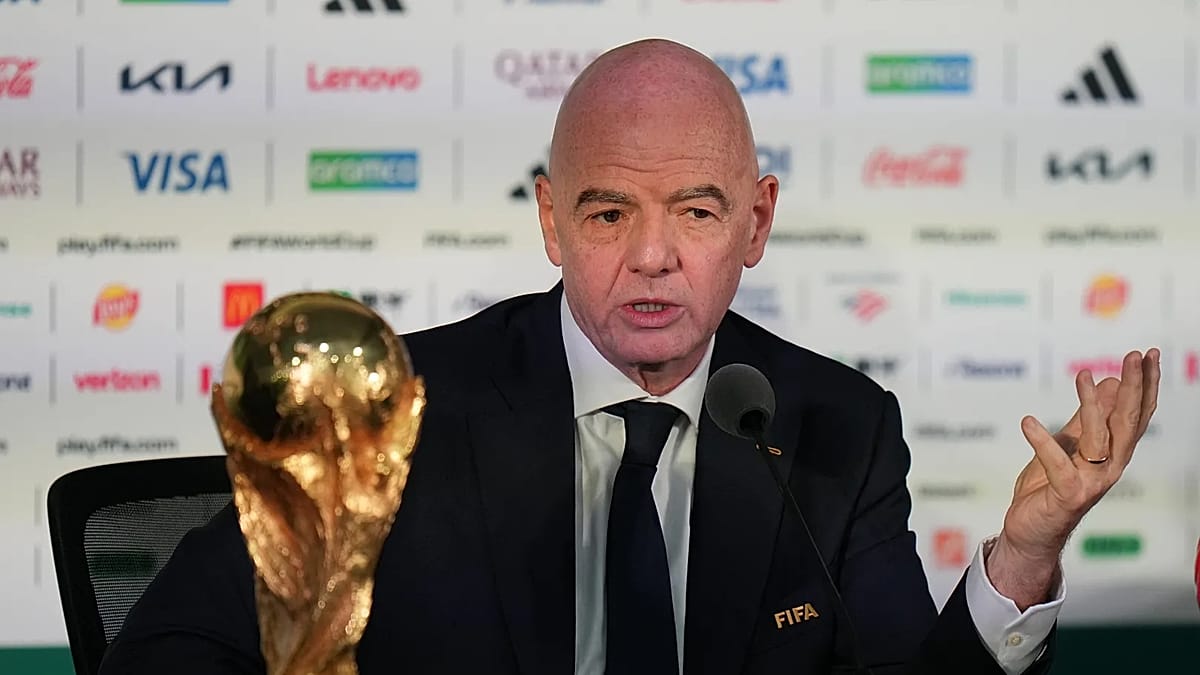
At the signing ceremony earlier this month, FIFA President Gianni Infantino applauded Qatar for their commitment and expertise, stating he can “certainly sleep well at night when he knows a tournament is being played here.”
“We have seen the expertise that Qatar has built over the years in hosting world-class events, from its sporting facilities to hotels, airport, transportation, as well as human skills,” Infantino said.
A World Cup fans still talk about
For many fans, Qatar 2022 remains one of the most memorable tournaments in recent history.
Among them is Mohammad Mirza, a football superfan originally from Iran who attended multiple matches during the tournament. Covered in football pins and memorabilia, Mirza says the ease of movement and hospitality stood out most.
“It was free transport. And the stadiums were very close together,” he said. “In one day, you could watch two games. I did that myself. It was really the best World Cup.”
He also recalled the warmth shown by local residents during the tournament.
“The Qataris, their houses are very close to the stadiums. They were giving free food to all the spectators. They said, ahlan wa sahlan, welcome, welcome.”
Al Jassim says those moments of cultural connection are part of what makes football’s biggest tournament special.
“From a spectator experience, fan experience and from a cultural and social perspective, it’s very important that all these people mingle with each other, meet each other and see each other’s culture,” he said. “That’s the power of football.”
Built to last
Qatar says the infrastructure built for the 2022 World Cup was always intended to support future sporting ambitions.
The country is continuing to position itself as a major global sports hub, with several international tournaments already on the horizon.
“It’s no secret as well, Qatar’s bidding for the Olympics,” Al Jassim said. “We have the Asian Games in 2030, the FIBA Basketball Championship in 2027, 2028 the Volleyball Championship, so I think our sports calendar will only continue to grow moving forward.”
“That was the whole intent of investing within the infrastructure to keep it as a lasting legacy.”