
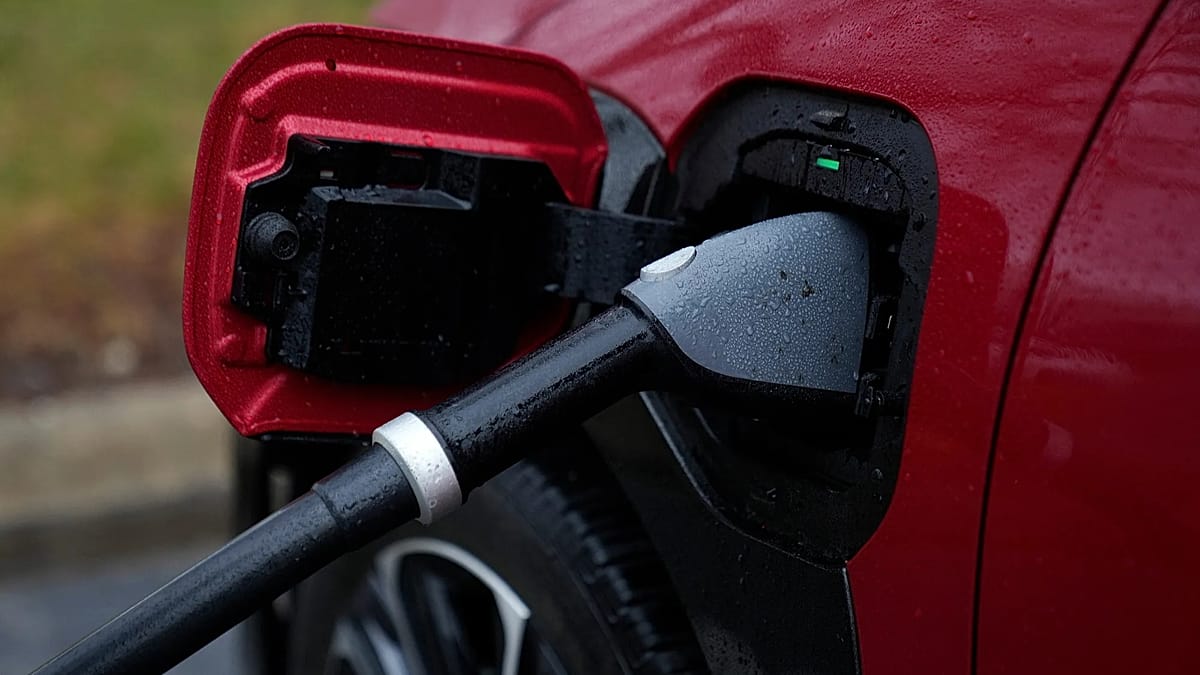
The most vulnerable families and microenterprises in Portugal will be entitled to support for the purchase of electric cars. The announcement came at the beginning of November, during the debate on the State Budget for 2027, when the environment minister, Maria da Graça Carvalho, said that the government would support the purchase of more than 20,000 vehicles, intending to cover up to 80% of the value of the vehicle, up to a maximum of 15,000 euros.
The announcement raised questions from the outset. The details of the measure are still not fully known, also because final approval by the European Commission is still needed, since this support is included in the Social Climate Plan, with an estimated allocation of 104.5 million euros to subsidise the purchase of around 5,500 vehicles by the poorest families in a first phase, a target that could grow by about another thousand units during the negotiations still under way in Brussels.
The aim of the programme, and of this measure in particular, is “to combat energy poverty and promote more accessible and sustainable mobility”, focusing on vulnerable families, “more exposed to the impacts of rising fossil fuel prices”.
Thus, the government expects “to support the electrification of mobility of 5,500 vulnerable families” and “around 9,000 microenterprises”.
According to the environment minister, the government chose to focus on vulnerable families because Portugal is one of the European countries where lower income households have more vehicles of their own. The average is around 20%, Maria da Graça Carvalho said, rising to 24% in rural areas. In the outskirts of large cities it is around 23%. These are generally older cars, with high carbon emissions, which the government wants to see replaced.
With regard to rural areas in particular, the minister stressed that people have a car “because they need one” and because “public transport does not solve problems in low-density regions”.
Who is the support for?
According to the government, in total, 1.5 million households may be covered by this measure. First of all, it is aimed at beneficiaries of the social electricity tariff. There are about 750,000 families and they will have priority when applications are assessed. Then there are households with incomes below 80% of the national median income, that is up to 11,572 euros a year.
How much is the support worth?
The amount of funding has not yet been finalised and may range between 70% and 90%, but the Environment Ministry indicates that it should be 80% of the value of the vehicle. The amount of support can be increased by 1,000 euros if an old vehicle is handed in to be scrapped. There will also be support for buying chargers.
In addition, in the case of vulnerable families, VAT will not be borne by them, said (source in Portuguese) the environment minister in an interview with Rádio Observador. According to Maria da Graça Carvalho, VAT will be covered by other funding.
“It is not the programme that covers it, but we have other funding for VAT. And we do not require scrappage [of an old combustion car]. It is the only case in which we do not require scrappage. Why? Because in that way they [low-income families] can sell the car. So in this model between 2,000 and 3,000 euros are left for the family to pay. And therefore, if the family manages to sell the old car for 2,000, 3,000 euros, it can swap it for an electric car without having to put in its own funding [to make up the 20%],” she explained.
Families will be able to receive a maximum of 15,000 euros per vehicle. There will also be a cap on the price of vehicles that can be bought with the support. The programme will accept applications to buy electric vehicles costing up to 37,500 euros, new or used and less than five years old, because of battery life, as long as they are bought from a dealership, that is they cannot be bought from private sellers.
Payment will be made through a voucher system, as happens with the E-Lar scheme created by the government to replace gas cookers and water heaters, and there will be no need to pay money up front when buying the vehicle.
After buying the car with the support, can it be sold straight away?
Vehicles bought under this support scheme cannot be sold before three years have passed.
And what is planned for companies?
Maria da Graça Carvalho also said that the government will support, with 228 million euros, around 9,000 microenterprises, with a turnover of up to two million euros and fewer than 10 workers, in buying 13,700 electric vehicles, and companies will be able to apply for one or two cars. In this case the subsidy will cover up to 100%, excluding VAT.
Microenterprises will also be required to hand in one vehicle to be scrapped for each electric vehicle they buy. In addition, to qualify for support to buy electric cars they must also prove that fuel accounts for at least 5% of their expenditure.
And for public transport?
Electrification will also reach public transport. Co-financing worth 125.5 million euros is also planned for the purchase of 700 electric buses for low-density areas, intended for example for the mobility of workers and students and for transporting patients in these territories.
This funding includes buying charging infrastructure and shelters by the transport authorities.
Is electrifying private cars the best way to solve the problem?
Despite the environmental and social objectives of the measure, there are questions about how effective it will be and about the impact it may have on mobility patterns in Portugal.
António Alvarenga, a professor at Nova School of Business and Economics (Nova SBE), speaking to Euronews, believes that the incentive to buy electric vehicles may represent a positive step towards decarbonisation, but warns of some contradictory effects that need to be taken into account.
From an environmental point of view, the professor draws attention to the risk that the measure will encourage behaviour that produces a result opposite to what is intended. He gives as an example a family that until then used public transport or soft mobility options such as bicycles every day but, encouraged by state support, starts to use a private car. In that scenario, instead of reducing emissions, the incentive could help to increase them by replacing more sustainable ways of travel with a more polluting individual solution.
However the issue is not limited to vehicle emissions. Alvarenga believes that it is also necessary to assess the impact of the measure on road traffic volumes. By encouraging the purchase of electric cars, the government is promoting a change in the technology used, but not necessarily a reduction in the number of cars on the road.
On the contrary, by making it easier to buy a private car, the support may help to maintain or even increase dependence on individual transport, without resolving structural problems such as congestion, the use of public space and pressure on infrastructure.
For the professor, the energy transition should not focus exclusively on replacing combustion cars with electric vehicles. Reducing dependence on private cars remains one of the key challenges for a truly sustainable mobility policy.
Should the priority be buying cars or strengthening public transport?
Using public funds to subsidise the purchase of private cars also raises the question of investment priorities. In particular when there are other structural needs still to be addressed, such as strengthening public transport, rail and mobility solutions in suburban and rural areas.
Even so, António Alvarenga believes that, despite the limitations identified, “it is better to go ahead with this measure than not to go ahead with any”.
The professor acknowledges that the incentive to buy electric vehicles does not solve Portugal’s structural mobility problems, but believes that it can represent a positive step towards decarbonisation. In his view, the search for an ideal solution should not prevent the implementation of measures which, even if insufficient, may produce results.
How can the government ensure that the support leads to a real improvement in these families’ mobility conditions?
Another challenge relates to the conditions needed to use an electric vehicle on a daily basis, especially for lower income families.
Even if they receive significant support when they buy the car, not all families have a garage or access to a private charging point, leaving them dependent on the public network.
On this point, Alvarenga draws attention to weaknesses in the current public charging system, which he considers not very transparent in terms of costs, with high prices and not very intuitive to use. The multiplicity of operators and the need to use different cards and apps make the network particularly complex for users.
Thus, although access to a car may be made easier by the subsidy, using it still represents a financial and logistical burden that may penalise precisely the families the measure is intended to support.
The risk that dealerships will absorb part of the subsidy
There are also questions about how public incentives may influence the sale price of electric vehicles.
António Alvarenga warns of the possibility that dealerships will adjust prices according to the amount made available by the state, absorbing part of the benefit that should reach consumers.
In that scenario, the subsidy may not translate into a real reduction in the financial effort required from families, instead benefiting sellers and manufacturers. This is therefore a risk that raises questions about how effective the measure is and about the monitoring mechanisms needed to ensure that public support really reaches its target groups.
Can electric cars made in China also benefit from the support?
Another issue raised by the Nova SBE professor concerns the origin of the vehicles that may benefit from Portuguese incentives.
Based on the criteria published by the government, only six electric cars are eligible for support for purchase by lower income families, and with the exception of the Citroën ë-C3 and the Renault Twingo they are all made in China.
The choice is even more limited when the 15,000 euro threshold is taken into account. Only three cars sold in Portugal fit within the price limit. Only the most affordable version of the Dacia Spring, priced at 13,740 euros, meets the threshold.
With the supplement associated with scrappage, which raises the threshold to 16,000 euros, the Leapmotor T03 at 15.284,5 euros and the Renault Twingo E-Tech at 15.845,3 euros may be added.
Of these three models, at least one is made in China, while the new Dacia Spring has recently started to be produced in Novo Mesto in Slovenia, on the same line as the Renault Twingo E-Tech. The first generation was made in China.
António Alvarenga accepts that public support may end up indirectly financing the purchase of cars made in China. This raises questions about the consistency between the environmental objectives of the measure and the European industrial policy, especially in a context of growing competition between European and Chinese manufacturers.
In this context the professor points to the example of France, which has adopted a different model for granting incentives to buy electric cars.
Since January 2024, the awarding of incentives for buying electric cars in France has excluded models made in China, even if they are from non-Chinese brands, because of environmental criteria and the carbon footprint associated with the manufacturing process and the energy used to make the vehicles.
The change came after the French authorities identified that around one third of the public incentives awarded were benefiting consumers who bought vehicles made in China.
The French programme represented an annual cost of around one billion euros and offered incentives of between 5,000 and 7,000 euros for buyers of electric cars. According to the French Finance Ministry, channelling a significant share of this support to cars made in China helped to increase imports and intensify competitive pressure on domestic manufacturers.