
Published on •Updated
‘Rizz’, ‘Delulu’, ‘Locked In’, ‘Glow Up’, ‘FRFR’, ‘Aura Farming’…
It can be hard keeping up with the latest Gen Z slang. While it’s hardly new that every generation develops its own jargon and expressions, the difference with Gen Z and Gen Alpha comes down to speed. Their lingo can go from niche to worldwide viral in a matter of days through social media, and if you’re not au fait with the latest expression, you risk reaching ‘Unc’ status – a Gen Z abbreviation for ‘uncle’ which mocks a person perceived as uncool and out of touch with modern trends.
(Speaking of which, ‘FRFR’ stands for ‘For Real, For Real’.)
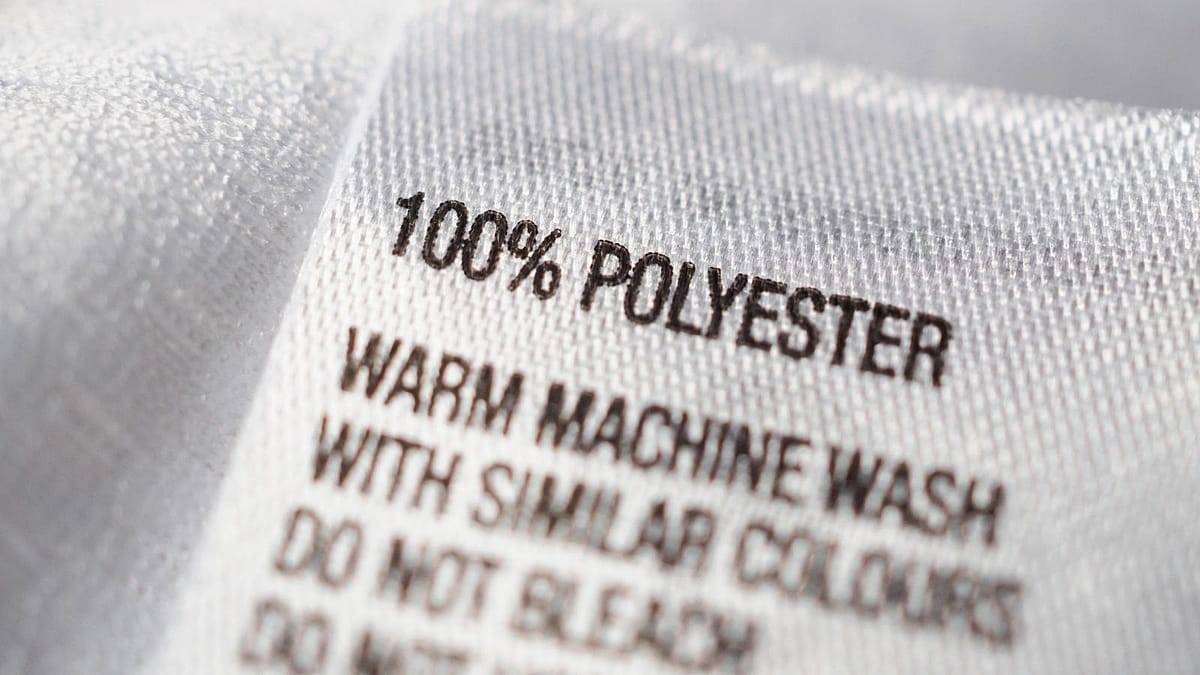
The latest term which has been going viral on TikTok and various social media platforms is ‘polyester’.
It doesn’t directly refer to the synthetic polymer (or does it?) but has become a new way to call something generic, inauthentic, or even try-hard.
A supposed candid moment that’s actually carefully staged? Polyester.
A public apology that rings false? Polyester.
A nose-bleedingly annoying influencer faking enthusiasm and sincerity when trying to peddle cheap merch or a product they’re contractually mandated to tout through sponsorship deals? Polyester. “Polyester Prince”, actually.
You get the gist. For all you long-suffering Millennials out there, it’s the equivalent of calling something ‘basic’; but the Gen Z version is more layered than it seems.
Before it became the go-to shorthand to call out fakeness and throw shade, “polyester” described a style of fan-edit TikTok that cut clips of characters like Spider-Man and layered them over flashing and frenetic footage.
Then came a viral TikTok featuring an 18-year-old sharing his vision of his dream adult life.
“I want to wake up at 6 a.m. in my New York City penthouse, Bible study with the boys before anything else, crack open an organic yerba mate, and go for a morning run in Cnetral Park… Blue light glasses on, deep work, house music, locked in. I’m not gonna even be doing half of the work because my Claude agent is gonna be running automatic in the background while I eat lunch…”
The internet was quick to label this algorithm-designed clip yearning to be aspirational as ‘polyester’ or “Polyester lifestyle”.
Then there’s the choice of a fabric word, which isn’t coincidental.
It anchors itself in the backlash against the most-produced synthetic fibre on the planet.
Younger generations are not only trying to distance themselves from fashion brands hawking garments which look great online but which feel terrible IRL and don’t last; they’re also pushing back because of polyester’s disastrous impact on the environment, as the fibre is not biodegradable and sheds microplastics.
Countless creators online are promoting purging their wardrobes from mass-produced and synthetic fabrics, showing that it’s not just a backlash against ultra-fast fashion business models (hence the trending diss “It gives Shein”), but a growing desire to be more environmentally conscious.
In a wider context, the popularity of ‘polyester’ denotes that generations which have grown up online are waking up to the disingenuous nature of influencers / corporations / politicians trying to fool them with catch-all terms and weak promises.
Too much of a stretch? Not really, as ‘polyester’ didn’t come out of nowhere. It follows other viral terms like ‘Larping’, ‘Slop’, ‘Performative Male’, ‘Industry Plant’ and yes, ‘FRFR’ – all of which focus on authenticity and call out anything fake.
While many older generations may roll their eyes at a new here-today-gone-tomorrow expression, ‘polyester’ is another reflection of Gen Z’s healthy and expanding sense of distrust towards anything that appears to be artificial. Their growing desire for authenticity – especially at a time when AI is utilised to such a degree that it can be harder to distinguish what’s real from what’s not – shows a promising intolerance towards the insincerity thriving on social media.
Consider yourself un-Unced.